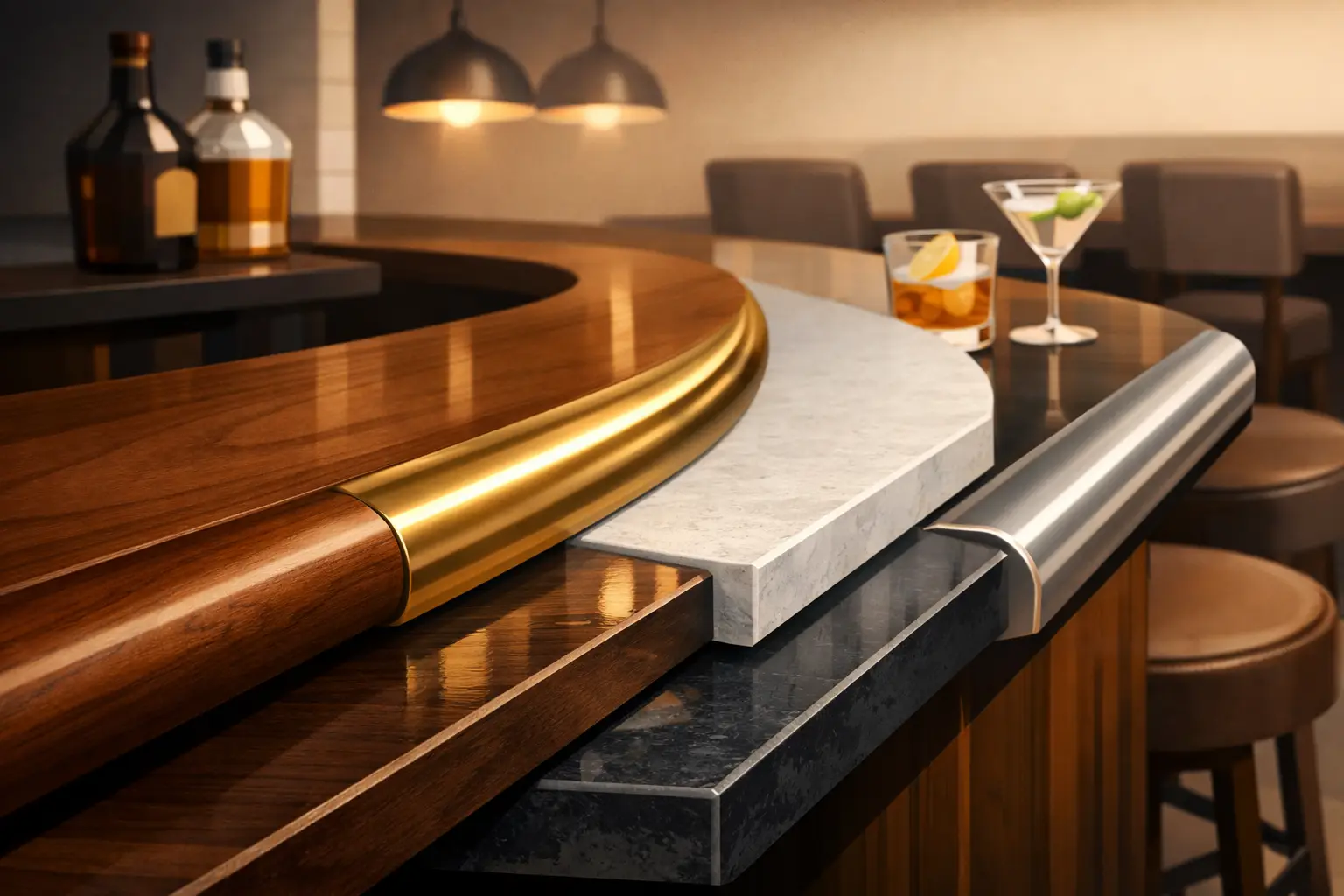
A bar rail is where a beautiful bar becomes a place people want to stay. It is the edge guests lean on, the surface that catches a resting glass, and often the first detail seen from across the room. Choosing the best materials for bar rails means balancing that tactile experience with the realities of spills, cleaning, traffic, and the character of the surrounding space.
For a residential entertaining area, the right material may bring warmth and furniture-like presence. For a restaurant, hotel, or café, it may need to stand up to constant contact while developing a finish that feels more distinguished over time. The most successful choice is rarely about selecting the hardest material alone. It is about selecting a material whose look, feel, and performance belong together.
Best Materials for Bar Rails: Start With How the Bar Will Be Used
Before comparing species, metals, or finishes, consider who will use the bar and how often. A home bar used for weekend gatherings has different demands than a cocktail bar serving guests from afternoon through late evening. A rail that meets a dining area may call for a refined, furniture-grade profile, while a pub-inspired bar may benefit from a substantial edge with a more relaxed, durable character.
The rail profile matters as much as the material. A rounded, eased edge feels comfortable under the forearm. A wider rail gives guests more room to rest a drink or plate. A crisp metal edge can make a contemporary bar feel tailored and architectural. Because every surface is made to exact dimensions, the material can be paired with a profile that supports the way the bar is actually used.
Wood Bar Rails Bring Warmth and Lasting Character
Wood remains one of the most sought-after choices for bar rails because it invites touch. Wide-plank wood, butcher block, and live-edge styles can make a bar feel grounded and generous, whether the setting is a classic library bar, a light-filled kitchen, or a hospitality space with a residential feel.
Hardwoods offer excellent day-to-day performance when they are properly fabricated and protected. Their natural grain brings movement that manufactured surfaces cannot duplicate, and the color can be selected to complement cabinetry, flooring, beams, or dining furniture. A dark walnut rail can add richness to a pale stone bar, while white oak can bring a calmer, more contemporary warmth.
Wood does ask for thoughtful care. Standing moisture, harsh abrasives, and repeated impact can affect any natural wood surface over time. For many projects, that trade-off is worthwhile because wood can be renewed and because its subtle marks become part of its character. A durable protective finish, including Brooks Custom’s Marine Finish on selected wood products, adds valuable resistance to stains and daily wear without taking away the material’s natural appeal.
Wood is especially fitting when the bar should feel like a piece of custom furniture rather than a purely utilitarian counter. It also pairs beautifully with stone, concrete, glass, and metal, allowing the rail to provide visual warmth against a cooler main bar top.
Butcher Block, Wide Plank, or Live Edge?
Butcher block presents a more tailored, graphic pattern and suits spaces that favor clean geometry. Wide-plank wood emphasizes long grain and a quieter, more continuous appearance. Live edge brings an organic silhouette and works best when the bar is meant to be a clear focal point. The right choice depends on whether the room calls for precision, restraint, or a more expressive natural statement.
Zinc Is a Distinctive Choice for High-Use Bars
Zinc has long been associated with memorable bars for good reason. It has a soft, silvery-gray appearance that feels historic and contemporary at once, and it develops a living patina as it is used. Fingerprints, water marks, and subtle variations are not defects in zinc. They are part of the material’s evolving finish.
A zinc bar rail can be formed with a smooth, comfortable edge that gives the entire bar a classic hospitality presence. It works exceptionally well in wine rooms, home pubs, restaurants, and spaces where the design calls for an authentic, handcrafted metal surface rather than a uniform factory finish.
The primary consideration is expectations. Zinc will change with use, and acidic spills may leave temporary or lasting marks depending on the finish and care routine. Clients who want every inch to remain visually identical may prefer stainless steel or protected wood. Those who appreciate character and subtle variation often find zinc becomes more compelling with age.
Bronze, Copper, and Pewter Add Depth
For a rail that feels genuinely one of a kind, warm-toned metals offer remarkable visual depth. Bronze can range from dark and understated to richly golden, depending on the finish. Copper brings a warmer, brighter note that can make an intimate bar feel welcoming. Pewter offers a muted, old-world gray with a softer visual presence than stainless steel.
These materials are especially effective in spaces with layered finishes: walnut cabinetry, leather stools, hand-blown glass pendants, plaster walls, or dark-painted millwork. A metal rail can echo nearby hardware or lighting while still serving as a substantial, functional surface.
Like zinc, bronze, copper, and pewter are living materials. They may patina, deepen in color, or show evidence of use. That is an advantage when a project calls for richness and authenticity. It is less appropriate for a highly uniform, bright-white modern interior where visual consistency is the priority.
Stainless Steel Delivers a Clean Commercial Edge
Stainless steel is a practical choice for bars that need a crisp appearance and straightforward maintenance. It resists moisture, handles frequent cleaning well, and fits naturally within contemporary kitchens, modern hospitality interiors, and high-use beverage service areas.
Its visual effect is more precise than wood or patinating metals. Stainless can complement glass, polished concrete, dark stone, and lacquered cabinetry without competing for attention. It is also an excellent material when sanitation and resilience are central concerns.
The trade-off is that stainless steel can show fingerprints and fine scratches, particularly in highly polished finishes. Brushed or directional finishes are often more forgiving for active settings. Stainless also has a cooler feel under the hand, which may be exactly right for a sleek urban bar but less suited to a room seeking a warm, traditional atmosphere.
Glass and Engineered Concrete Make a Modern Statement
Specialty glass brings light, reflection, and depth to a bar rail or bar top. It can be selected for clarity, texture, color, or a more decorative effect, making it a compelling choice for a feature bar in a contemporary residence, boutique hotel, or restaurant. Glass is especially strong when lighting is part of the design concept, since it can catch and distribute light in ways that wood and opaque metals cannot.
Engineered concrete offers a different kind of presence. It is substantial, tactile, and architectural, with tonal variation that makes each piece feel considered rather than standardized. Concrete can work beautifully for an indoor-outdoor entertaining bar or an interior with a modern, grounded palette.
Both materials require careful expectations. Glass needs appropriate cleaning to maintain its clarity, while concrete has a more material-forward appearance that may include natural variation. Neither is trying to imitate wood or metal. Their value comes from their distinct visual language.
Pairing the Rail With the Main Bar Top
A bar rail does not need to match the main top exactly. In fact, some of the most compelling custom bars rely on contrast. A zinc rail around a wood bar top creates a familiar bistro-inspired composition. A warm wood rail can soften a concrete or stone surface. Stainless steel can frame a glass top with a sharp, contemporary line.
Matching can be equally effective when the goal is a quiet, monolithic look. A continuous wide-plank wood top and rail feels cohesive and inviting. A single metal surface can make a compact bar appear more architectural. The key is deciding whether the rail should recede into the bar or announce itself as a separate tactile detail.
Material samples are valuable at this stage. View them beside cabinet finishes, flooring, tile, lighting, and upholstery whenever possible. A material that looks ideal on its own can read much warmer, cooler, brighter, or darker once it is placed within the full room palette.
A Custom Rail Should Feel Right From the First Lean
The best bar rail material is the one that makes the space more useful and more memorable every time it is used. Wood offers warmth and renewal. Zinc, bronze, copper, and pewter bring a living finish with depth. Stainless steel provides clean durability. Glass and engineered concrete create a more architectural statement.
Rather than choosing from a standard list of parts, begin with the atmosphere you want guests to feel and the level of daily use the surface will receive. From there, a handcrafted rail can be made to your exact needs, with the material, profile, scale, and finish working together to bring your vision to life.