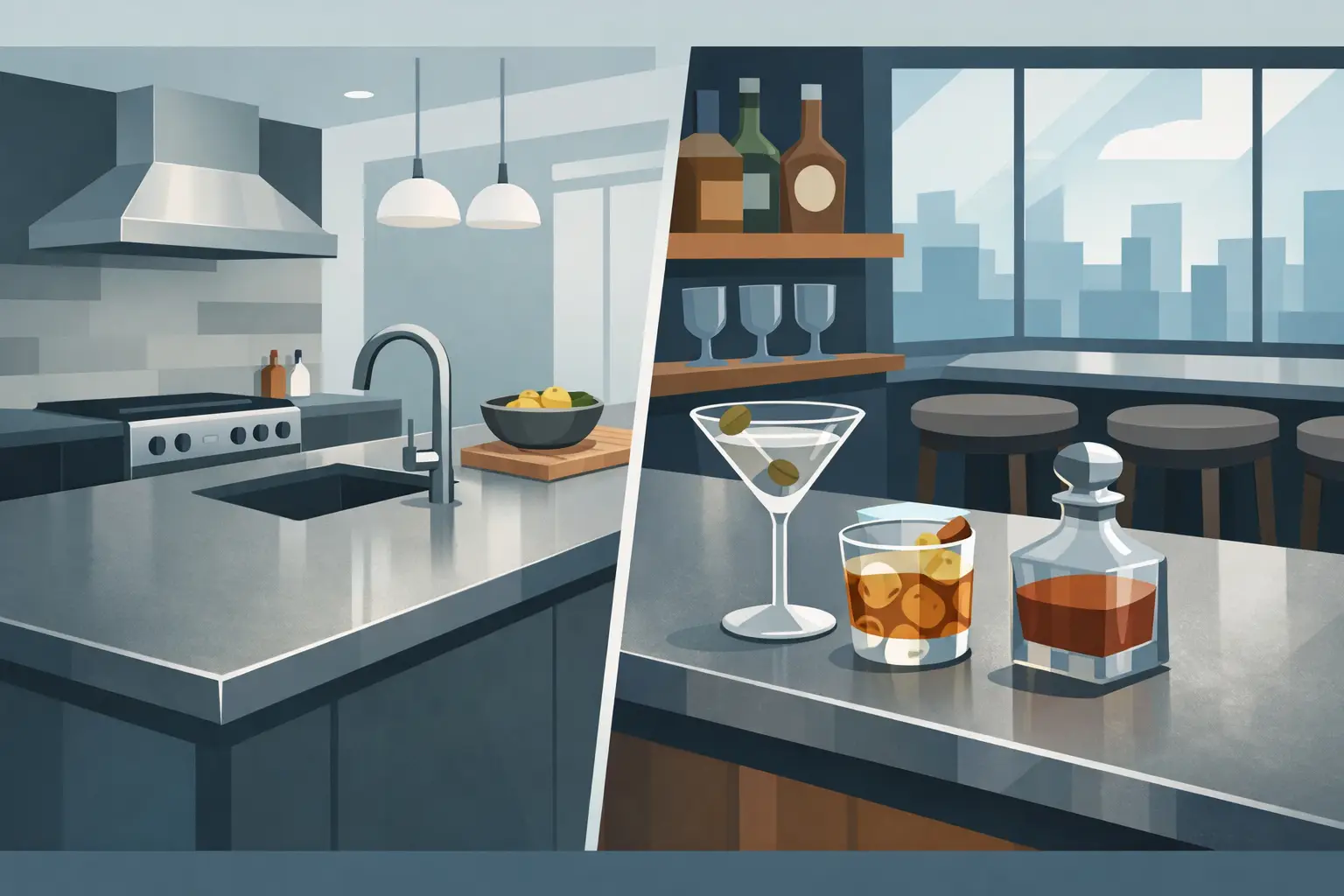
A countertop can set the entire emotional temperature of a room. Pewter countertops do this with unusual restraint: their silvery-gray surface has warmth, depth, and a soft reflectivity that changes with the light instead of demanding attention. They feel at home in a tailored Manhattan kitchen, a relaxed country house bar, or a hospitality space designed for long evenings and frequent use.
Unlike a perfectly uniform manufactured slab, pewter has movement. Subtle tonal shifts, hand-worked texture, and the marks it develops over time give the surface a sense of permanence. For homeowners and designers who want a metal finish with character rather than a high-polish industrial look, it is a compelling choice.
What Makes Pewter Countertops Distinctive
Pewter is valued for its muted, lived-in appearance. Its color generally falls between silver and warm gray, with undertones that can read cooler or softer depending on surrounding materials and lighting. Against crisp white cabinetry, it lends contrast without the visual sharpness of black stone. Paired with walnut, white oak, painted cabinetry, or aged brass, it creates a layered material palette that feels considered from every angle.
The appeal is not only visual. A hand-crafted pewter surface has a tactile quality that stone and engineered materials cannot duplicate. Light catches its variations differently throughout the day. It may appear silvery in morning light, then deeper and more atmospheric by evening. In a bar setting, that quality can make the counter feel immediately established, even in a newly finished room.
Pewter is also a useful design bridge. It can soften the transition between traditional millwork and contemporary appliances, or bring refined texture to a minimal kitchen where every material must earn its place. It is less reflective than polished stainless steel and less boldly colored than copper or bronze, making it remarkably adaptable.
A Surface That Becomes More Personal With Use
A pewter top should not be chosen with the expectation that it will remain visually unchanged. This is a material that develops a patina. Gentle shifts in tone, faint contact marks, and subtle signs of daily use are part of its character, not evidence that the surface has failed.
That distinction matters when comparing pewter with hard, highly consistent countertop materials. If the goal is a uniform surface that disguises every trace of a busy household, a different material may be a better fit. If the goal is a surface that gains depth and individuality over the years, pewter offers something few other countertop materials can provide.
The degree of visible aging depends on the finish, location, use pattern, and care routine. A decorative bar top, for example, may mature differently from a heavily used kitchen island. A custom fabricator can help match the surface treatment to the level of variation you welcome in the finished piece.
Why finish selection matters
The finish is central to the final look of a pewter countertop. A smoother finish can feel more tailored and formal, while a more textured or hand-worked finish emphasizes the material’s artisanal side. Neither is universally better. The right choice depends on the architecture of the room, the other metals in the space, and how the countertop will be used.
Consider the entire palette before choosing. Matte black hardware can make pewter feel contemporary. Unlacquered brass brings out its warmer notes. Natural wood adds contrast and keeps the metal from feeling too cool. In commercial spaces, pewter can pair especially well with leather, dark-stained wood, tile, and low-glare lighting.
Where Pewter Works Best
Pewter is particularly effective in places where guests gather and where detail is meant to be noticed. Bar tops are a natural application because the surface can become part of the experience of sitting down, ordering a drink, or sharing a meal. Its subtle luster photographs beautifully but remains inviting in person.
In residential kitchens, a pewter-topped island can serve as a focal point while perimeter counters remain wood, stone, or another complementary material. This approach gives the room a clear hierarchy and introduces metal without making the kitchen feel overly industrial. A smaller coffee bar, serving counter, or butler’s pantry is another opportunity to use pewter in a concentrated, memorable way.
Dining tables and occasional tables benefit from the same rich surface quality. Pewter can also be carried into a room through a custom backsplash, range hood detail, or decorative wall component, creating continuity without repeating the same material on every plane.
For restaurants, cafés, and hospitality venues, the material’s ability to look better as it settles into service is especially valuable. A well-designed custom bar top can become part of a venue’s identity, developing character alongside the business rather than looking generic after a few seasons.
Designing a Custom Pewter Surface
The most successful pewter projects begin with proportion and use, not simply color. A narrow counter, expansive island, curved bar, waterfall edge, or tabletop each calls for different visual decisions. Edge treatment alone can shift the design from crisp and contemporary to substantial and traditional.
Custom fabrication allows dimensions, overhangs, edge profiles, finish, and surface details to be planned around the piece rather than forced into a standard format. This is particularly valuable for bars and furniture, where a few inches can affect comfort, circulation, and the overall presence of the finished element.
Large surfaces may include carefully planned seams, depending on the scale and design of the project. Rather than treating this as a compromise, a skilled maker can position and finish seams so they contribute to the piece’s handmade character. It is worth discussing early, alongside details such as sinks, cutouts, curves, corners, and the relationship between the metal and adjacent materials.
At Brooks Custom, each surface is made to exact project needs, allowing homeowners, designers, and hospitality teams to specify a piece that belongs to the room rather than approximates it. Samples are especially useful with pewter because they reveal how the finish responds to actual light and neighboring cabinetry, tile, and hardware.
Pairing pewter with other materials
Pewter rarely needs to stand alone. It gains presence when it is paired with materials of a different temperature or texture. White oak and walnut create a warm, grounded contrast. Honed stone offers a quieter, mineral-forward companion. Glass, dark tile, and blackened steel can take the look in a more modern direction.
When combining metals, aim for relationship rather than exact matching. Pewter does not need identical hardware or lighting to look intentional. A nearby bronze, brass, or blackened steel element can add dimension, provided the finishes share a similar level of refinement. The result should feel collected and architectural, not overly coordinated.
Care and Everyday Expectations
Pewter is best cared for with a light touch. Regular wiping with a soft cloth and mild soap, followed by drying, is generally the right everyday approach. Abrasive pads, harsh chemical cleaners, and aggressive polishing products can alter the finish and create unwanted bright spots.
Promptly wiping spills is a sensible habit, particularly with acidic foods, alcohol, or strongly colored ingredients. Use trivets for very hot cookware and avoid dragging rough or sharp objects across the surface. As with any custom material, follow the care guidance provided for the specific finish and construction of your piece.
The goal is not to preserve an artificial factory-new appearance. It is to care for the surface in a way that allows it to mature evenly and gracefully. Minor marks often blend into the broader patina with time, contributing to the visual depth that made pewter appealing in the first place.
Is Pewter the Right Countertop Material for You?
Pewter is an excellent fit for those who appreciate authentic materials, nuanced finishes, and the beauty of use over time. It is especially strong for statement islands, entertaining spaces, custom bar tops, dining surfaces, and projects where the countertop is intended to be more than a backdrop.
It may be less suitable for someone seeking a completely uniform, low-character finish or a surface expected to hide all signs of household activity. That is not a limitation so much as an honest material choice. The best custom surfaces reflect how a space will actually be lived in.
A pewter countertop brings quiet distinction to a room from day one, then gives it something even better over time: a finish shaped by real gatherings, daily rituals, and the life of the space around it.