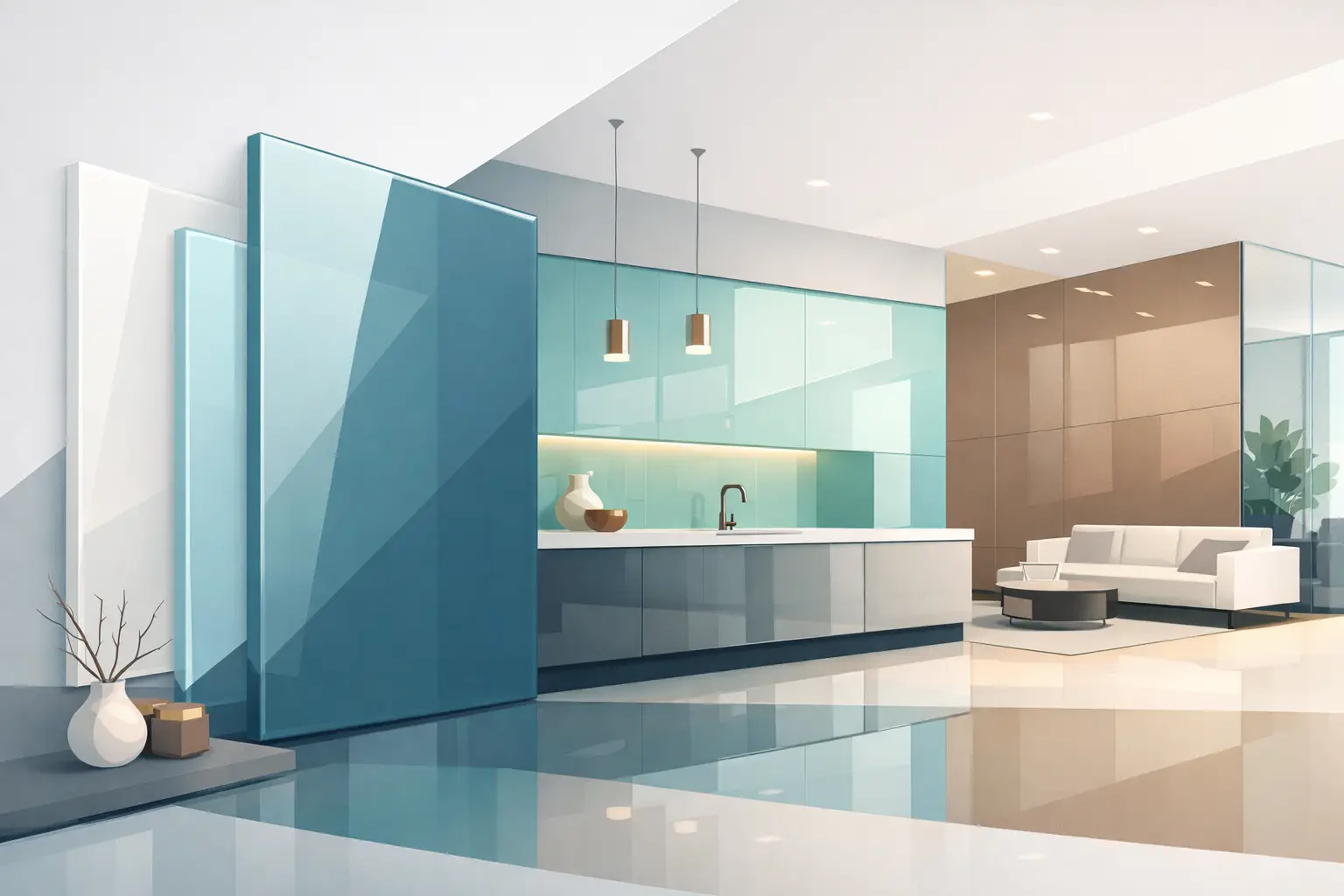
A wall surface can do more than protect the room behind it. It can carry color across a kitchen, bring depth to a bar front, or give a bathroom a clean, luminous finish that feels intentionally designed. Backpainted glass wall panels offer that visual clarity with a smooth, nonporous face and color made to suit the project rather than a standard palette.
For homeowners, designers, and hospitality teams, the appeal is not simply shine. It is the ability to specify a material that feels tailored – from the glass selection and paint color to the dimensions, edge treatment, and panel layout. The result can be quiet and architectural or rich enough to become the room’s defining element.
What Makes Backpainted Glass Wall Panels Distinct
Backpainted glass is made by applying color to the reverse side of the glass. The clear front surface protects that color while creating visual depth that painted drywall, tile, and many laminates cannot replicate. Light moves across the face of the panel, giving even a restrained neutral a more polished presence.
Unlike tile, glass panels present large uninterrupted areas of color. Fewer joints create a more continuous appearance, particularly across a long backsplash, a full-height vanity wall, or the front of a commercial bar. That clean plane is often what makes the material so effective in contemporary interiors.
Color has more depth behind glass
A color behind glass does not read exactly like the same paint on a wall. The glass face adds reflection and subtle dimension, so a soft gray can appear cooler and more layered, while a deep navy or black can take on a dramatic, almost lacquered character.
Samples are especially useful when selecting color. The surrounding cabinetry, metal finishes, daylight, and artificial lighting all influence how the finished panel will appear. A color that feels warm beside natural white oak may look entirely different against polished stainless steel or dark bronze.
The glass itself affects the final look
Standard clear glass carries a slight natural tint, which can influence pale whites, cool grays, and delicate pastels. Low-iron glass has reduced tint and is often the better choice when color accuracy is central to the design.
For saturated colors and darker tones, either option may be appropriate depending on the desired effect. The right selection comes down to the project palette, the level of color precision required, and whether the glass should read crisp and bright or slightly softened.
A smooth surface changes the room’s rhythm
Backpainted glass wall panels are well suited to spaces where visual calm matters. A large panel can make a compact kitchen feel less busy than a heavily grouted surface, while a full-height application can give a bath or powder room a more composed, finished character.
That same quality makes glass valuable in hospitality settings. Restaurant feature walls, host stands, bar fronts, and private dining rooms benefit from materials that feel elevated under ambient lighting and remain easy to care for during daily use.
Where Backpainted Glass Belongs
The most familiar use is the kitchen backsplash, particularly when homeowners want a tailored alternative to subway tile or stone. A glass backsplash can extend from countertop to upper cabinetry, run across an open wall, or rise to the ceiling for a more architectural statement. It works beautifully with wood, metal, concrete, and natural stone because its clean face allows neighboring materials to retain their character.
Bathrooms are another natural setting. Behind a vanity, a custom glass panel provides color without introducing excess pattern into a smaller room. In a powder room, it can become the focal point – especially when paired with a sculptural mirror, artisan metal lighting, or a custom countertop.
Backpainted glass also has a strong place beyond residential wet areas. Consider it for fireplace surrounds where project conditions support the material selection, decorative wall components, built-in niches, reception walls, and furniture accents. In bars and restaurants, a richly colored glass face can bring a polished finish to guest-facing surfaces without competing with the warmth of a wood bar top or the character of hand-worked metal.
Designing a Panel That Feels Made for the Space
The strongest projects begin with the surrounding materials, not a color chip in isolation. Look at the undertone of the cabinetry, the veining in a stone surface, and the finish of nearby hardware. A soft green-gray may bridge white oak and aged brass. A warm off-white can preserve brightness while avoiding the starkness of a pure white panel.
Scale matters as much as color. A single broad panel reads differently from several smaller sections, even when the paint color is identical. Large expanses feel modern and restrained; divisions can be used intentionally to align with cabinetry, shelving, or other architectural lines.
Edge details deserve the same attention. Polished edges create a refined, finished appearance where the edge remains visible. Concealed edges place the emphasis on the uninterrupted field of glass. The best choice depends on where the panel terminates and how much of its perimeter will be seen.
For a truly coordinated room, repeat one visual cue across materials. A blue-green glass wall can echo a painted range hood. A charcoal panel can relate to a blackened steel shelf bracket. A pale neutral can provide a calm backdrop for a live-edge tabletop or a richly figured butcher block counter. Custom surfaces feel most successful when each material has a role rather than competing for attention.
Practical Considerations Before You Specify Glass
Glass is easy to maintain, but it is not a no-decisions material. Its reflective face can show water spots, fingerprints, and streaks more readily than a textured surface, particularly in high-touch locations or under strong directional lighting. Routine cleaning with a soft cloth and appropriate nonabrasive glass cleaner keeps the finish looking clear.
Panel size, cutouts, and final approved dimensions should be considered early in the design process. Outlets, controls, shelving, and adjoining materials all affect the fabrication plan. Clear decisions before production help preserve alignment and keep the finished composition intentional.
It is also worth considering the room’s lighting at different times of day. Highly glossy glass can amplify a beautiful pendant or window view, but it may also reflect bright task lighting. In a low-light bar or dining space, that reflection often adds atmosphere. In a sun-filled kitchen, the preferred color and placement may depend on how much movement and reflection the owner wants to see.
Durability requirements vary by application. Decorative wall areas, kitchen backsplashes, busy commercial interiors, and locations near heat or moisture do not all call for the same glass specification. A custom fabricator can guide the material choices based on the intended use, desired appearance, and project conditions.
Why Custom Fabrication Makes the Difference
A standard panel can fill a wall. A custom-fabricated panel can belong to it. Made-to-order work allows color, glass type, dimensions, and finishing details to support the architecture instead of forcing the architecture to accommodate a stock product.
Brooks Custom brings nearly five decades of material knowledge to projects that combine specialty glass with wood, metal, engineered concrete, and other distinctive surfaces. That breadth is valuable when a glass wall panel needs to relate precisely to a custom bar top, decorative metal component, or statement countertop.
The goal is not to make every room glossy. It is to use glass where its depth, color, and clean surface will add something no other material can. Choose the hue in the context of the room, give the panel enough scale to feel purposeful, and let the finished surface bring your vision to life.