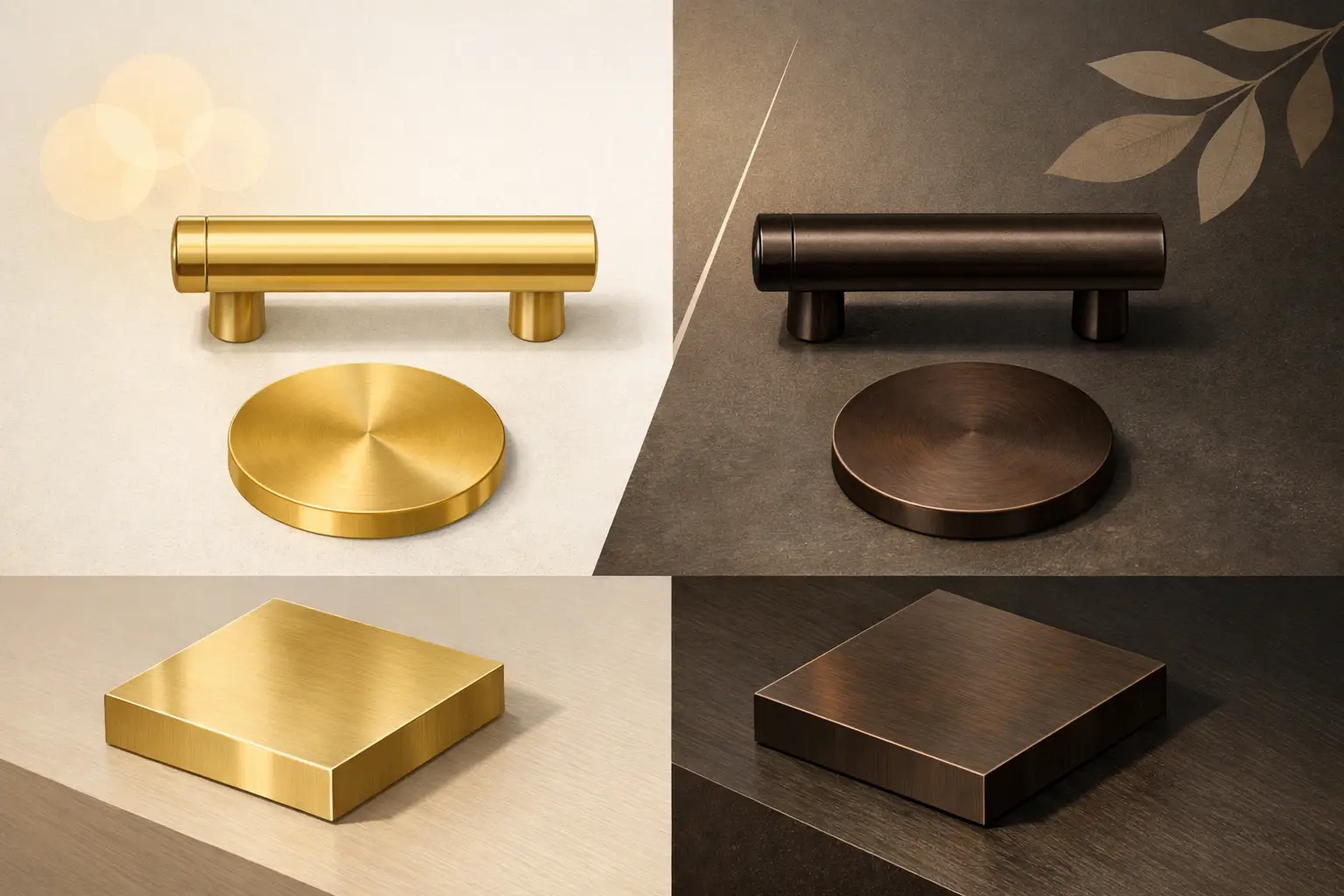
A warm metal finish can change the entire character of a room. Brass versus bronze finishes is not simply a choice between light and dark. Each brings its own undertone, reflectivity, aging pattern, and sense of visual weight to a custom range hood, bar top, tabletop, backsplash, or decorative wall feature.
For a tailored interior, the right decision begins with how the metal will live in the space. A softly aged bronze surface can ground a dramatic kitchen or hospitality bar. A brushed brass element can introduce light and polish without relying on a high-gloss look. The best choice is the one that supports the architecture, the surrounding materials, and the level of patina you want to welcome over time.
Brass Versus Bronze Finishes at a Glance
Brass is an alloy made primarily from copper and zinc. Its familiar color range runs from clear golden yellow to softer antique gold, depending on the specific alloy and finish process. It often reads as bright, inviting, and refined, even when it is brushed, antiqued, or darkened at the edges.
Bronze is generally made from copper with tin and, in some formulas, other elements. It tends to carry more red, brown, and umber depth than brass. Bronze can feel traditional, sculptural, industrial, or quietly contemporary depending on its texture and patina. Its lower reflectivity gives it a grounded presence that works beautifully with natural wood, stone, plaster, and darker cabinetry.
In custom architectural metalwork, the terms brass and bronze may also describe a finish appearance rather than a solid material throughout. The base metal, fabrication method, texture, patina, and protective topcoat all affect the final result. That is why a material sample is far more useful than choosing from a small digital color swatch.
The Color Story: Bright Gold or Layered Warmth
Brass usually brings more visible light into a composition. Polished brass has a crisp, luminous quality, while satin and brushed brass soften the reflection into a velvety glow. In a kitchen with white oak cabinetry, honed stone, or creamy painted finishes, brass can add warmth without overwhelming the palette.
Bronze offers a more layered color story. It may appear deep brown from across the room, then reveal coppery, golden, or greenish notes along the edges and in the texture. This complexity gives bronze a natural connection to hand-finished wood, richly veined stone, blackened steel, and aged leather.
Neither finish is inherently warmer in every setting. A golden brass can feel bright and fresh, while a dark bronze can feel more intimate and enveloping. If a room has limited daylight or a cool palette, brass may provide welcome lift. If the goal is to create contrast against pale materials or add permanence to an expansive room, bronze often delivers more visual depth.
Consider the Undertones Already in the Room
The most successful metal selections do not compete with the undertones nearby. Brass often pairs naturally with cream, camel, warm white, walnut, rift-cut oak, and marble with gold or honey veining. Bronze is especially effective beside charcoal, espresso wood, smoky glass, slate, deep green, and stones with brown, rust, or graphite movement.
That does not mean brass belongs only in light rooms or bronze only in dark ones. A dark bronze backsplash can create a striking focal point in a white kitchen. A restrained brushed brass range hood can bring a tailored point of light to dark cabinetry. The difference lies in the intended contrast and the amount of metal used.
Reflectivity Changes the Mood
Finish sheen matters as much as metal color. A polished brass surface catches light and reflects its surroundings, giving a compact space more animation. It can be an excellent choice for decorative wall panels, furniture details, and carefully considered accent pieces where a lively finish is part of the design intent.
A brushed, satin, or antiqued brass finish provides a quieter alternative. It retains the recognizable golden character of brass but reduces glare and can make everyday marks less apparent than a mirror-like surface.
Bronze is often selected for its more restrained reflection. A hand-finished bronze top can have subtle variation that feels tactile rather than glossy. On a substantial dining table, reception counter, or bar top, that lower sheen can help a statement surface feel composed rather than flashy.
For larger custom pieces, ask how the finish will appear under the actual lighting conditions. Warm LEDs can intensify brass, while cool light may pull out gray or brown notes in bronze. Natural daylight also changes the reading of both metals throughout the day.
Patina Is Part of the Design, Not a Flaw
Copper-based metals respond to air, moisture, skin oils, and use. This is part of their appeal. Unlike a printed metallic coating, real metal can develop character that makes a custom surface increasingly individual.
Brass may deepen from bright gold toward richer amber or brown tones. Bronze may develop darker areas, warm highlights, and subtle shifts that emphasize a hammered or textured surface. The rate and appearance of change depend on the alloy, the environment, exposure to water, and whether the metal is left living or protected with a finish system.
A living finish is a strong choice for clients who appreciate variation. It can be especially compelling on decorative panels, furniture, and architectural accents where the evolving surface is part of the story. It requires comfort with the fact that no two areas will age in precisely the same way.
If a more consistent appearance is preferred, a protective coating can help preserve the intended color and limit oxidation. This is often practical for frequently used surfaces, but it does not make metal maintenance-free. The right approach depends on the application and how much natural change you want to see.
Choosing for Countertops, Bars, and Tabletops
A finish that looks beautiful on a cabinet pull may behave differently on a full-size surface. Countertops, bar tops, and tabletops are touched, cleaned, and exposed to spills far more often than decorative metalwork. Their finish needs to suit both the visual ambition and the daily rhythm of the space.
Bronze is a natural fit for large hospitality and entertaining surfaces because it carries visual weight and can develop a rich, collected look with use. It works particularly well for bars, communal tables, and dramatic islands where the metal is meant to be a defining material.
Brass can be equally memorable, especially when a project calls for a lighter, more tailored expression. A muted brass finish on a table or bar can pair beautifully with upholstered seating, pale wood, and refined stone. For broad horizontal surfaces, a brushed or patinated treatment is often more forgiving than a highly polished finish.
In either metal, texture has practical value. Hammered, softly brushed, or hand-worked surfaces diffuse reflections and make natural variation feel intentional. A smooth polished surface has a more formal look, but it asks for more regular attention if the goal is to maintain an even appearance.
Care Expectations Before You Choose
Metal care should be discussed before fabrication, not after the piece arrives. The wrong cleaner can damage a protective coating, alter a patina, or create uneven shine. Most finished metal surfaces benefit from gentle cleaning with a soft cloth, mild soap when needed, and prompt drying.
Avoid abrasive pads, harsh chemicals, and aggressive metal polishes unless the specific finish is intended to be renewed that way. Citrus, vinegar, and acidic spills should not be left sitting on a metal surface. In high-use settings, using trays, coasters, and thoughtful cleanup habits helps retain a more consistent finish.
There is no universally better answer between a living metal and a protected finish. A family kitchen that sees constant activity may benefit from a finish designed for easier day-to-day care. A private cocktail bar or statement dining table may be the ideal place to embrace the marks and tonal shifts that create authentic patina.
Make the Metal Part of a Complete Material Palette
Brass and bronze do not need to match every fixture in a room. In fact, an overly matched metal scheme can make a carefully designed space feel flat. What matters is that the finishes share a believable relationship through undertone, sheen, texture, or repeated detail.
For example, a bronze bar top can sit confidently with aged brass lighting if both carry warm, softly burnished notes. A brushed brass backsplash may work beside dark bronze cabinet hardware when the brass is used as the focal metal and the bronze acts as a framing element. The contrast should look deliberate, not accidental.
At Brooks Custom, each custom metal project begins with the practical questions that shape the finished piece: intended use, dimensions, surrounding materials, desired texture, and the amount of change a client is comfortable seeing over time. That conversation turns a metal preference into a surface made to your exact needs.
A sample held beside the actual cabinetry, stone, wood, and paint will reveal more than a photograph ever can. Choose the finish that feels right in the room’s real light, then give it the care and room to develop the character that made you choose real metal in the first place.