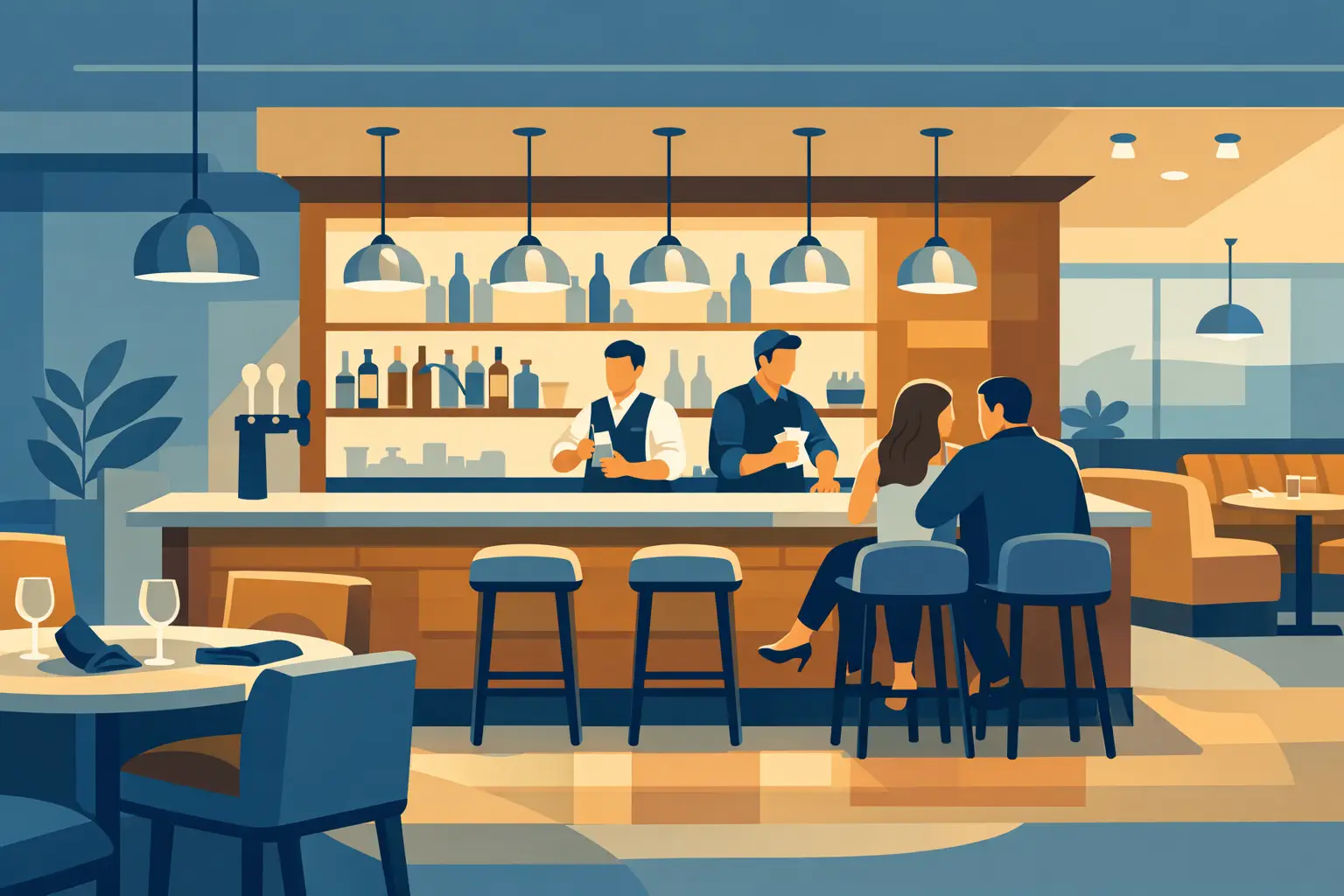
A successful restaurant bar renovation is felt before it is analyzed. Guests notice the warmth of a wood grain beneath their hands, the quiet glow of aged metal, and the sense that the bar was made for this room alone. For operators, that visual impact has to coexist with a more demanding reality: spills, condensation, glassware, cleaning routines, crowded service, and years of daily use.
The bar top is often the most visible working surface in the building. It deserves the same care as the menu, lighting, and back-bar presentation. A custom surface gives a hospitality space a clear point of view while meeting the practical needs of a high-traffic environment.
Start a Restaurant Bar Renovation With the Guest Experience
Before choosing a material, consider what the bar needs to communicate. Is it the centerpiece of a refined dining room, a fast-moving neighborhood gathering place, a hotel lounge, or an intimate cocktail program? Each setting calls for a different relationship between texture, color, edge detail, and durability.
A broad-plank wood bar can make a large space feel grounded and welcoming. A dark stained wood surface may suit a classic steakhouse or private club, while a lighter oak finish can bring ease to a café or coastal concept. Live edge wood introduces an organic profile that feels especially at home in restaurants built around local ingredients, open-fire cooking, or a strong connection to nature.
Metal offers a different kind of presence. Zinc, bronze, copper, pewter, and stainless steel can create a polished, historic, industrial, or distinctly contemporary mood depending on the finish. Their reflective qualities also interact beautifully with low lighting, back-bar bottles, and glassware. The right material should not simply match the décor. It should help guests understand the experience they are about to have.
Choose Materials for the Pace of Service
A bar top is not a residential dining table. It encounters moisture, citrus, alcohol, heat, abrasion, and frequent cleaning throughout the day. Material selection should balance the appearance you want with the maintenance habits your operation can realistically support.
Wood Creates Warmth With the Right Protection
Wood remains one of the most compelling choices for restaurant bars because no two boards carry the same grain, movement, or character. Wide-plank wood, butcher block, and live edge tops can be made to exact lengths, widths, and thicknesses, giving a bar a substantial, furniture-quality presence.
For hospitality use, the finish is as important as the species. A protected wood surface can offer the rich look guests expect while standing up to everyday use. Brooks Custom’s proprietary Marine Finish is designed to create a stain-resistant, incredibly durable layer of protection for selected wood products. That makes wood a practical consideration for operators who want natural material without treating every splash as a crisis.
Wood does require sensible care. Standing water should not be left in place, and staff should use cleaning products appropriate for the finish. In return, a well-made wood top develops a visual depth that generic commercial surfaces rarely achieve.
Metal Delivers Character That Improves With Age
Metal bar tops are especially effective when a project calls for material authenticity and a memorable tactile experience. Zinc has a soft, timeworn appearance that can work in both traditional and modern settings. Bronze and copper bring warmth and depth, often developing a natural patina that becomes part of the story. Pewter offers a muted, elegant surface, while stainless steel provides a crisp, clean-lined option for contemporary hospitality environments.
Patina is a choice, not a flaw. Some restaurant owners want a metal surface that records years of service and develops more personality over time. Others prefer a more consistent appearance and should select their metal and finish accordingly. Discussing that preference early helps ensure the finished top will look right not just on opening night, but after thousands of guest interactions.
Engineered Concrete and Glass Offer a Distinctive Direction
Engineered concrete can bring architectural weight to a bar without losing the opportunity for custom color, shape, and edge detail. It suits spaces with a sculptural, minimal, or industrial point of view. Specialty glass can be equally dramatic, especially when paired with lighting or layered with other materials to create visual depth.
These surfaces can make a strong design statement, but they should be selected with the full environment in mind. A visually bold bar needs supporting materials that keep the room from feeling overworked. Often, the most successful projects pair a statement top with restrained cabinetry, seating, and wall finishes.
Specify the Details Guests Notice
The most convincing custom bar tops are not defined by material alone. Their proportions and construction details shape how guests interact with the space.
Thickness affects perceived quality immediately. A thicker profile can make a bar feel established and substantial, especially in a large restaurant or hotel setting. A slimmer profile may be appropriate for a modern wine bar or a compact counter where visual lightness matters. Neither approach is automatically better. The right scale depends on the room, seating, and surrounding millwork.
The edge is another important decision. A softened edge feels approachable and comfortable for guests seated for a long meal. A more pronounced profile can add formality or historic character. Custom dimensions also matter at corners, curves, returns, and transitions, where standard surfaces tend to reveal their limitations.
Consider the visual hierarchy as well. In a small room, a highly figured wood slab or luminous metal top may be the dominant feature. In a larger venue with a dramatic back bar, the top may need to provide a quieter, grounding element. A material sample viewed under the restaurant’s actual lighting can help clarify this balance before fabrication begins.
Plan for Operations, Not Just Opening Night
A beautiful bar is only successful if it supports the people working around it. Think through where drinks are built, where guests rest their hands, how glassware moves across the surface, and which areas will receive the most traffic. The front edge, service stations, and corners often see the hardest use and deserve careful material and finish consideration.
It is also wise to establish a simple care plan before the bar enters service. Staff should know which cleaners are compatible with the surface, how quickly spills should be addressed, and when to avoid abrasive pads or harsh chemicals. This is not about creating a burdensome maintenance routine. It is about protecting a major design investment with consistent, straightforward habits.
For multi-location concepts, custom fabrication can also create consistency without making every location feel identical. The same core material palette can be adapted in size, shape, or finish to respond to each building. That approach preserves brand recognition while allowing individual spaces to feel considered rather than copied.
Bring the Material Story Together
The strongest restaurant bar renovation projects treat the bar top as a central architectural furnishing, not an afterthought. It is where guests gather, where service begins, and where a restaurant’s material identity becomes tangible.
With nearly five decades of experience across wood, metal, engineered concrete, and specialty glass, Brooks Custom creates made-to-order surfaces for hospitality spaces that need more than a standard solution. From a tailored butcher block top to an artisan-cast metal statement piece, the goal is the same: a surface made to your exact needs and built for the life of the room.
Choose the material that fits your service style, welcome its natural character, and give it the attention a guest-facing centerpiece deserves. A well-considered bar does more than refresh a room. It gives people a reason to pull up a seat and stay awhile.