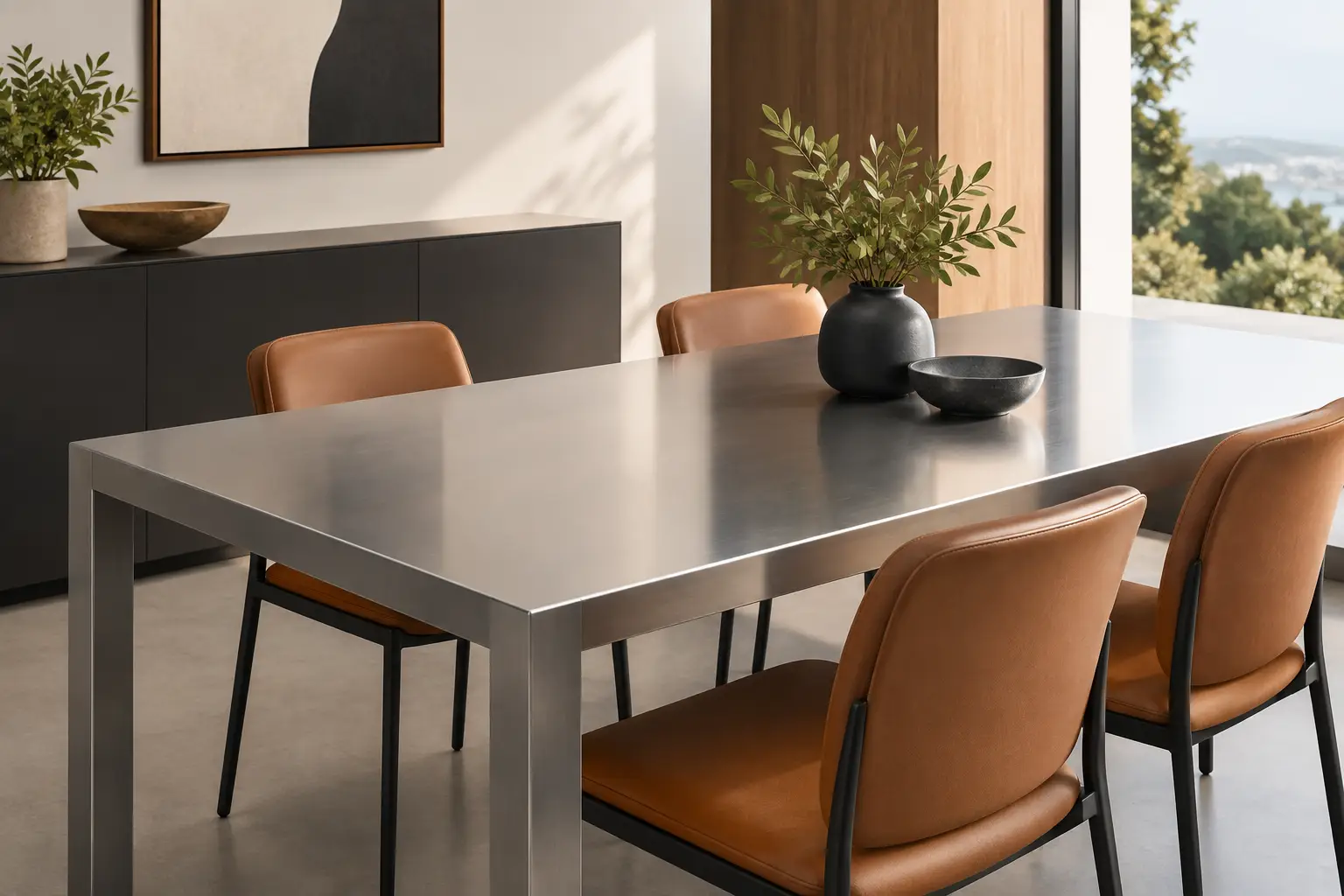
A dining table is asked to do more than hold a place setting. It gathers family, anchors a breakfast nook, sets the tone in a restaurant, and often becomes the most touched surface in a room. Custom metal tabletops meet that daily demand with a material presence that is difficult to imitate: cool, substantial, reflective, and entirely individual.
Unlike factory-finished furniture, a handcrafted metal surface is made to your dimensions, edge profile, base, and intended use. The result can be quietly tailored for a refined dining room or designed to make an unmistakable statement in a bar, café, or hospitality space.
Why Metal Tabletops Feel Distinctly Custom
Metal has visual depth that changes with the light. A zinc top may appear softly mottled and silvery in the morning, then take on richer shadows at night. Copper carries warmth and evolves over time. Bronze can feel architectural and grounding, while stainless steel brings a clean, crisp finish to contemporary spaces.
That movement is part of metal’s appeal. Hand-applied finishes, patina variation, subtle tooling marks, and natural tonal shifts make each piece feel authored rather than selected from a shelf. For homeowners and designers who want a room to feel considered without feeling overdone, a custom tabletop provides that balance.
Metal also works across design styles. A darkened bronze table can complement walnut cabinetry, leather seating, and traditional millwork. A bright zinc top can bring a relaxed European bistro character to a kitchen or sunroom. Stainless steel belongs naturally in a loft, modern dining space, or high-use commercial setting, yet can be softened with a wood or upholstered base.
The right choice depends on the look you want, how the table will be used, and whether you welcome a living finish that develops character with time.
Choosing the Right Metal for Your Tabletop
Every metal has its own color, behavior, and relationship to wear. Samples are especially valuable here because finish photographs cannot fully show the depth, texture, and tonal variation of real metal.
Zinc: Softly Aged and Approachable
Zinc tabletops are valued for their pale gray tone and naturally aged appearance. They suit kitchens, casual dining areas, bakeries, cafés, and restaurant tables where a welcoming, collected look is the goal. Zinc develops a patina through use, so fingerprints, water marks, and minor shifts in tone are often part of its charm rather than flaws to eliminate.
For a client who wants a surface to look exactly the same year after year, zinc may not be the best fit. For someone who appreciates materials that gain personality through daily life, it is hard to match.
Copper: Warmth With a Living Finish
Copper brings immediate warmth to a tabletop. Its orange-red glow pairs beautifully with dark wood, deep green, navy, charcoal, and creamy neutral interiors. It can be finished to feel bright and polished, gently aged, or richly patinated for a more dramatic effect.
Copper is naturally expressive. It will respond to touch, moisture, and time, especially when it is allowed to develop a living finish. This makes it a compelling choice for statement dining tables, tasting rooms, intimate bars, and spaces where material change is welcomed as part of the design.
Bronze and Pewter: Rich, Refined, and Architectural
Bronze offers depth and weight. Depending on the finish, it can range from warm brown to dark, nearly black tones with burnished highlights. It is often selected for formal dining rooms, executive spaces, boutique hospitality projects, and furniture designed to feel permanent.
Pewter has a softer, more muted gray character. It can feel elegant without the cool sharpness of stainless steel, making it a strong choice for transitional interiors. Both bronze and pewter offer a refined alternative when a homeowner or designer wants the character of metal with a more restrained palette.
Stainless Steel: Clean Performance and Contemporary Style
Stainless steel is a practical favorite for active environments. Its clean silver finish, resistance to corrosion, and straightforward care make it well suited to restaurant tables, commercial gathering spaces, work tables, and modern residential interiors.
Its appearance can be tailored through finish selection. A brushed surface feels softer and does a better job of disguising everyday marks than a highly polished finish. For projects where sanitation, regular cleaning, and a contemporary visual language are central concerns, stainless steel is often the most direct answer.
Design Details That Change the Finished Piece
Material selection is only the beginning. A tabletop becomes truly custom when its proportions and details respond to the room and the people using it.
Start with scale. A generous communal dining table needs enough surface area for place settings, serving pieces, and conversation without making guests feel separated. A small café table benefits from a compact diameter and a base that keeps legroom open. Conference and hospitality tables often need carefully planned lengths that support circulation while making a strong visual impression.
Shape affects both function and mood. Rectangular tabletops feel structured and are ideal for long rooms and larger groups. Round tables encourage conversation and fit naturally into breakfast areas, banquettes, and tighter restaurant layouts. Racetrack and oval forms soften a long table’s footprint while retaining generous seating capacity.
Edge treatment deserves equal attention. A clean square edge reads modern and tailored. A more substantial built-up edge gives a table visual weight, especially on a large dining or communal table. The edge can also create a meaningful transition between the metal top and its base, whether that base is wood, steel, or a custom furniture structure.
Consider the surrounding materials as well. Metal tabletops are especially effective when they create contrast: warm oak against zinc, dark stained wood beneath bronze, soft boucle seating beside brushed stainless steel. Repeating the metal in a range hood, backsplash detail, lighting, hardware, or bar front can make the room feel connected without becoming overly matched.
What Daily Use Looks Like
No surface is completely maintenance-free, and the honest choice is to select a material whose care requirements suit the way you live or operate. A family table, a busy restaurant, and a decorative occasional table ask different things of a finish.
For most metal tops, routine care is simple: wipe spills promptly with a soft cloth, use mild soap and water when needed, and dry the surface rather than allowing water to sit. Avoid abrasive pads, harsh cleaners, and acidic products unless they are specifically recommended for the selected metal and finish. These can alter patina, dull a protective finish, or create uneven areas.
Use coasters and trivets for hot cookware, cold sweating glasses, and acidic foods or drinks. This is particularly wise for zinc and copper, where interaction with moisture and acidity can leave marks. Those marks may become part of a living finish, but they should be anticipated rather than mistaken for damage.
In commercial settings, maintenance should be planned around service realities. A restaurant table may need a finish and metal selection that can handle frequent cleaning, rapid turnover, and contact with glassware, condiments, and hot plates. A custom fabricator can help align the surface with those demands before production begins.
Residential and Hospitality Uses
Metal tabletops are not limited to dining furniture. Their durability and visual character make them useful across a wide range of spaces. In a home, they can define a kitchen island table, breakfast table, game table, home bar, or outdoor-adjacent entertaining area with appropriate material and finish considerations.
In hospitality, metal works especially well where guests interact directly with the surface. Bar tops, high-top tables, host stands, communal tables, café seating, and private dining tables all benefit from a material that signals intention and quality at first touch.
Brooks Custom fabricates metal surfaces to exact project needs, making it possible to coordinate tabletop dimensions, material, finish, and edge details with the larger design. That level of control matters when a surface must fit a specific banquette, base, room plan, or brand aesthetic.
A Surface That Earns Its Place
The best tabletop is not simply the one that looks good in a showroom photograph. It should suit the pace of the space, support the people around it, and still feel compelling after years of meals, meetings, celebrations, and daily use.
Choose metal when you want a surface with substance, variation, and a point of view. With the right material and a made-to-order approach, the table becomes more than furniture. It becomes the piece people remember sitting around.