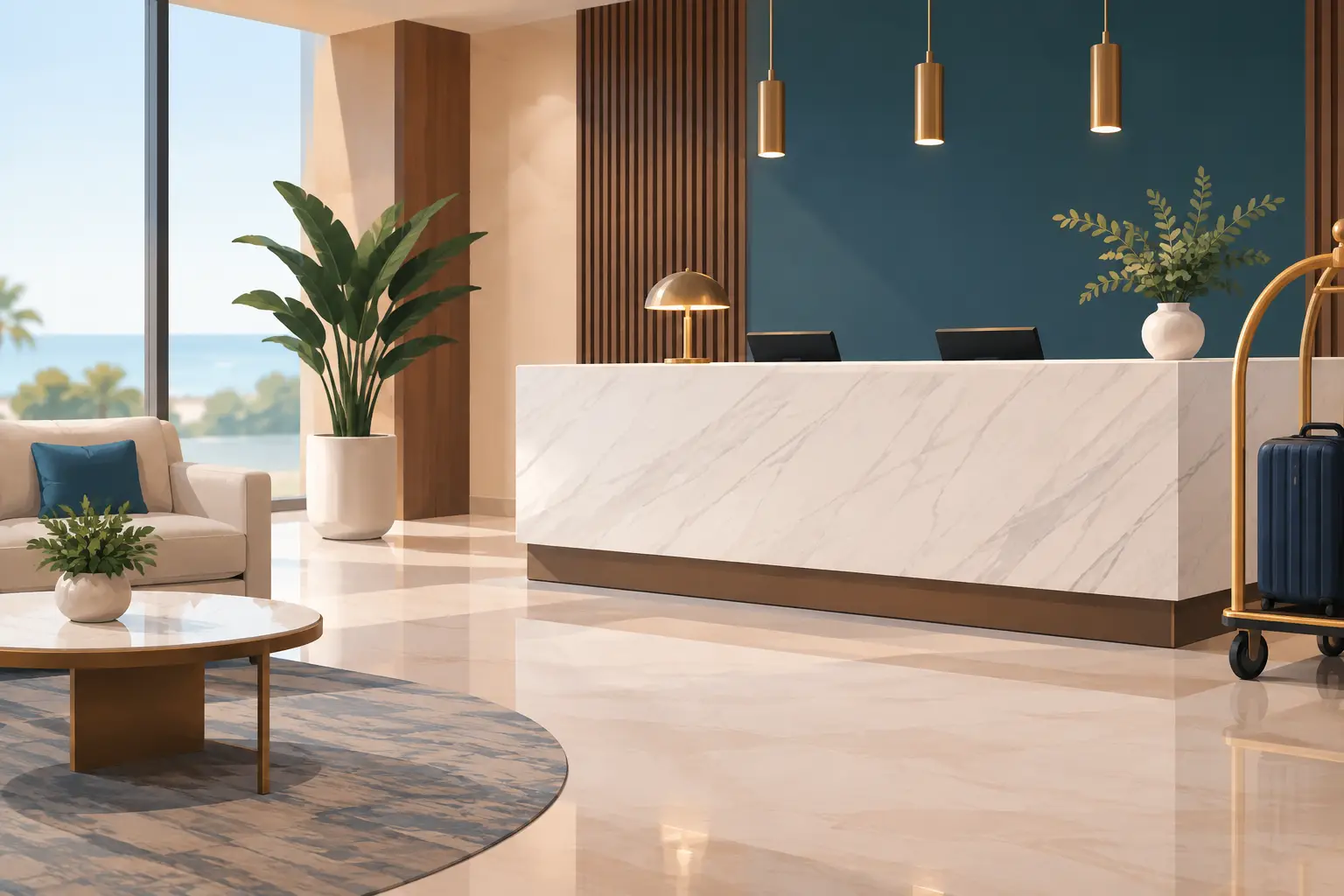
A guest may not know whether a bar top is zinc, sealed wood, or artisan-cast metal. They will notice how it feels under a glass, how it catches the light, and whether it makes the room feel considered. That is the quiet work of hospitality surfaces: they support constant use while giving a restaurant, hotel, café, or private club a point of view.
For guest-facing spaces, a surface is never merely a finish selection. It is part of the service experience. A tabletop sets the tone for a long dinner. A reception desk establishes confidence at arrival. A bar top becomes the place where strangers settle in, celebrations begin, and regulars claim a familiar seat.
What Hospitality Surfaces Must Do
Commercial settings ask more from a surface than most residential rooms. The material must suit the visual concept, but it must also stand up to frequent cleaning, shifting glassware, food service, moisture, and the ordinary impact of a busy room. The best choice is rarely the material that is simply hardest. It is the one that balances character, maintenance expectations, and the way the space will actually be used.
A bustling cocktail bar has different demands than a quiet hotel lounge. A fast-casual restaurant may favor an easy-to-clean, consistent material across dozens of tables. A chef-driven dining room may choose wood or metal precisely because the material develops a visible history over time. Neither approach is more correct. The right decision begins with an honest understanding of daily service.
Scale matters, too. A single dramatic live-edge communal table can anchor a dining room, while smaller tables may need a more repeatable format for efficient layout changes. A long custom bar top may require a material and construction approach that maintains visual continuity across its full length. Custom fabrication makes those choices possible without forcing the design around stock sizes.
Choose the Material for the Experience
The most memorable hospitality interiors use material intentionally. Texture, reflectivity, edge detail, and color all influence whether a room feels tailored, relaxed, energetic, or quietly luxurious.
Wood brings warmth and familiarity
Wide-plank wood, butcher block, and live-edge tops give hospitality spaces a natural warmth that guests recognize immediately. Wood works especially well for restaurant tables, communal dining surfaces, coffee counters, host stands, and lounge furnishings where the goal is to make people feel comfortable enough to stay awhile.
Species, grain selection, stain color, and edge profile can shift wood from rustic to refined. A clean, square-edge walnut top feels very different from a softly shaped, character-rich oak slab. For high-use applications, a durable protective finish is essential. Brooks Custom’s Marine Finish is designed to create a stain-resistant, incredibly durable layer of protection for selected wood surfaces while preserving the material’s depth and character.
Wood does require care, and that is part of the trade-off. It is a living material with an honest, tactile quality. In the right setting, its gradual patina is not a flaw to hide but evidence that the space is being used and enjoyed.
Metal creates an immediate signature
Zinc, bronze, copper, pewter, stainless steel, and artisan-cast metal make a strong first impression without relying on excessive ornament. Their appeal is partly visual and partly physical: metal feels cool, substantial, and precise. It can be quietly elegant or deliberately dramatic depending on the finish, edge treatment, and surrounding materials.
Zinc bar tops remain a distinctive choice for cocktail bars, breweries, and restaurants seeking an established, gathering-place character. Bronze and copper can bring warmth and depth to a reception desk, serving counter, or private dining surface. Stainless steel offers a cleaner, more contemporary expression for spaces where crisp lines and high-performance utility are central to the design.
Most metals will evolve over time. Fingerprints, subtle marks, and patina may become part of the finish story. That makes metal an excellent choice for operators who appreciate materials that gain character rather than remain visually static. If a perfectly uniform appearance is the priority, a different finish may be more appropriate.
Engineered concrete adds weight and restraint
Engineered concrete offers a grounded, architectural look for communal tables, coffee bars, host stations, and statement counters. It can complement industrial interiors, modern hotels, and restaurants built around a restrained material palette. Its visual weight pairs naturally with wood, leather, stone, and metal.
The appeal is not only the color. Concrete has depth, slight movement, and a hand-crafted presence that gives a surface authority. Because every project is made to order, dimensions, thickness, color direction, and detailing can be developed around the room rather than selected from a limited set of standard options.
Glass keeps the room light
Specialty glass is useful when a hospitality setting needs reflectivity, color, or visual lightness. It can be especially effective for tabletops, decorative wall components, and accents where the goal is to add dimension without adding visual heaviness. A carefully selected glass surface can pick up ambient lighting, reveal a supporting base, or introduce a subtle layer of color.
Glass is not always the practical choice for every high-turnover dining room. Yet in a hotel lounge, private club, or reception setting, it can deliver a polished result that other materials cannot quite replicate.
Design the Details Guests Touch
The details people touch often carry more weight than the details they only see. A comfortable edge on a bar top matters during a two-hour conversation. The height and overhang of a communal table influence how naturally guests gather. The transition between a metal top and a wood base can determine whether the finished piece feels intentionally composed.
This is where custom work earns its place. A hospitality surface can be made to the exact length, depth, thickness, and material combination the design calls for. It can include a particular edge profile, a carefully matched stain, a hand-applied metal finish, or a one-of-a-kind live edge. These choices do not need to be extravagant to be meaningful. Even a modest adjustment in proportion can make a built element feel at home in its setting.
For multi-surface projects, consistency is equally valuable. A restaurant may carry the same wood tone from its host stand to its dining tables and bar shelving. A hotel may repeat bronze accents from the reception desk through lounge tables and decorative wall elements. The result is not sameness. It is a material language that gives guests a sense of place.
Plan for Service, Not Just Opening Night
A strong hospitality design has to look right after the first rush, the first holiday season, and the thousandth wipedown. Before selecting a surface, consider who will clean it, what products they use, how often the furniture moves, and whether the venue embraces patina or expects a more consistent appearance.
Ask practical questions early. Will drinks regularly sit directly on the surface? Will plates, condiment caddies, or point-of-sale equipment remain in one location? Does the bar host busy standing-room events? Are tables frequently rearranged for private parties? These answers help determine the appropriate material, thickness, protective finish, and construction details.
It is also wise to think beyond the tabletop. A memorable space often depends on the relationship between several crafted elements: the bar top, dining tables, counter fronts, backsplashes, decorative wall components, and furnishings. Designing these pieces as a connected family creates greater impact than treating each one as an isolated purchase.
Custom Hospitality Surfaces Start With a Clear Brief
The most productive conversations begin with the atmosphere you want guests to feel, followed by the realities of service. Reference images, floor plans, dimensions, material samples, and a description of how the room operates all help turn an initial idea into a made-to-order piece. For commercial projects, it also helps to identify where a surface will receive the most contact and where a more decorative material can take center stage.
With nearly five decades of craftsmanship across wood, metal, engineered concrete, and glass, Brooks Custom can help translate that brief into surfaces made for the way your space welcomes people. The goal is not simply to furnish a room. It is to create the bar, table, counter, or wall element guests remember when they decide to come back.