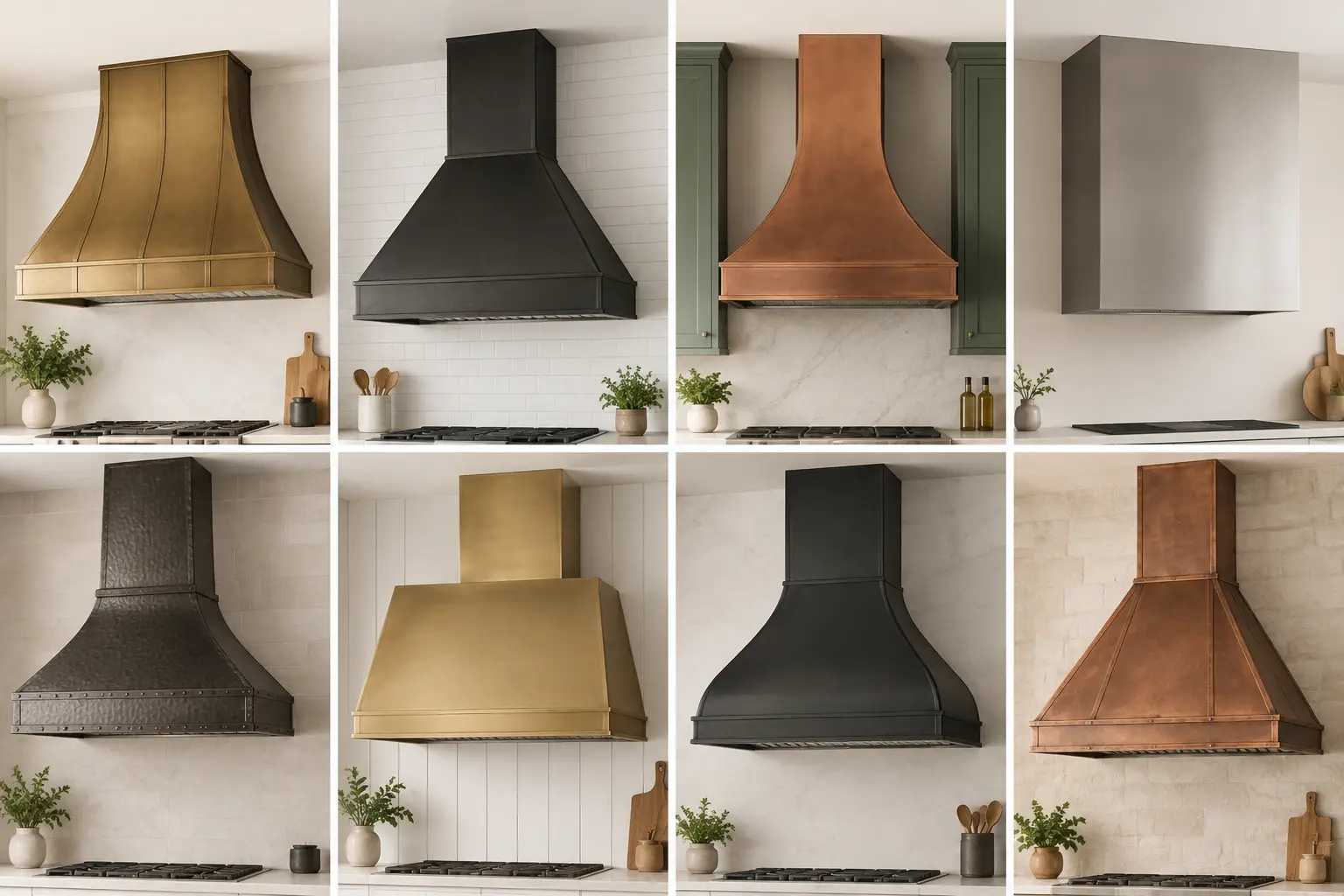
A range hood occupies one of the most visible stretches of wall in a kitchen. When it is made in metal, it can bring warmth, depth, and a sense of permanence to cabinetry that might otherwise feel familiar. These artisan metal hood examples show how material, shape, scale, and finish can turn a functional kitchen element into a defining architectural feature.
The most successful choice is rarely about selecting the boldest metal. It is about choosing a hood that relates to the room’s cabinetry, hardware, lighting, backsplash, and the way the kitchen will be used. A hand-crafted hood gives homeowners and designers the freedom to make those relationships intentional.
8 Artisan Metal Hood Examples to Consider
1. Aged Copper Bell-Shaped Hood
A bell-shaped copper hood brings softness to a kitchen with clean-lined cabinetry. Its curved lower profile and gently tapered body feel substantial without appearing heavy, particularly above a wide range or cooktop.
Copper begins with a warm, recognizable glow, then develops character as the surface changes over time. Depending on the finish, it may deepen toward brown, russet, or softly varied tones. That natural evolution is part of its appeal, but it also means copper is best for clients who appreciate a living finish rather than a perfectly uniform surface.
This style works especially well with painted cabinetry, wide-plank wood elements, natural stone, and aged brass hardware. A decorative band near the base can add definition, while a smooth body keeps the overall look refined.
2. Hammered Copper with a Strong Patina
For a hood with more texture and visual movement, hammered copper offers a distinctly hand-worked surface. Each impression catches light differently, giving the metal dimension from across the room as well as up close.
A darker patina can make a hammered copper hood feel established from the first day. It pairs naturally with traditional kitchens, rustic modern homes, lodge-inspired interiors, and entertaining spaces with wood beams or substantial stonework.
Texture is a meaningful design decision here. A heavily hammered finish can become the main focal point, so surrounding selections should provide some visual restraint. Simple cabinet door profiles, a quieter backsplash, or understated pendants allow the hood to hold its place without competing with every surface around it.
3. Zinc Hood with Soft Gray Variation
Zinc has a quieter presence than copper, yet it is far from plain. Its cool gray surface often carries delicate tonal variation that gives a kitchen depth without introducing a highly reflective finish.
A zinc hood is an excellent choice when a client wants a custom metal statement that feels tailored rather than ornate. A simple tapered chimney shape, straight apron, and lightly softened edges can suit transitional, European-inspired, and contemporary farmhouse kitchens.
The material is particularly effective beside warm white cabinetry, oak, walnut, black accents, and honed stone. Zinc can also bridge mixed finishes beautifully. In a kitchen with warm brass hardware and stainless appliances, its neutral character helps both materials feel at home.
4. Dark Bronze Hood with Defined Seams
Bronze offers depth, warmth, and a more formal presence. A dark bronze hood with visible seams or rivet detailing can give a kitchen an architectural quality, especially when it is designed as a tailored, paneled form.
This example suits kitchens with strong contrasts: creamy cabinetry with dark window frames, pale stone with black fixtures, or richly colored cabinets with warm wood flooring. The bronze brings visual weight above the range and can connect to dark metal lighting or furniture details elsewhere in the room.
Seams and rivets should be used with purpose. They can reinforce an industrial or old-world direction, but too much ornament can make a compact kitchen feel crowded. On a smaller wall, a clean bronze surface with one carefully placed band may be the better choice.
5. Brushed Stainless Steel for a Clean Architectural Look
Stainless steel remains a strong option for kitchens where performance-minded materials and crisp lines lead the design. A custom brushed stainless hood can be made with a sharp-edged canopy, an angular chimney, or a wide low-profile silhouette that emphasizes the range below.
Unlike highly polished metal, brushed stainless steel has a directional texture that softens reflections and gives the surface a more considered appearance. It works naturally with professional-style ranges and contemporary cabinetry, but it can also bring contrast to warm wood kitchens.
The trade-off is visual temperature. Stainless steel can feel cooler than copper, bronze, or zinc, especially in an all-white room. Bringing in wood bar stools, a natural stone backsplash, or warm lighting keeps the kitchen from feeling overly clinical.
6. Blackened Steel Hood for Modern Contrast
A blackened steel hood creates drama with restraint. The finish can range from charcoal and deep brown to nearly black, often with subtle variation that prevents the surface from looking flat or factory-made.
This approach is well suited to modern kitchens with light oak, rift-cut white oak, pale stone, or softly painted cabinetry. It also gives a dark range a visual anchor, making the cooking wall feel composed rather than fragmented.
A wide rectangular canopy in blackened steel can look striking over a large range. For a lighter effect, consider a narrow chimney that rises from a simple hood body. The first option reads bold and horizontal; the second emphasizes height and lets surrounding materials remain more visible.
7. Pewter Hood with a Vintage-Inspired Finish
Pewter has a silvery-gray tone that feels softer and more decorative than stainless steel. It is a natural fit for kitchens that draw on French country, English cottage, historic, or collected design influences without becoming overly formal.
A pewter hood may include a shaped apron, a curved canopy, or subtle ornamental straps. The key is proportion. Decorative details are most convincing when they follow the hood’s geometry instead of being added simply for effect.
Pair pewter with painted cabinetry in warm white, muted blue, sage, or charcoal. It also works well near unlacquered brass, antique bronze, or aged nickel hardware. The resulting palette feels layered, with each finish contributing a different kind of warmth.
8. Mixed-Metal Hood with a Custom Accent Band
A mixed-metal hood offers a controlled way to add contrast. For example, a zinc body can be finished with a bronze band, or a brushed stainless hood can include copper straps. The combination can echo other finishes in the kitchen and make a large hood feel more integrated with the room.
This option works best when the metal choices already appear elsewhere in small ways. A bronze band might relate to cabinet hardware, while the zinc body connects to a bar top or lighting fixture. Repeating the exact mix only once or twice usually creates a more polished result than scattering every finish throughout the space.
Mixed metal requires careful balance. If the cabinetry is already dramatic, the hood should remain simple in shape. If the room is quiet and tonal, a contrasting band or edge detail can become the element that gives the kitchen its identity.
How to Choose the Right Shape and Scale
Before choosing a finish, consider what the hood needs to do visually. A broad, low hood emphasizes the width of the range and works well in kitchens with long horizontal lines. A taller chimney hood can make ceilings feel more generous and gives the cooking wall a stronger vertical focal point.
The cabinet layout matters just as much. A hood positioned between tall pantry cabinets often benefits from a clean, disciplined profile. On an open wall, it can carry more sculptural presence because there is room for its silhouette to be appreciated.
Material sample review is useful because metals change noticeably with lighting. Copper may appear brighter near a sunny window, while zinc and blackened steel can reveal more texture under warm evening illumination. Viewing samples beside cabinet and backsplash selections helps ensure the undertones work together.
Details That Make a Custom Hood Feel Complete
The most memorable artisan metal hoods are often defined by small decisions: the width of an apron, the curve of a lower edge, the placement of a seam, or the amount of hand-applied texture. These details determine whether a hood feels sleek, historic, industrial, tailored, or quietly organic.
Consider the finish from normal viewing distance, not only at close range. A highly textured metal may look beautiful in a sample but read much busier across a full cooking wall. Conversely, a smooth finish can gain enough interest through shape, patina, and careful edge detailing.
Brooks Custom creates made-to-order metal range hoods in materials selected to support a specific kitchen vision. Whether the goal is warm aged copper, tailored zinc, dark bronze, or a clean stainless profile, custom fabrication makes it possible to choose dimensions and details that belong to the room.
A well-chosen hood does more than finish the space above the range. It gives the kitchen a center of gravity – one crafted element that makes the surrounding cabinetry, stone, and lighting feel intentionally brought together.