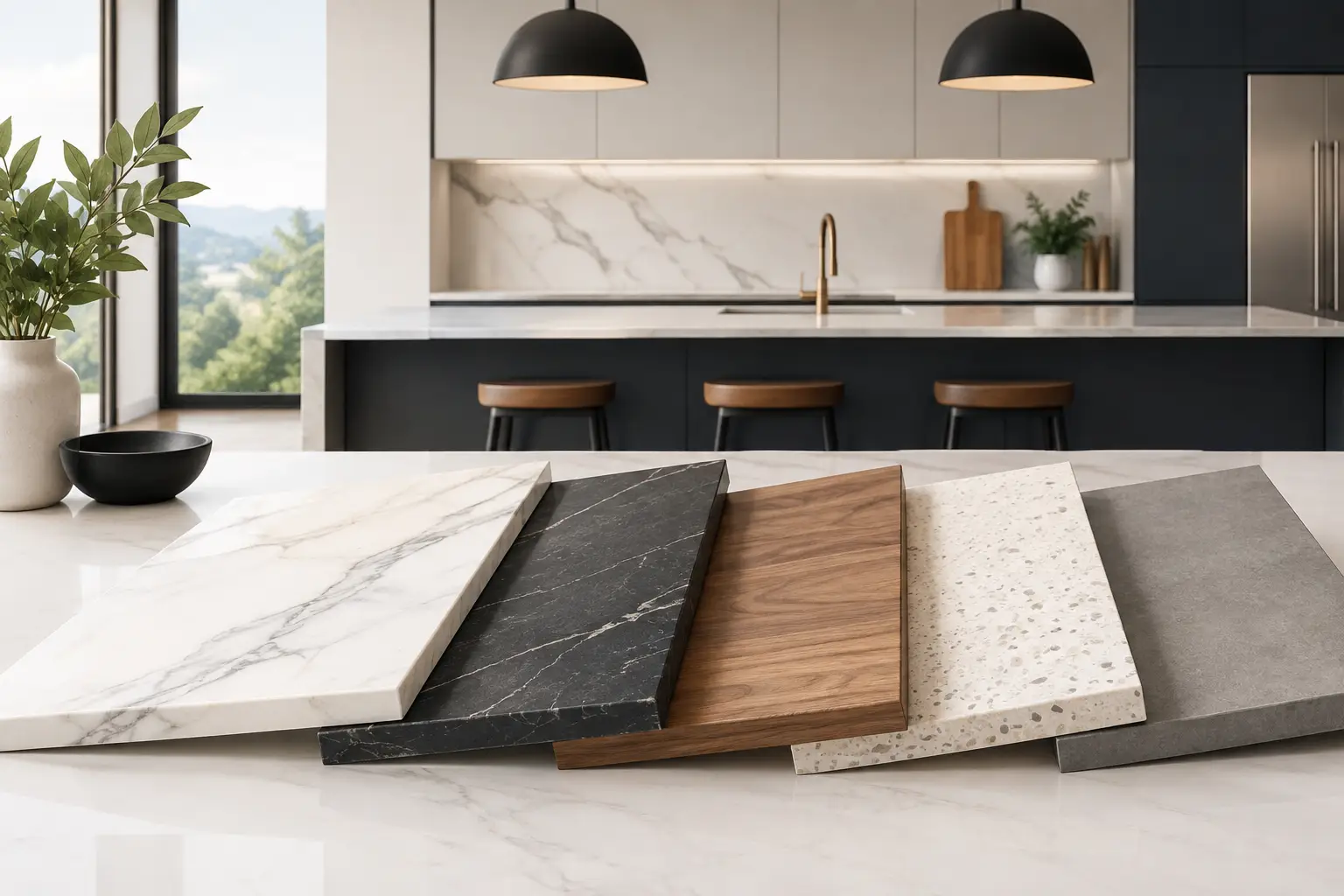
A surface is one of the first things people touch in a room. It catches morning light, carries the weight of daily preparation, and sets the tone for everything around it. The right countertop materials do more than complete a kitchen or bar – they make the space feel considered, personal, and made for the way it will be used.
For a quiet residential kitchen, that may mean the warmth and natural movement of wide-plank wood. For a restaurant bar, it may mean zinc with a living patina that becomes part of the guest experience. The best choice is not simply the hardest material or the most familiar one. It is the one that balances visual character, day-to-day performance, and the dimensions of your project.
Start With the Life Your Surface Will Lead
Before choosing a color, edge profile, or finish, consider what will happen on the surface every day. A family kitchen and a cocktail bar can both be beautiful, but they place very different demands on a top. One may need forgiving warmth for gathering, while the other needs a finish that stands up to frequent wiping, glassware, and high-volume service.
Use also shapes the design. A long dining tabletop benefits from a material with visual depth and a comfortable feel under the hand. A bathroom vanity may call for a clean, refined surface that works within a tighter footprint. A range hood or backsplash can introduce metal as an architectural focal point without asking it to perform like a work surface.
Custom fabrication gives you the freedom to make those distinctions. Thickness, grain direction, finish, sheen, edge treatment, and size can all be selected to support the room rather than force the room to suit a standard product.
Wood Countertops Bring Warmth and Individuality
Wood has a presence that manufactured surfaces cannot fully duplicate. Every board carries variation in grain, tone, and texture, so even a carefully selected species retains a sense of natural individuality. In kitchens, pantries, dining spaces, and hospitality settings, wood softens stone, tile, and metal while adding a tactile quality people notice immediately.
Wide-plank wood countertops are especially effective when the goal is a composed, furniture-like look. Long boards allow the grain to read clearly across the surface, creating a calm visual field that feels substantial without becoming heavy. They pair naturally with painted cabinetry, dark metal hardware, and architectural millwork.
Butcher block offers a different expression. Its construction highlights the end grain or edge grain of the wood, resulting in a hardworking, classic surface with a more rhythmic pattern. It is well suited to prep areas, islands, and tables where the material’s honest, functional character is part of the appeal.
Wood does require thoughtful care. Moisture should not be allowed to sit for extended periods, and a cutting surface will show the evidence of use over time. That is not always a drawback. Many homeowners prefer a surface that develops character rather than remaining visually unchanged. For projects that need added protection, a durable Marine Finish can provide stain resistance and long-term performance while preserving the warmth of real wood.
Live Edge Wood Makes the Material the Feature
Live edge surfaces retain the natural contour of the tree along one or more edges. The result can be dramatic, but it is not limited to rustic interiors. In a tailored modern room, a live edge dining table or bar top introduces a needed element of organic movement against clean cabinetry and structured architectural lines.
The key is proportion. A bold slab needs room to be seen, while a quieter grain and restrained base can make the same material feel more refined. Because each slab is distinct, live edge work is especially suited to projects seeking a true one-of-a-kind centerpiece.
Metal Countertop Materials Offer Patina and Precision
Metal surfaces bring an entirely different kind of character. They can be polished and reflective, softly brushed, darkened, aged, or allowed to change gradually with use. That range makes metal a natural choice for bars, hospitality environments, statement islands, fireplace surrounds, and custom range hoods.
Zinc is known for its cool gray tone and evolving patina. It has long been associated with European-style bar tops, where small marks and changes in tone become part of its lived-in appeal. It is a strong fit for those who appreciate materials that tell a story over time rather than stay perfectly uniform.
Copper offers more warmth. Its color can range from bright and lively to deep and aged, depending on the finish and how it is used. A copper bar top can become the visual heart of an entertaining space, while a copper backsplash or hood introduces richness without overwhelming the room.
Bronze and pewter create a more tailored, understated effect. Bronze has depth and a warm, architectural quality that pairs beautifully with dark woods and stone. Pewter feels softer and more muted, making it a compelling option for interiors that favor quiet luxury over shine.
Stainless steel remains an excellent performance-minded choice. It delivers a crisp, professional appearance and works especially well in contemporary kitchens, service areas, and commercial settings. Fingerprints, fine scratches, and sheen should be discussed as part of the selection process, since the finish determines whether stainless feels highly reflective or more forgiving.
Engineered Concrete Creates a Sculptural Surface
Engineered concrete has visual weight, subtle movement, and a handcrafted quality that makes it feel architectural. Unlike the cold, purely industrial image some people associate with concrete, a well-made custom piece can be remarkably refined. Color can range from pale mineral tones to charcoal hues, while the finish may be smooth, lightly textured, or more expressive.
This material is particularly effective for substantial islands, vanities, tables, and commercial counters. It works well when a project calls for a monolithic look, but it can also complement warm wood cabinetry and aged metal accents. The contrast between materials is often what gives a room its energy.
Concrete is not the right choice for someone expecting an entirely static, manufactured appearance. Natural variation, subtle tonal shifts, and the possibility of a developing patina are part of its appeal. With the right expectations and fabrication details, it becomes a surface with real depth rather than a flat backdrop.
Glass Adds Light Without Losing Substance
Specialty glass is often overlooked as a countertop material, yet it can create some of the most memorable surfaces in a home or hospitality setting. It reflects light, adds visual clarity, and can make a smaller room feel more open. Depending on the glass type and treatment, it may appear crisp and contemporary, softly luminous, or richly layered.
Glass works especially well for bar tops, tabletops, vanity surfaces, shelving, and decorative wall components. It can also be combined with metal or wood to create a layered custom piece. The supporting material matters as much as the glass itself: warm wood makes glass feel inviting, while darkened metal gives it a more dramatic edge.
For high-use applications, discuss the desired finish and the realities of everyday contact. Glass can be exceptionally durable when specified properly, but it will have its own care profile and visual behavior under changing light.
How to Compare Countertop Materials With Confidence
When several materials appeal to you, narrow the choice by looking at four factors: character, maintenance, use, and continuity with the rest of the room. Character asks whether you want uniformity, natural variation, or a surface that gains patina. Maintenance asks how much visible evidence of use feels acceptable to you. Use considers moisture, heat, traffic, and the types of objects that will meet the surface daily.
Continuity is the design question. A countertop does not need to match every other finish, but it should belong in the composition. A dark bronze top may echo window frames or lighting. A wood island may relate to flooring, ceiling beams, or furniture. A pale concrete vanity can provide a calm counterpoint to richly veined tile.
Samples are invaluable at this stage. View them in the actual room, near cabinet colors, paint, flooring, and hardware. Look at them in daylight and evening light. Materials with depth reveal different qualities throughout the day, and that changing character is often what makes a custom surface feel lasting.
Make the Surface Part of the Architecture
The most successful surfaces are not selected in isolation. They consider scale, surrounding materials, and how people move through the room. A generous wood top can invite guests to gather around an island. A handcrafted metal bar creates a destination within a restaurant. A concrete table becomes a permanent, sculptural anchor for a dining room.
Brooks Custom brings nearly five decades of material knowledge to pieces made to exact project needs, from residential statement surfaces to commercial bar tops designed for daily use. The goal is not to choose the material everyone expects. It is to choose the one that makes the room unmistakably yours.
Give the surface enough thought to become part of the story of the space. The right material will not simply hold what you place on it – it will bring your vision to life every time the room is used.