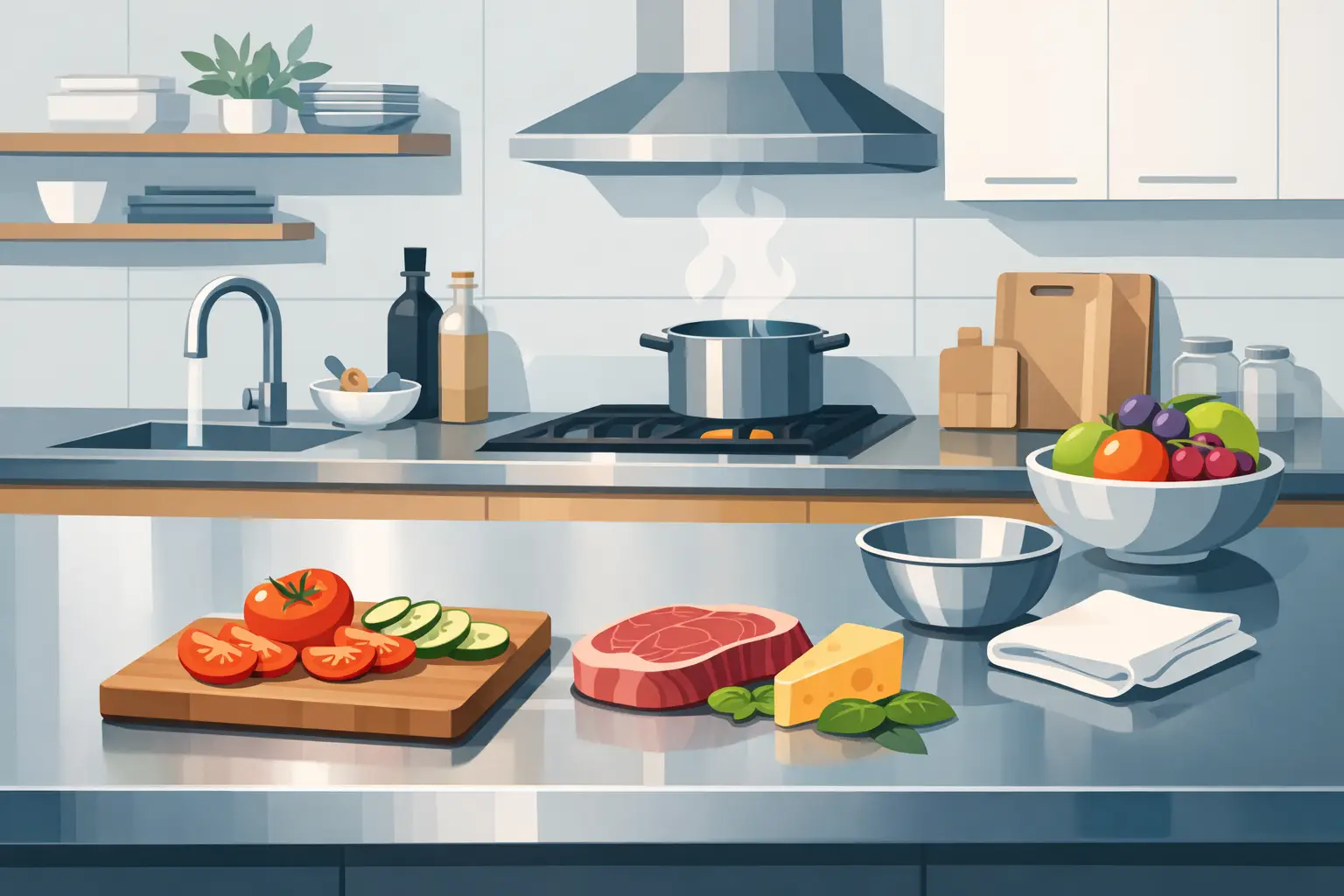
A countertop has to do more than make a visual statement. It becomes a landing place for groceries, a pastry station, a serving surface, and often the center of daily kitchen life. So, are metal countertops food safe? Yes, when the material, fabrication details, and care routine are appropriate for the way you cook and entertain.
Metal surfaces have a long history in professional kitchens, restaurants, and bars because they are durable, nonporous, and easy to clean. In a custom residential kitchen, though, the best choice is not always simply the most familiar one. Stainless steel, zinc, copper, bronze, and pewter each have distinct characteristics, from their reaction to acids to the way they develop a living finish over time.
What Makes a Countertop Food Safe?
For a countertop to support food preparation safely, it should have a surface that can be thoroughly cleaned, resist moisture absorption, and avoid harboring bacteria in cracks, open seams, or damaged areas. Nonporous materials perform especially well because liquids, food residue, and odors remain at the surface rather than penetrating into the countertop.
Fabrication matters as much as the metal itself. A beautifully made metal top should have carefully finished edges, appropriate seams, and a sound substrate beneath the metal. For sinks, cooktops, and other cutouts, precise fabrication helps eliminate difficult-to-clean gaps where debris can collect.
No countertop is automatically sanitary without regular cleaning. Even stainless steel needs to be washed after raw meat preparation, wiped dry after use, and treated with a food-safe cleaner or mild soap as needed. The advantage of metal is that its smooth surface makes this routine straightforward.
Are Metal Countertops Food Safe for Daily Prep?
Most metal countertops are suitable for everyday food preparation, but their practical performance varies by alloy and finish. Stainless steel is the most universally recognized choice for active prep areas. Zinc, copper, bronze, and pewter are often selected for their depth of color and hand-crafted character, and they work beautifully in kitchens, pantries, bars, and serving spaces when homeowners understand how the surface will age.
The central question is not whether metal is safe in a general sense. It is whether the particular metal is the right fit for direct prep, acidic ingredients, frequent cutting, hot cookware, and the level of patina you want to welcome into the design.
Stainless Steel: The Most Practical Prep Surface
Stainless steel is a natural fit for food-focused spaces. It is nonporous, does not rust under normal interior use, and can be cleaned thoroughly without special rituals. That is why it remains a standard in commercial kitchens and a compelling choice for serious home cooks.
A custom stainless steel countertop can be fabricated with integral backsplashes, tailored edge details, sink cutouts, drainboards, and dimensions made to your exact needs. It handles heat well and does not react with acidic foods such as tomatoes, citrus, or vinegar.
Its trade-off is visual rather than sanitary. Stainless steel can scratch, show fingerprints, and develop fine marks from everyday use. Many homeowners consider that softening part of its honest, working-kitchen appeal. A directional brushed finish can help make normal wear less noticeable than a highly polished surface.
Zinc: Food Safe With a Few Clear Boundaries
Zinc countertops are nonporous and are commonly used for kitchen islands, bar tops, and European-inspired work surfaces. Their appeal lies in their blue-gray color and the patina that develops through use. Water spots, handprints, and subtle tonal changes are part of the material’s character, not a flaw to be eliminated.
Zinc is generally appropriate for light food preparation and serving, but it is reactive. Acidic ingredients can leave temporary or lasting marks, particularly if lemon juice, wine, vinegar, or tomato products sit on the surface. For that reason, zinc is often best paired with a dedicated cutting board for chopping and a separate work area for lengthy food preparation.
A properly fabricated zinc top gives you a durable, easy-to-clean surface, but it asks for a different mindset than engineered stone. Choose it when you value a living finish and want the room to record use gracefully over time.
Copper and Bronze: Distinctive Metals for Entertaining Spaces
Copper and bronze bring warmth that few other countertop materials can match. They are especially striking on bar tops, beverage stations, islands, and hospitality counters, where the surface is seen up close and used as part of the experience.
Copper has natural antimicrobial properties, but that does not replace normal cleaning practices. Food spills should still be wiped up promptly, and the surface should be cleaned between uses. Like zinc, copper is reactive and will patina with exposure to moisture, oils, acids, and touch. Bronze, an alloy that often includes copper and tin, can offer a darker, more grounded appearance while retaining the expressive quality of a living metal surface.
For direct handling of food, choose an appropriate uncoated metal surface or confirm that any protective treatment is specifically intended for food-contact use. This is especially relevant for bar tops and serving counters, where guests may set down fruit garnishes, charcuterie boards, glasses, or plates.
Pewter: Soft Luster, Gentle Use
Pewter offers a soft silver-gray appearance with a more understated presence than stainless steel. It is often favored for decorative counters, bar surfaces, and furniture applications where craftsmanship and visual texture take priority over heavy-duty food prep.
Because pewter is relatively soft, it is not the best surface for frequent chopping, abrasive scrubbing, or high-impact kitchen work. It can be food safe in an appropriate application, but it is best treated as a finished surface for serving and entertaining rather than a replacement for a hard-working butcher block or stainless prep station.
Finishes, Sealers, and Food Contact
The finish on a metal countertop deserves as much attention as the metal itself. Some metals are left natural so they can develop an authentic patina. Others may receive waxes, oils, lacquers, or clear protective coatings to alter sheen, slow oxidation, or reduce marking.
A clear coating can change maintenance requirements, but it also introduces an essential question: Is it rated for food contact? Not every decorative coating is suitable for an area where unwrapped food will be placed directly on the counter. If direct food contact is part of the plan, clarify this during the design and specification process.
For many custom kitchens, the practical solution is simple. Use a metal surface for its visual impact and cleanability, then use cutting boards, sheet pans, and serving boards for direct cutting and food staging. This protects the metal, supports good kitchen hygiene, and allows the material to age beautifully without asking it to do every job at once.
Cleaning Metal Countertops Without Damaging Them
Routine care is uncomplicated: wipe the surface with a soft cloth, warm water, and mild dish soap, then dry it to prevent water spotting. After preparing raw meat, poultry, fish, or eggs, clean the area promptly with a cleaner suitable for the specific metal and follow its label instructions.
Avoid harsh scouring pads, steel wool, and aggressive chemical cleaners unless they are approved for your countertop material and finish. Chlorine bleach can damage or discolor some metals, while acidic cleaners may accelerate patina or etch reactive surfaces. The goal is a clean surface, not an over-scrubbed one.
If a metal countertop includes seams, an integrated sink, or a backsplash return, clean those transitions regularly. Professional fabrication minimizes crevices, but any kitchen surface benefits from attention at edges and joints.
Designing a Kitchen That Uses Metal Well
A metal countertop does not have to cover every inch of the room. A stainless steel prep zone beside a range, a zinc-topped island, or a copper bar can create contrast while assigning each surface a role. Pairing metal with wide-plank wood, butcher block, stone, or glass also gives a kitchen more texture and makes daily use more forgiving.
Brooks Custom creates metal countertops and bar tops to suit the material, the room, and the way each client intends to use the surface. Samples are particularly valuable with living metals, since they reveal variations in color, texture, and finish that photographs cannot fully capture.
The best metal countertop is one you will enjoy using, not one you feel compelled to preserve untouched. Specify the right metal for the task, care for it with intention, and let its surface become part of the story your kitchen tells.