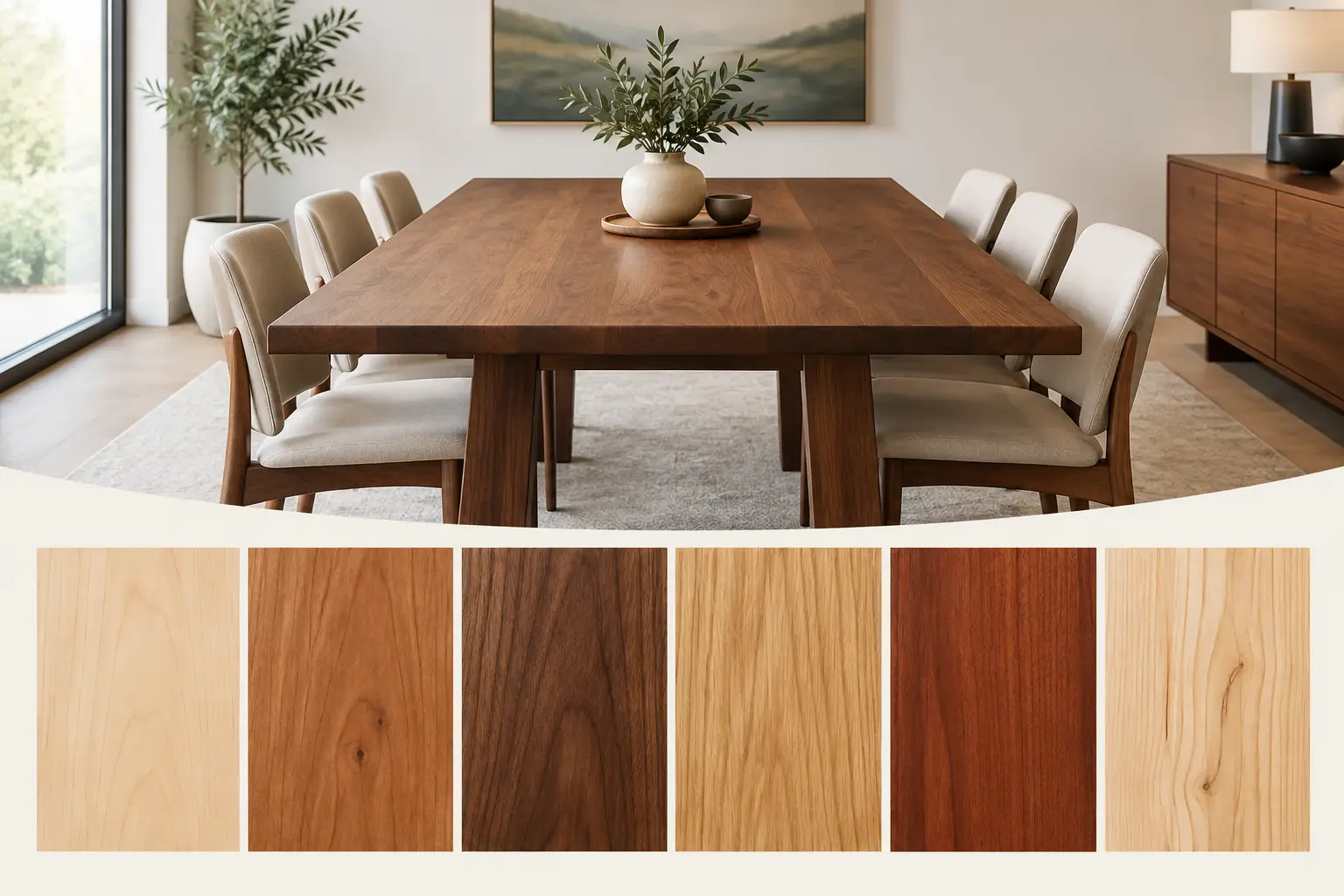
A dining table is where the everyday happens: rushed breakfasts, holiday meals, schoolwork, long conversations, and the occasional glass set down without a coaster. Choosing among the best tabletop wood species is therefore about more than a beautiful grain pattern. It is about selecting a material that suits the way your space is used, the character you want to create, and the level of care that feels realistic for your household.
For a made-to-order tabletop, wood species, plank selection, edge profile, dimensions, and finish all work together. The right choice can feel refined yet relaxed, dramatic yet timeless, or hardwearing enough for a busy restaurant while still looking distinctly handcrafted.
What Makes a Wood Right for a Tabletop?
No single species is best for every table. A quiet formal dining room calls for different qualities than a family kitchen, a conference table, or a high-traffic bar. Start with four practical considerations: hardness, grain character, natural color variation, and movement.
Harder woods are generally better at resisting everyday dents and wear, but hardness is not the only measure of performance. A well-built tabletop with a quality protective finish can make a moderately hard species an excellent choice. Likewise, a very hard wood with an overly uniform appearance may not be the right visual match for a warm, expressive interior.
Grain also changes how a table feels in the room. Fine, even grain reads tailored and polished. Open grain has more texture and visual depth. Boards with knots, mineral streaks, and color variation create an organic surface that becomes the focal point of the space.
Wood is a natural material, so each species responds to shifts in humidity. Thoughtful fabrication and the right finish help manage that movement, while regular indoor climate control supports long-term stability.
The Best Tabletop Wood Species by Style and Use
Walnut: Deep Color With Lasting Presence
Walnut is one of the most sought-after woods for a custom dining tabletop. Its rich brown tones range from soft cocoa to near-black, often with subtle purple or gray undertones. The grain can be straight and composed or display movement that gives a larger table remarkable depth.
A walnut tabletop has immediate presence without feeling overstated. It works beautifully in tailored traditional rooms, contemporary dining spaces, and hospitality settings where the surface should feel substantial and inviting. It pairs naturally with blackened steel, bronze, brass, and lighter upholstered seating.
Walnut is moderately hard rather than indestructible, so it benefits from sensible daily use and a durable finish. For many homeowners, that balance is part of its appeal. It wears with character while retaining a refined appearance.
White Oak: Durable, Versatile, and Distinctly Architectural
White oak is an exceptional choice when durability and design flexibility are equally important. It is harder than walnut, with a pronounced grain that brings texture to the surface without the dramatic contrast of some other species. Its natural color ranges from pale tan to warm medium brown.
This versatility makes white oak a favorite for kitchens, dining tables, work tables, and commercial spaces. It can be finished in a light natural tone for an airy, modern look, deepened for a more traditional setting, or custom-colored to coordinate with cabinetry and flooring.
The visible pores and grain give white oak an honest, architectural quality. It is especially compelling in wide-plank tabletops, where the scale of the boards allows the material to speak for itself. For a household that wants a table used every day, white oak delivers a strong blend of resilience and lasting style.
Hard Maple: Clean, Bright, and Built for Heavy Use
Hard maple is among the most durable choices for a wood tabletop. Its pale, creamy color and tight, understated grain suit spaces that call for a clean, bright surface. It has long been valued for butcher block because it stands up well to repeated use.
For tabletop applications, maple is particularly effective in hardworking kitchens, casual dining areas, bakeries, cafés, and family rooms. It can bring welcome lightness to a darker interior, especially when paired with warm metal accents or richly colored cabinetry.
Its restrained grain is a benefit when you want the table form, base, or surrounding architecture to take center stage. The trade-off is that maple does not offer the same visual drama as walnut or the open-grain texture of oak. It is a confident choice for clients who favor crisp materiality and practical performance.
Cherry: Warm, Elegant, and Richer Over Time
Cherry has a smooth, fine grain and a naturally warm color that deepens beautifully with exposure to light. A new cherry tabletop may begin with golden amber or reddish-brown tones, then mature into a richer, more complex finish over time.
That evolution gives cherry a special appeal for heirloom-quality dining furniture. It feels classic but not dated, and its smooth grain works equally well in traditional interiors and more edited, transitional rooms. Cherry is often chosen for spaces where warmth is essential but a darker wood would feel too heavy.
Cherry is softer than hard maple or white oak, which means it can show dents and marks more readily in an active setting. For a dining room table used with care, that is rarely a concern. For a high-volume bar or a household with constant rough use, white oak or maple may be the better fit.
Hickory: High Contrast and Exceptional Hardness
Hickory is known for strength and visual energy. It commonly features dramatic variation, from pale sapwood to darker brown heartwood, often within the same board. Its bold grain and high hardness make it a natural fit for rustic, lodge-inspired, and industrial spaces.
A hickory tabletop does not fade into the background. It is for a client who wants the material itself to be the statement, whether used on a generous farmhouse dining table or a communal table in a hospitality setting.
Because its color and grain variation are so pronounced, sample review is particularly useful with hickory. The finished tabletop will be cohesive, but it will never be uniform. That is precisely the point for many projects.
Ash: Expressive Grain in a Lighter Palette
Ash offers a lively, open grain similar in character to oak, but with a lighter natural appearance. It can range from creamy white to pale brown, creating a fresh, contemporary look that still has plenty of texture.
This species is a smart option for Scandinavian-inspired interiors, coastal homes, and modern spaces that need a wood surface with more movement than maple. Ash takes color well, offering further flexibility when the table needs to coordinate with a larger material palette.
Ash is durable enough for everyday tables, though availability can vary. When it is the right fit for the desired color and grain, it creates a tabletop that feels both light and grounded.
Best Tabletop Wood Species for Dining, Bars, and Workspaces
The best species becomes clearer when the table has a specific job. For a formal dining table, walnut and cherry bring depth, warmth, and an heirloom feel. White oak offers a more textural, adaptable alternative for a dining room that sees frequent use.
For kitchen tables and family gathering spaces, white oak, hard maple, and hickory are dependable choices. They provide good resistance to everyday activity while still offering distinct visual personalities. A wide-plank white oak table can feel elevated and relaxed at once, while maple brings a quieter, more tailored look.
Bar tops and hospitality tabletops need to balance impact with endurance. White oak is a strong all-around choice for its hardness and grain, while walnut creates a more luxurious, intimate mood. For especially demanding guest-facing settings, the finish is just as important as the species. A protective finish designed to resist moisture and staining helps preserve the surface through daily service.
For desks, conference tables, and creative work surfaces, consider how the grain will read at close range. Walnut offers executive warmth, maple keeps the surface bright and focused, and oak provides texture without becoming visually distracting.
Construction and Finish Matter as Much as the Species
A beautiful species deserves fabrication that respects its natural qualities. Wide-plank construction emphasizes long, continuous grain and creates a more furniture-like presence. Butcher block construction has a more rhythmic, graphic appearance and can be especially effective for hardworking surfaces. Live edge construction retains the natural contour of the tree, making every tabletop unmistakably individual.
Finish selection should follow the intended use. A well-chosen protective finish helps defend against spills, stains, and daily wear while allowing the grain and color to remain visible. For surfaces that serve food and drinks regularly, a durable finish makes a meaningful difference in how confidently the table can be enjoyed.
The finish also affects appearance. Some treatments enrich color and deepen contrast, while others preserve a lighter, more natural look. Reviewing samples alongside cabinetry, flooring, metalwork, and upholstery helps ensure the final surface belongs naturally in the room.
Choose the Wood You Will Enjoy Living With
The right tabletop wood is not simply the hardest, darkest, or most expensive species. It is the one that supports the life of the room and makes you want to gather there. At Brooks Custom, each tabletop can be made to your exact needs, from species and construction style to dimensions and finish. Begin with the wood that speaks to your space, then let thoughtful craftsmanship turn it into a surface meant to be used, remembered, and enjoyed for years.