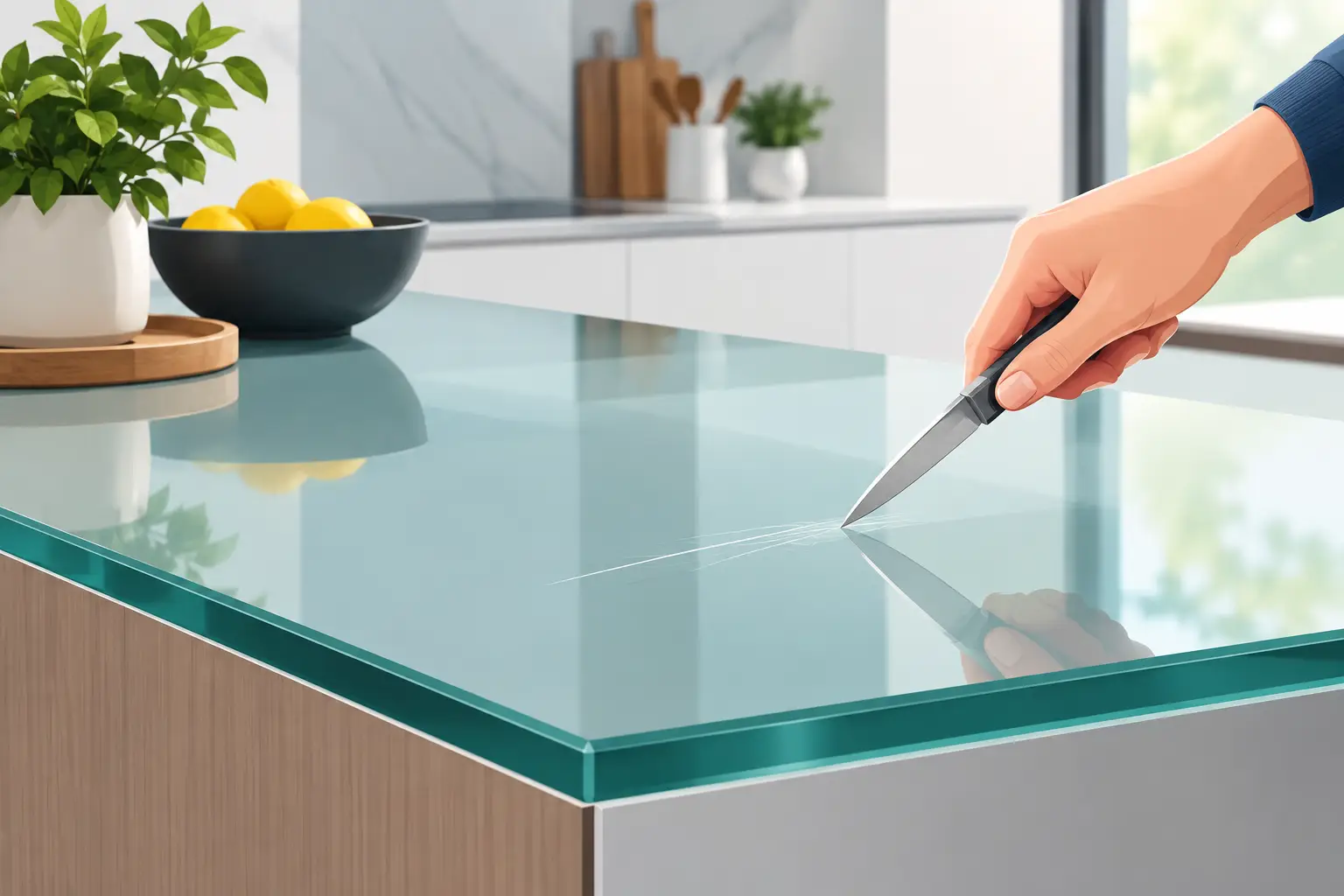
A glass counter catches light in a way stone and wood cannot. It can bring depth to a bar top, brightness to a vanity, or a polished focal point to a kitchen designed for entertaining. But before selecting one, most clients ask the practical question: do glass countertops scratch?
They can. Like any surface with a finished face, glass can show marks under the wrong conditions. The more useful answer is that scratch resistance depends on the type of glass, the selected finish, the location of the surface, and how it will be used each day. With those choices made thoughtfully, a custom glass countertop can remain exceptionally beautiful for years.
Do Glass Countertops Scratch in Everyday Use?
Glass is hard, nonporous, and easy to wipe clean, but it is not impervious to abrasion. Dragging a rough ceramic vessel, metal tool, or piece of grit across the surface can leave a mark. Fine scratches are most noticeable when light strikes the glass at an angle, particularly on dark colors and highly reflective finishes.
That does not mean glass is too delicate for a hardworking room. It means the material deserves to be matched to the application. A glass tabletop in a dining room experiences different wear than a kitchen prep counter. A restaurant bar top faces a different set of demands than a powder room vanity. The best result comes from specifying the glass for its intended use rather than treating every glass surface as interchangeable.
For many residential projects, glass performs especially well where visual impact, cleanability, and a sense of lightness matter most. It is an excellent consideration for bar tops, tabletops, bathroom surfaces, accent counters, and furniture pieces. In a busy kitchen, it can also be a striking choice when the household understands a few simple care habits.
The Type of Glass Makes a Difference
Not all architectural glass has the same performance characteristics. Tempered glass is commonly selected for countertops and tables because it is heat-treated for greater strength than standard annealed glass. If it breaks under extreme force, it is designed to fracture into small pieces rather than sharp shards.
Laminated glass combines layers of glass with an interlayer between them. Beyond its safety benefits, lamination opens compelling design possibilities. Color, texture, metallic elements, printed imagery, or decorative materials may be captured beneath the top layer, protected from direct contact while contributing depth and character.
Thickness also matters. A substantial glass top has visual presence and helps create the tailored, architectural feel clients expect from a custom surface. Edge treatments, support conditions, dimensions, and intended use should all be considered together during fabrication.
Clear, Low-Iron, and Colored Glass
Clear glass has a subtle natural tint, most noticeable along the edge. Low-iron glass reduces that green cast for a cleaner, more neutral appearance, particularly valuable when a pale color or detailed design sits below the glass.
Back-painted and colored glass can create a smooth field of color that feels modern yet personal. They also introduce a practical consideration: a glossy colored surface may make fingerprints or fine surface marks more apparent than a textured or softly finished option. This is not a flaw. It is part of choosing a finish whose appearance suits the way the space will be lived in.
Finish Changes What You See
A countertop does not have to be mirror-glossy to be glass. The finish is one of the most effective ways to balance appearance and maintenance.
A polished surface delivers crisp reflections and a refined, high-design look. It is ideal for projects where clarity and light play are central to the design. Because it reflects so precisely, it can reveal dust, smudges, and fine scratches more readily than a diffuse surface.
Acid-etched or frosted glass softens reflections and creates a satin-like visual effect. Its gentle texture can be more forgiving of fingerprints and minor wear, while still offering the clean, luminous quality that makes glass distinctive. Patterned, textured, or seeded glass can add further movement and visual camouflage, though each texture has its own cleaning considerations.
For a surface that will see frequent contact, finish selection is often more influential than a simple yes-or-no question about scratches. The right finish helps a custom piece age gracefully in its real environment.
Where Glass Works Best
Glass countertops are often chosen for spaces where the surface itself is meant to be noticed. A home bar can take on the atmosphere of a boutique hotel lounge with illuminated or colored glass. A bathroom vanity can feel open and tailored without relying on bulky materials. A dining or conference tabletop can protect a custom base while allowing the furniture design beneath it to remain visible.
In hospitality settings, glass bar tops and tabletops can be memorable guest-facing elements. Their nonporous surface is a practical advantage for beverage service, and custom color or decorative layering can reinforce a restaurant’s identity. For commercial use, the thickness, finish, edge detail, and expected traffic level should be carefully specified from the start.
Glass may be less natural for an owner who routinely cuts directly on the counter, moves heavy cookware without protection, or prefers a surface that develops a heavily worn patina. Those habits do not eliminate glass as an option, but they may point toward a different material for primary work zones, with glass used as a complementary statement surface elsewhere.
How to Prevent Scratches on Glass Countertops
Daily care is straightforward. Wipe the surface with a soft microfiber cloth and a glass-safe cleaner or mild soap and water. Drying the top after cleaning helps preserve a clear, streak-free appearance, especially in areas with hard water.
The most common damage comes from abrasion, not from ordinary spills. Avoid dragging ceramics, metal serving pieces, or appliances across the glass. Use felt pads beneath decorative objects, and place trivets under hot cookware. A cutting board is essential for food preparation, both to protect the glass and to protect knives.
Avoid scouring pads, abrasive powders, and cleaners intended to remove baked-on residue from other materials. Even if a product seems mild, any cleaner with abrasive particles can dull a polished surface over time. When a spill contains grit, lift it with a damp cloth rather than rubbing it across the countertop.
These small habits are not burdensome. They are the same sort of material-aware care that keeps fine wood, natural metal, and other handcrafted surfaces looking their best.
Can Scratches Be Repaired?
Some very light surface marks can be reduced by a qualified glass professional, depending on the glass type, finish, and depth of the scratch. However, polishing glass is not a universal solution. Aggressive polishing can create optical distortion, alter a satin finish, or make a repaired area look different from the surrounding surface.
Deep scratches, chips, and edge damage are more difficult to correct invisibly. This is why prevention matters most, particularly for glossy glass with strong reflected light. Before attempting a do-it-yourself repair kit, it is wise to seek guidance specific to the surface. A well-intended abrasive compound can turn a small mark into a larger visual issue.
A Custom Glass Surface Should Fit the Way You Live
The question is not simply whether glass can scratch. It is whether its particular blend of clarity, color, light, and cleanability belongs in your project. For some spaces, the answer is an enthusiastic yes. For others, a mixed-material design may be the stronger choice, pairing glass with warm wood, artisan-cast metal, or another surface selected for heavier wear.
At Brooks Custom, each made-to-order surface begins with the details that shape daily use: dimensions, finish, color, edge profile, setting, and the feeling you want the room to create. Choose glass with a clear understanding of its character, and it can bring your vision to life with a finish that feels considered rather than precious.