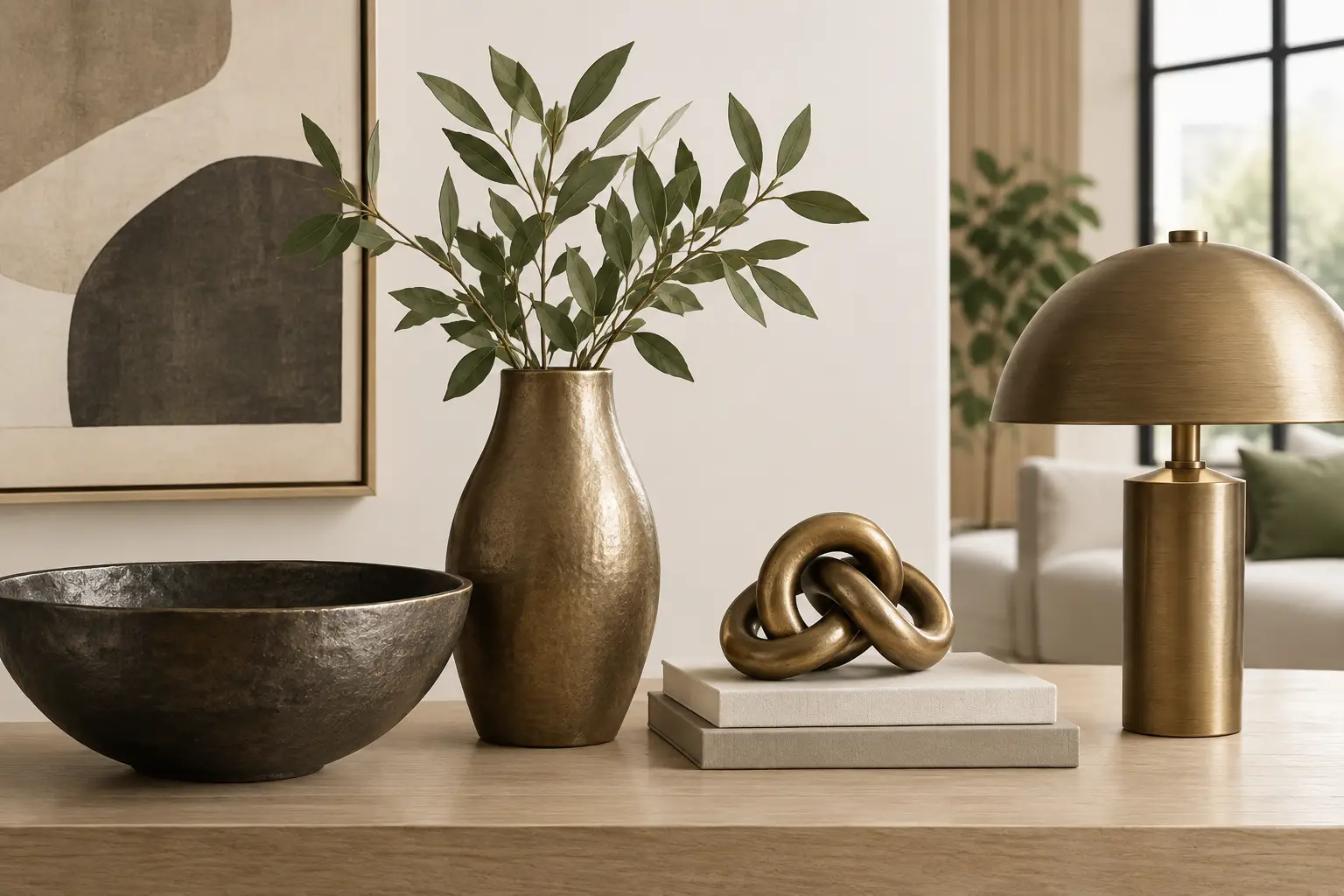
A surface should do more than fill a dimension. It should give a room its point of view. This guide to artisan cast metal is for homeowners and design professionals who want the depth and individuality of metal, shaped into a countertop, bar top, table, range hood, or decorative wall element made to their exact needs.
Artisan cast metal brings visual movement to an interior without relying on a printed pattern or a factory-perfect sheen. Each piece carries the evidence of hand-applied texture, color variation, and finishing work. The result can feel quietly tailored in a refined kitchen or unmistakably dramatic in a restaurant bar.
What Makes Artisan Cast Metal Different?
Artisan cast metal is valued for its dimensional, hand-worked appearance. Rather than presenting as a flat sheet with a uniform finish, the material is created to show texture, tonal variation, and a sense of depth across the surface. Light moves differently over it throughout the day, revealing subtle marks and layers that make the piece feel alive.
This character is precisely why cast metal appeals to projects that need more than standard materials can offer. A large island can become a focal point rather than a background element. A bar top can establish an atmosphere before the first drink is served. On a range hood or fireplace surround, cast metal can add warmth and weight without the visual heaviness of stone.
Handcrafted variation is part of the material, not a flaw to correct. Samples are useful for understanding the overall direction of color and texture, but no sample can duplicate the exact movement of a finished custom piece. For many clients, that is the point: the final surface belongs specifically to their space.
A Guide to Artisan Cast Metal Finishes and Color
The finish determines how artisan cast metal reads in a room. Darker finishes can create a grounded, architectural presence, especially alongside warm wood cabinetry, plaster walls, or natural stone. Softer pewter-like tones feel more understated and work well in layered, neutral interiors.
Bronze and copper-inspired finishes introduce warmth, while cooler gray and steel tones can sharpen a more contemporary palette. The best choice depends on the surrounding materials as much as personal preference. A metal that looks striking against a small sample of white cabinetry may feel much bolder once it covers a long bar or expansive island.
Texture matters just as much as color. A quieter finish can support rooms with expressive veining, colorful tile, or heavily grained wood. A more tactile, variegated cast metal surface may be the right counterpoint in a restrained setting where the architecture needs a defining feature.
When selecting a finish, consider the room at different times of day. Daylight can emphasize highs and lows in the texture, while pendants and under-cabinet lighting can bring out richer tonal shifts at night. This changing quality is one of cast metal’s strongest design advantages.
Where Artisan Cast Metal Works Best
Artisan cast metal is especially effective in spaces where people gather and touch the surface often. Kitchen islands, dining tables, and bar tops all benefit from a material that has both visual presence and a tactile quality. In hospitality settings, a custom cast metal bar top can become a memorable part of the guest experience while standing up to the demands of regular service.
It also has a place beyond horizontal surfaces. A custom range hood in artisan cast metal can turn a practical kitchen component into an intentional architectural element. Decorative wall panels, backsplashes, and fireplace details offer another way to introduce metal without committing an entire room to it.
Scale should guide the application. On a modest console or coffee table, a more active finish can deliver a concentrated moment of interest. On a broad countertop or long communal table, a balanced finish often gives the surface room to show its movement without overwhelming the rest of the design.
Designing a Custom Piece
Custom fabrication allows the material to serve the way a space is actually used. Dimensions, edge details, finish direction, and overall form can be considered together instead of forcing a design around a standard-size product. That is particularly valuable for unusually shaped islands, generous dining tables, curved bars, and commercial surfaces with specific performance needs.
Start with the role the piece needs to play. Is it the room’s primary statement, or should it complement cabinetry, lighting, and seating already chosen? A focal-point surface may call for a richer finish and more visible texture. A supporting surface may benefit from a quieter tone that adds depth without competing for attention.
Then consider the pieces that meet it. Wood brings softness and natural grain. Stone can provide crisp contrast or a layered, old-world feel. Glass and metal together can create a lighter, more contemporary composition. The most successful combinations do not match every finish exactly. They create enough contrast for each material to remain distinct.
For projects involving several custom elements, such as a kitchen island, range hood, and dining table, carrying one metal finish through every surface is not always necessary. Repeating the material in one or two carefully chosen moments can feel more considered than using it everywhere.
Durability, Patina, and Everyday Use
Metal is a practical choice, but it should be selected with an honest understanding of its character. A hand-finished surface is not intended to look like a synthetic material that remains visually unchanged forever. Depending on the finish and how the piece is used, small shifts in tone and marks from daily life may become part of its story.
That does not mean artisan cast metal is delicate. Properly fabricated and finished surfaces are made for real interiors, including dining, entertaining, and commercial use. Still, a busy restaurant bar, a family kitchen island, and a decorative wall panel have different demands. Discussing the intended application early helps determine the right material, finish, and protective approach for the project.
If absolute uniformity and a completely unchanging appearance are the priority, a different surface may be a better fit. If the goal is a material that gains personality through light, use, and handcrafted detail, cast metal offers something manufactured look-alikes cannot replicate.
Caring for an Artisan Cast Metal Surface
Care is straightforward when it is consistent. Wipe the surface with a soft cloth and mild soap as needed, then dry it rather than allowing standing water to remain. Avoid abrasive pads, harsh chemicals, and aggressive cleaners that can affect the finish or protective coating.
For countertops and bar tops, use coasters, trivets, and cutting boards as sensible daily protection. These habits preserve the finish while allowing the surface to remain part of normal life. If a question arises about a specific cleaner, stain, or mark, it is better to ask before trying a strong product.
The finish should also guide expectations. Some clients prefer a surface that develops a subtle patina over time. Others want the appearance maintained as consistently as possible. Neither preference is wrong, but the choice should be made before fabrication so the final piece aligns with how the space will be lived in and cared for.
Bringing Material and Vision Together
Artisan cast metal is not a default choice, and that is what makes it valuable. It offers a way to create a surface with depth, individuality, and a lasting connection to the handwork behind it. Brooks Custom can help translate that material character into a made-to-order piece that feels proportionate to your space and right for the way you use it.
Begin with the feeling you want the room to hold: warm and collected, polished and tailored, dark and atmospheric, or quietly textural. From there, the right finish, scale, and application can bring that vision into focus.