A custom countertop begins long before a workshop cuts the first board, casts the first form, or shapes the first sheet of metal. It begins with the decisions that determine how the surface will look, feel, perform, and belong in your space. Knowing how to order custom countertops means giving those decisions the attention they deserve, then working with a fabricator that can translate them into a finished piece made to your exact needs.
Whether you are specifying a wide-plank walnut island, a zinc bar top, a concrete vanity, or a specialty glass tabletop, the most successful orders balance visual character with everyday use. A surface should be memorable, but it should also be right for the way you live, host, work, or welcome guests.
Start With the Surface’s Purpose
Before selecting a material, define what the countertop needs to do. A family kitchen island sees a different kind of use than a cocktail bar, reception desk, bathroom vanity, or restaurant table. Heat exposure, moisture, food preparation, frequent cleaning, and the likelihood of impact all influence the best material and finish.
For example, wood brings warmth, natural variation, and a substantial handcrafted presence to a kitchen, dining table, or bar. Butcher block is particularly well suited to work surfaces where its tactile quality is part of the appeal. A durable protective finish can make selected wood surfaces stain resistant and incredibly durable while preserving the richness of the grain.
Metal offers an entirely different expression. Zinc develops a soft, lived-in patina over time, while bronze, copper, pewter, and stainless steel each carry their own color, reflectivity, and maintenance profile. Engineered concrete creates a tailored architectural look with depth and character. Glass can introduce light, color, and a striking sense of refinement. There is no universally best choice. The right one depends on the room, the use, and the finish you want the material to develop over years of use.
Choose a Material for Its Character and Performance
Custom work gives you the freedom to choose a material because it is genuinely right for the project, not because it is the closest available stock option. That choice is worth making deliberately.
Wood, butcher block, and live edge
Wide-plank wood countertops create a clean, enduring focal point, with boards selected and arranged to highlight the natural grain. Species, stain color, edge treatment, and plank layout can move the look from understated to dramatic. A live-edge slab makes the organic perimeter of the tree part of the design, creating a statement surface that feels especially at home in dining, entertaining, and hospitality settings.
Wood requires thoughtful care, particularly where standing water, sharp tools, or extreme heat are common. For many homeowners and designers, that is not a drawback but part of its appeal: wood is a living material with a warmth that manufactured surfaces cannot replicate.
Metal and artisan-cast surfaces
A handcrafted metal top can be sleek and tailored or richly expressive. Zinc is favored for bars and gathering spaces because its patina records use beautifully. Copper and bronze offer warmth and depth, while pewter provides a softer, silvery character. Stainless steel suits settings where a crisp, contemporary appearance and easy day-to-day cleaning are priorities.
Hand-applied and artisan-cast metal surfaces bring texture into the conversation. Their marks, movement, and tonal variation are part of the craftsmanship. If you want a perfectly uniform surface, a naturally variable material may not be the right fit. If you want a top with visual depth that becomes more personal over time, it may be exactly right.
Concrete and specialty glass
Engineered concrete is a strong choice for projects that call for a substantial, modern surface with a custom color and profile. Its visual character can range from quiet and minimal to deeply textural. Specialty glass can be equally tailored, offering a luminous surface for tables, bars, wall features, and other design-forward applications.
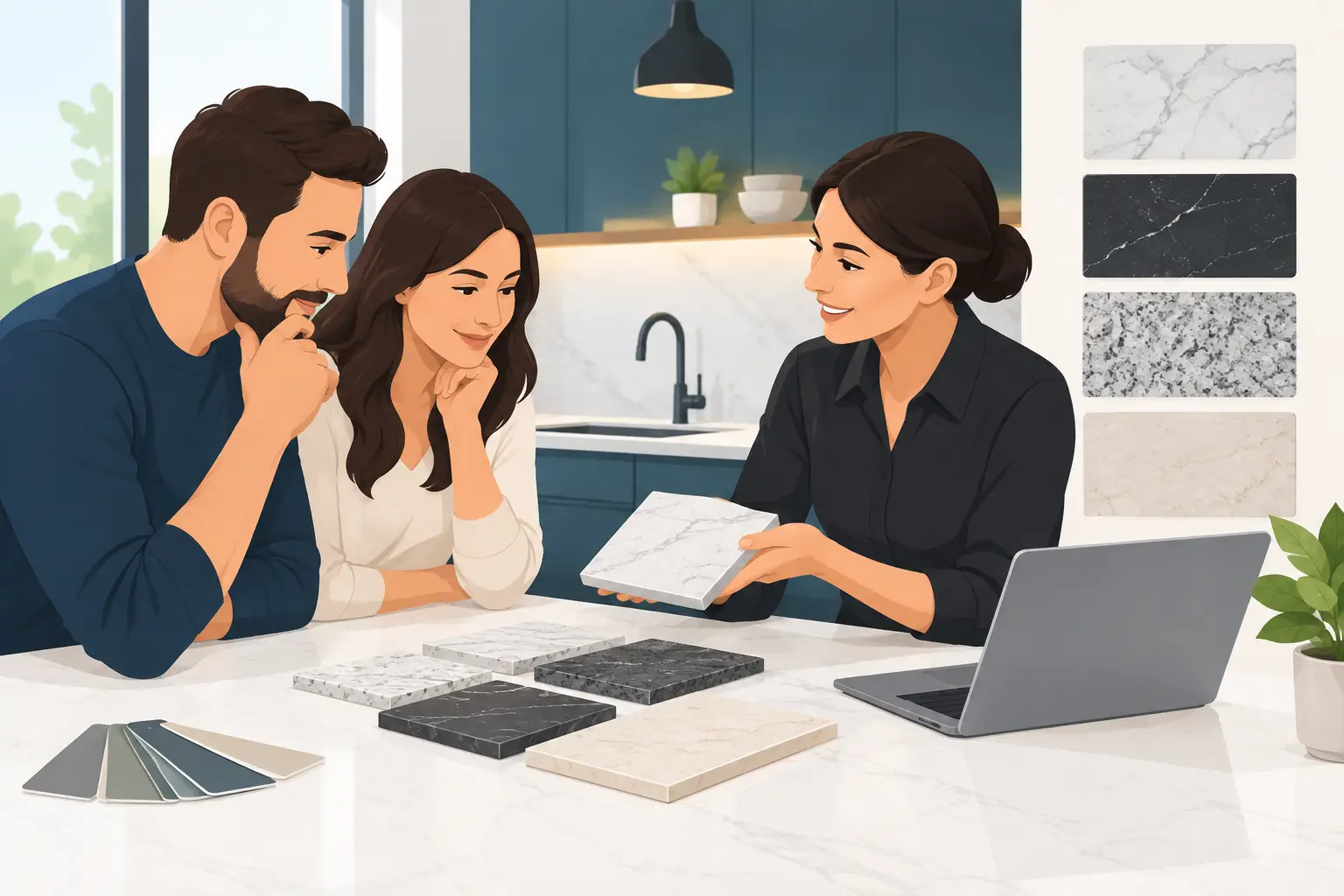
Ask for material samples early. A sample lets you see undertones, texture, sheen, and variation in the actual light of the room. It is also the best way to compare materials that may look similar on a screen but feel completely different in person.
How to Order Custom Countertops With Clear Specifications
A custom order works best when the fabricator receives a complete, practical picture of the piece. You do not need to arrive with every detail resolved, but the more information you can share at the outset, the more precisely the surface can be quoted and made.
Begin with the overall dimensions: length, width, and desired thickness. Include the intended application, such as an island, vanity, tabletop, bar top, reception counter, or wall-mounted ledge. Describe the shape as clearly as possible, especially if it includes curves, clipped corners, a radius, an angled end, or an irregular live edge.
Then identify the features that affect the final design. These may include edge style, overhangs, seam preferences, cutouts, holes, supports, backsplash pieces, matching shelves, or a waterfall-style return. For commercial bars and hospitality projects, share how the top will be used throughout service, including beverage exposure, cleaning routines, and any need for integrated functional components.
Photos of the room, cabinetry, surrounding finishes, and inspiration images can also be useful. They help a craft team understand whether the goal is tonal harmony, bold contrast, historic character, or a distinctly modern statement. A good custom surface should feel connected to the full room, not selected in isolation.
Confirm the Details That Change the Final Piece
The smallest decisions often have the largest visual impact. A one-inch change in thickness can make a wood top feel lighter or more furniture-like. An eased edge reads differently from a square edge, and the sheen of a metal surface can shift from quiet to reflective depending on the finish.
Color deserves the same level of care. Natural wood tones vary from board to board, and metal patinas are intentionally not identical from one area to another. Concrete and glass also have depth that cannot be captured fully by a single product image. Samples and finish discussions set appropriate expectations while protecting the individuality that makes a handcrafted piece special.
It is also wise to consider the transition between the countertop and adjacent materials. The relationship to cabinetry, tile, stone, wall color, flooring, stools, and lighting can affect the choice of species, stain, patina, and edge profile. A dark bronze top may ground a bright room. Pale wood may soften a space with substantial stone and steel. The strongest projects use contrast with intention.
Plan for Lead Time, Delivery, and Receiving
Made-to-order surfaces are fabricated for a specific project, so they should be selected early enough to allow for design review, material preparation, fabrication, finishing, and transit. The timeline varies with the material, complexity, size, and volume of the order. Large commercial bar tops and highly detailed multi-piece projects naturally require more coordination than a straightforward tabletop.
Discuss delivery requirements before finalizing the order. Confirm the shipping destination, receiving contact, access considerations, and a protected location where the piece can remain flat or otherwise be safely stored until it is ready for the next stage of your project. For oversized or heavy surfaces, thoughtful receiving plans help protect the craftsmanship from the moment it arrives.
When the piece is delivered, inspect the packaging and surface carefully before moving it into place. Keep any care information provided with the order, particularly for wood, patinated metal, and other materials that benefit from material-specific cleaning practices.
Work With a Fabricator That Welcomes the Details
Custom fabrication should feel collaborative, not complicated. The right partner asks useful questions about material, dimensions, finish, intended use, and design priorities. They can explain trade-offs clearly: why a certain thickness suits a span, how a patina may evolve, or which finish is appropriate for a high-use surface.
Brooks Custom brings nearly five decades of handcrafted surface expertise to projects ranging from residential kitchen counters and dining tables to distinctive commercial bar tops and architectural elements. The goal is not to push every project toward one material. It is to bring your vision to life with a surface that is visually compelling, properly considered, and built for the way it will be used.
A custom countertop is an opportunity to make the most-used part of a room feel truly considered. Start with honest priorities, choose a material you will appreciate over time, and allow the details to do their work. The result is more than a finished surface – it is a piece with a lasting place in the life of the space.