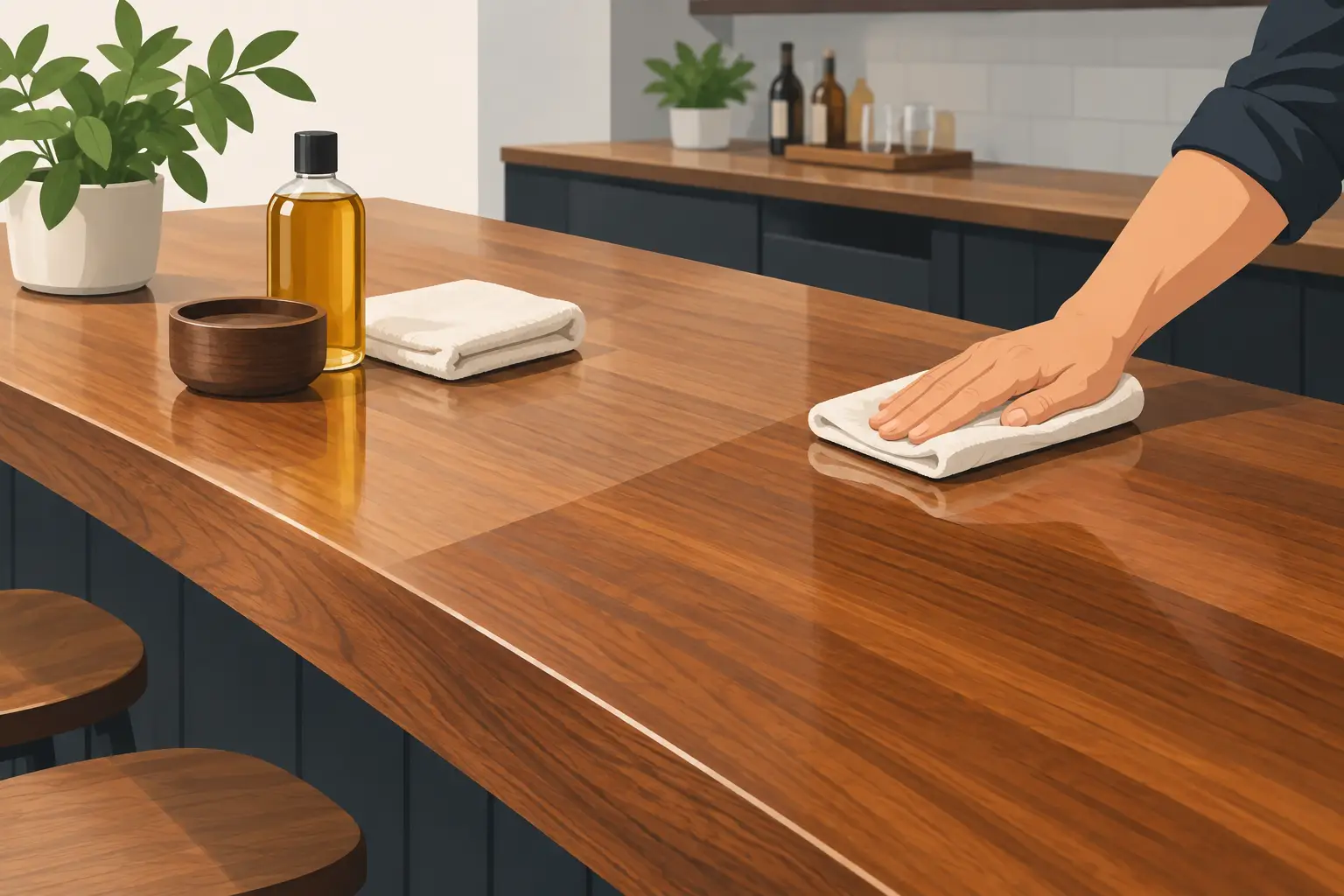
A wood bartop earns its character in use: a glass set down after dinner, a morning coffee, a gathering that runs late. Knowing how to protect wood bartops means preserving that lived-in warmth without treating a handcrafted surface as if it cannot be enjoyed. The right protection is a combination of thoughtful material selection, a durable finish, and a few consistent care habits.
Wood is naturally resilient, but it is also responsive to its surroundings. Moisture, heat, alcohol, acidic foods, and repeated abrasion can affect an unprotected or poorly finished surface. A well-built bartop should invite daily use while retaining the grain, color, and tactile quality that made wood the right choice in the first place.
Start With the Right Protective Finish
The finish is the bartop’s primary defense. It creates a barrier between the wood and the inevitable spills, condensation, fingerprints, and cleaning that come with an active entertaining space. The best choice depends on how the bartop will be used, the look you want, and the level of maintenance you are comfortable with.
For a home bar used occasionally, a finish that highlights the grain and can be renewed over time may be a good fit. For a restaurant, cocktail bar, or heavily used kitchen island, a more durable protective system is usually the wiser investment. High-traffic commercial settings place far greater demands on a surface, especially when drinks, citrus, ice, and frequent cleaning are part of every service.
At Brooks Custom, selected wood surfaces can be finished with a proprietary Marine Finish, developed to provide a stain-resistant, incredibly durable layer of protection while allowing the character of the wood to remain visible. This type of finish is especially valuable when a bartop needs the warmth of natural wood with the practical performance expected in an entertaining or hospitality setting.
A durable finish should not look artificial
Protection does not have to mean a thick, plastic-looking coating. The strongest finish for your space is one that balances performance with the visual result you want. Some clients prefer a low-sheen surface that feels understated and natural. Others want a polished look that reflects light and gives the bar a more formal presence.
Sheen affects more than appearance. A glossier surface can make a room feel more refined, but it may show smudges and fine scratches more readily. A matte or satin finish is often more forgiving in busy spaces, while still offering a tailored, elevated look. Requesting material samples before ordering a custom bartop helps make this decision clearer under the actual lighting in your home or commercial interior.
How to Protect Wood Bartops From Daily Wear
Even the best finish benefits from sensible use. Most everyday damage begins with standing moisture, extreme temperature, or abrasive contact – not with ordinary enjoyment. A few simple habits will keep the protective finish working as intended.
Wipe spills promptly, particularly red wine, citrus juice, vinegar, and sugary mixers. These liquids can leave marks if they sit long enough, especially near seams, end grain, or any area where the finish has been compromised. Use a soft, absorbent cloth rather than rubbing aggressively with a rough towel or scouring pad.
Coasters are worthwhile for cold drinks. Condensation may seem harmless, but a wet ring left in one place can eventually dull the finish or encourage moisture to work into vulnerable areas. For serving, trays are helpful beneath ice buckets, decanters, and bottles that may sweat or drip over the course of an evening.
Heat requires the same attention. Do not place hot cookware, warming appliances, or heat-producing serving pieces directly on a wood bartop. While many quality finishes are durable, sudden or sustained heat can discolor the surface, weaken the protective layer, or create a cloudy mark that is difficult to remove.
Avoid dragging ceramic dishes, metal bar tools, or decorative objects across the top. Wood bartops are made for real use, but sharp or gritty items can scratch nearly any finish. Felt pads beneath accessories and carefully placed serving boards offer discreet protection without making the space feel overly precious.
Clean Gently and Consistently
A wood bartop does not need an elaborate cleaning routine. It does need the right one. For regular care, wipe the surface with a lightly damp, soft cloth, then dry it with a clean towel. This removes dust, residue, and fingerprints without leaving excess water behind.
Skip harsh cleaners, abrasive powders, steel wool, and solvent-heavy products unless the finish manufacturer specifically recommends them. These products can dull the sheen, wear through the protective layer, or leave a residue that attracts more dirt. Strong disinfectants and degreasers deserve particular caution in commercial settings, where cleaning procedures may be more aggressive.
If the bartop is in a restaurant or bar, establish a cleaning process that protects both sanitation standards and the finish. Staff should know which products are approved for the surface, how long liquids should remain on it, and why soaking the top is never appropriate. A durable commercial bartop performs best when daily maintenance supports the finish rather than slowly breaking it down.
Keep moisture from lingering at edges and joints
The flat field of a bartop is not the only area to watch. Edges, seams, cutouts, and the underside can be more vulnerable when exposed to prolonged moisture. After cleaning, make sure water has not collected along a back edge or around an accessory that sits permanently on the bar.
This matters even more in rooms with fluctuating humidity. Wood expands and contracts naturally as seasons change. Maintaining a reasonably stable indoor environment helps minimize movement, reduces stress on the finish, and supports the long-term appearance of the bartop.
Choose Wood and Construction for the Setting
Protection begins before the finish is applied. Wood species, grain orientation, color, and construction all influence how a bartop will wear over time. A dark stained surface can create a dramatic atmosphere, but it may reveal light scratches or water spotting differently than a natural-toned surface. A lighter wood can feel casual and open, while still developing a rich patina with age.
The grain also has practical implications. Open-grained woods have a more pronounced texture, which many people love for its authenticity. They may require especially careful finishing if the bartop will see frequent spills. Tighter-grained woods can present a smoother appearance and may suit a more tailored, contemporary bar design.
For high-use applications, share as much as possible about the setting when specifying the piece. Will it be a weekend gathering place, a family kitchen counter, a tasting room, or a full-service cocktail bar? Will guests eat at the surface? Will bartenders prepare drinks directly on it? These details help determine the most appropriate material, edge profile, and finish system for the job.
Know When the Finish Needs Attention
A protected wood bartop should not need frequent refinishing, but no finish lasts forever under constant use. Watch for dull patches that do not improve with gentle cleaning, persistent water rings, scratches that catch a fingernail, areas where the color appears lighter, or roughness around edges and seams.
Addressing small concerns early is far easier than waiting until moisture reaches bare wood. In some cases, a professional touch-up or restoration can renew the protective layer without requiring a complete refinish. The right approach depends on the original finish and the extent of the wear, so avoid experimenting with random repair products that may create adhesion or color-matching problems.
A custom wood bartop is not meant to remain untouched. It is meant to become part of the life of the room. With a finish selected for its use, gentle regular care, and timely attention to signs of wear, the surface will continue to carry both the beauty of the wood and the memories made around it.