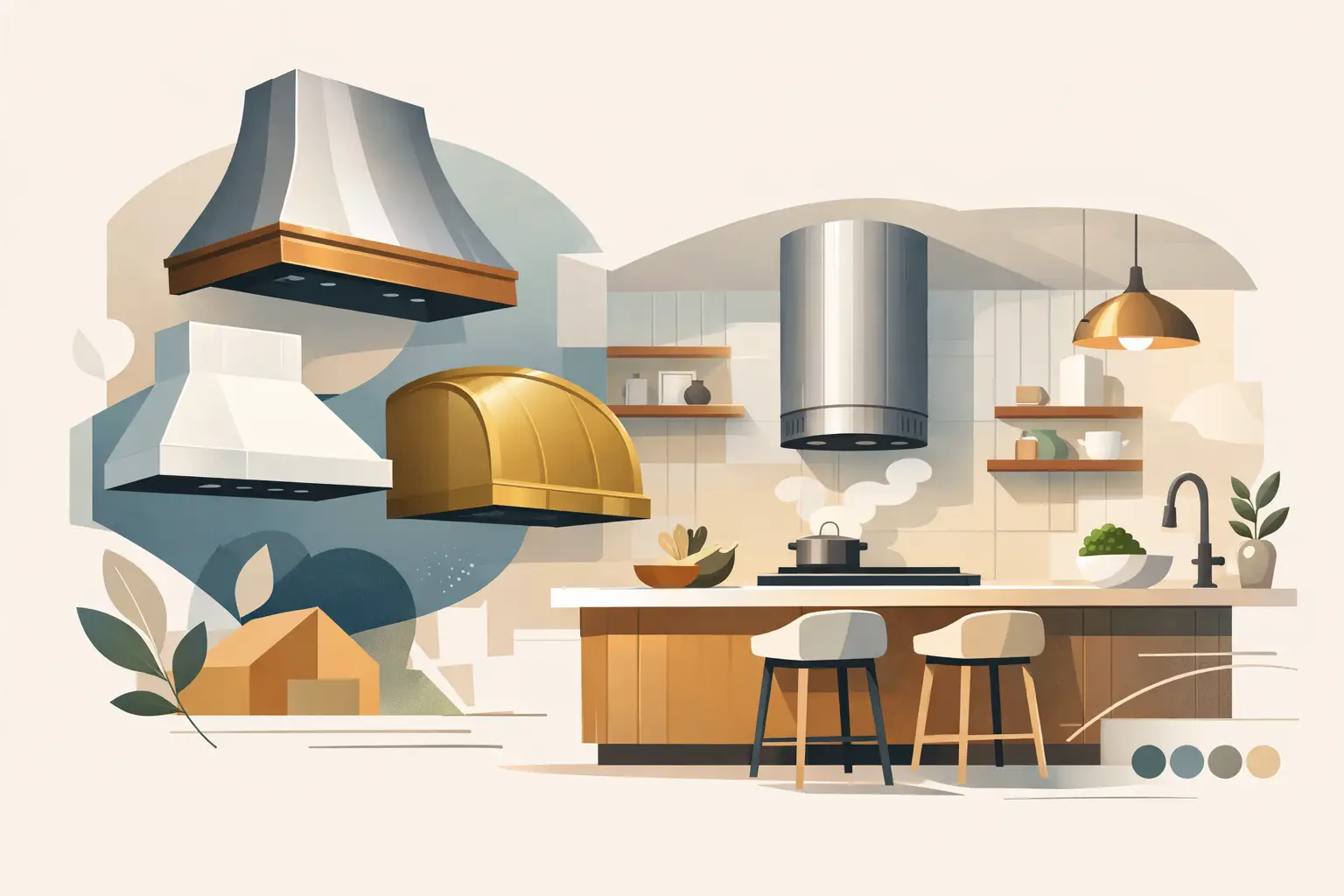
A range hood no longer disappears into the background of a kitchen plan. The most compelling range hood trends treat this hard-working element as a focal point, using proportion, material, and finish to give the room a clear point of view. For homeowners designing a kitchen around custom cabinetry, natural stone, warm wood, or expressive metalwork, the hood is often the piece that brings those choices together.
A well-considered custom range hood can feel architectural rather than appliance-driven. It can echo the patina of a bar top, soften a wall of painted cabinetry, or create contrast above a refined, minimal cooking surface. The right direction is not simply about following a trend. It is about selecting a form and material that will continue to feel intentional as the kitchen evolves.
Range Hood Trends Favor a Stronger Focal Point
For years, many kitchens relied on concealed or nearly invisible ventilation. That approach still has a place, particularly in compact or highly streamlined spaces. But more homeowners and designers are choosing visible hoods with depth, texture, and a distinct silhouette.
The shift reflects a broader move away from kitchens that look assembled from matching components. Instead, rooms are becoming more layered. Cabinetry may be painted in a quiet neutral, while the island introduces a deeper wood tone. Hardware, lighting, and plumbing fixtures bring in metal. A custom hood offers an opportunity to connect those elements with a single, made-to-order statement.
The strongest designs do not make the hood large merely for attention. They make it visually appropriate for the wall, range, ceiling height, and surrounding cabinetry. A hood that is too small can look incidental over a substantial range. One that is overly wide or deep may crowd the composition. Exact dimensions and a considered profile matter as much as the chosen finish.
Warm Metals Move Beyond the Industrial Look
Stainless steel remains a practical classic, especially for kitchens with a crisp contemporary character. Yet the current preference is for metal that has more warmth and material presence. Zinc, bronze, copper, pewter, and artisan-cast metals add variation that painted surfaces cannot replicate.
A zinc hood can bring a soft gray-blue cast and a lived-in character to white oak or painted cabinetry. Bronze creates depth without the brightness of polished brass, making it especially effective in kitchens that lean traditional, transitional, or quietly modern. Copper brings a richer, more expressive note, whether the goal is an old-world cooking hearth or a clean-lined contemporary contrast.
Patina is part of the appeal. Unlike a uniform coating, natural metal finishes can develop subtle changes in tone over time. This makes each piece feel less like a standard fixture and more like a lasting architectural component. It also calls for an honest conversation about expectations. If a perfectly static finish is the priority, some metals may not be the best fit. If the appeal lies in character and a surface that gains depth with use, a living metal hood can be exceptionally rewarding.
Texture is also gaining attention. Hammered, brushed, lightly distressed, and artisan-cast surfaces catch light differently throughout the day. These details can add interest to a restrained kitchen without introducing a busy pattern or a second competing color.
When a Metal Hood Works Best
Metal is particularly effective when a kitchen needs contrast. A dark bronze hood above pale cabinetry can anchor the entire cooking wall. A brushed stainless hood can sharpen a kitchen with natural wood cabinets and stone countertops. In hospitality settings, metal hoods can also reinforce a bar or dining area’s material story, especially when they relate to custom metal tabletops, bar tops, or decorative wall elements.
The scale of the metal detail should match the room. In a smaller kitchen, a simple tapered shape and a muted finish can offer enough presence. In a larger open-plan kitchen, a broader chimney form, trim band, rivet detail, or stronger patina may be appropriate.
Wood Hoods Bring Balance and Softness
Wood range hoods are gaining ground because they introduce warmth where kitchens can otherwise feel hard and reflective. Stone, tile, glass, metal, and lacquered cabinetry all have a role, but a handcrafted wood hood can make the cooking wall feel more settled and personal.
White oak remains a popular choice for its clean grain and natural versatility. It works with light, Scandinavian-influenced kitchens as easily as it does with tailored transitional spaces. Walnut offers deeper color and a more formal presence. Reclaimed or character-rich wood can create a relaxed, collected look, though it should be used with care in a kitchen that already has dramatic veining or highly figured surfaces.
The key is coordination without excessive matching. A wood hood does not need to duplicate the cabinetry exactly. In fact, a slight contrast can create a more custom result. A walnut hood over soft beige cabinets, for example, may relate beautifully to a walnut dining table or open shelving elsewhere in the room. A white oak hood can stand out gently against painted cabinetry while connecting to wide-plank flooring.
For wood surfaces near cooking areas, finish performance deserves equal attention. The beauty of the grain should not come at the expense of long-term durability. Protective finishes designed for demanding environments help preserve the material while allowing its natural character to remain visible.
Plaster-Look Forms Continue to Evolve
Soft, sculptural hoods with plaster-like finishes remain influential, but the best versions are becoming more tailored. Rather than relying on exaggerated curves or thick, bulky forms, current designs often use a restrained arch, gentle taper, or subtly rounded corner.
This direction works well in kitchens with handmade tile, pale stone, and organic materials. It can also provide a welcome visual pause in a room with strong cabinet lines. The trade-off is that a plaster-look hood may feel less connected if the rest of the kitchen is highly polished, formal, or metal-forward. In those settings, a metal or wood hood with a similarly simplified silhouette can achieve the same sense of calm with better material continuity.
Engineered concrete offers another way to create a mineral, sculptural presence. Its appeal comes from its weight, tone, and tactile quality. A custom piece can be designed with the proportions needed for the room, rather than forcing the kitchen around a predetermined shape.
Quiet Geometry Replaces Overdecorated Details
The most enduring hood profiles tend to be straightforward: a clean box form, a gentle taper, a chimney shape, or a shallow curve. Decorative trim has not disappeared, but it is being used with more restraint. A narrow metal band, a stepped edge, or a carefully placed row of rivets can provide definition without turning the hood into a period reproduction.
This preference for quiet geometry makes custom work especially valuable. Small decisions have outsized visual impact: where the taper begins, how far the hood projects, whether the edges are crisp or softened, and how the piece relates to adjacent upper cabinets. These are not details that should be left to chance when the hood occupies the most visible wall in the kitchen.
Match the Hood to the Kitchen’s Material Hierarchy
Before selecting a finish, identify the room’s primary visual material. If the countertop has dramatic movement, the hood may be better in a calm, matte metal or softly grained wood. If the counters are understated, the hood can carry more texture or color. When the backsplash is a major feature, a hood that either frames it cleanly or intentionally covers part of it will produce a more resolved result.
A kitchen rarely benefits when every surface asks for attention at once. The goal is not to make the hood compete with the island, stone, lighting, and cabinetry. It is to give each material a role.
Custom Fabrication Makes Trends Last Longer
Trends are most useful when they reveal a lasting preference: warmer materials, more individual expression, and furnishings made for a specific room rather than a generic floor plan. A made-to-order hood supports that approach because its width, depth, height, silhouette, metal finish, wood species, and detailing can be chosen to suit the project.
Brooks Custom draws on nearly five decades of hands-on material expertise to fabricate range hoods that are designed around those real choices. Whether the vision calls for warm zinc, richly patinated bronze, stainless steel, natural wood, or an unexpected material combination, the objective is the same: create a durable focal point with a purpose beyond decoration.
The most successful range hood will not feel like a trend purchase five years from now. It will feel like it has always belonged above the range, carrying the same confidence, character, and craftsmanship as the rest of the kitchen.