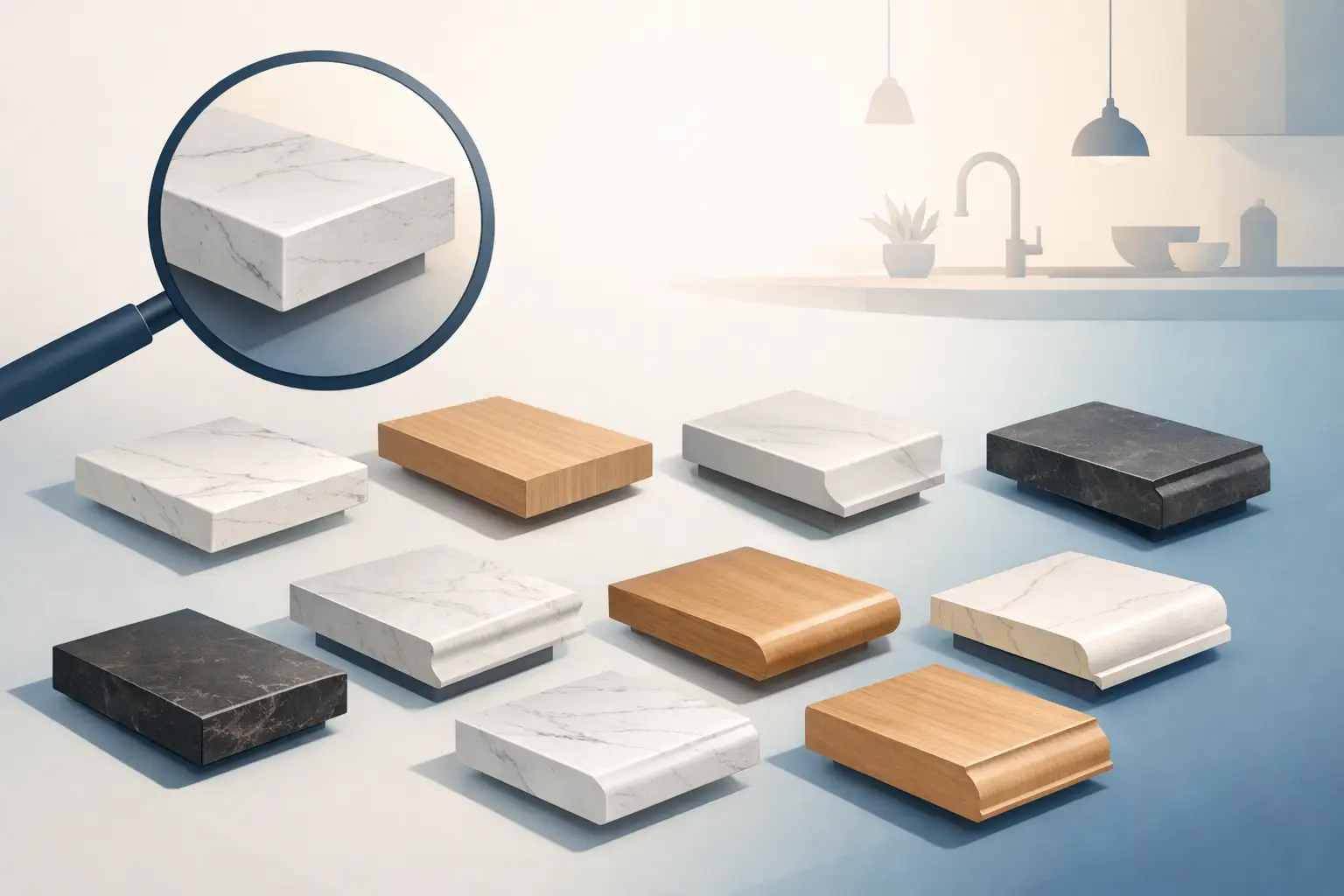
The edge is where a countertop becomes tactile. It is the detail your hand meets when you lean on an island, pull up a chair at a bar, or set down a serving platter. If you are asking what countertop edge profiles exist, the answer ranges from clean, nearly invisible softening to deeply shaped, furniture-inspired molding. The right choice should support the material, room, and way the surface will be used.
A custom edge does more than decorate the perimeter. It can make a thick wood top feel lighter, give metal a crisp architectural presence, or add the kind of quiet refinement that makes a kitchen feel considered from every angle.
What Countertop Edge Profiles Exist for Custom Surfaces?
Most countertop edge profiles fall into a few broad families: straight and softened edges, angled cuts, rounded shapes, traditional decorative profiles, and fully custom combinations. Some are best suited to contemporary rooms, while others bring a classic, substantial character to kitchens, bars, and furniture.
Material matters as much as style. A profile that is beautifully restrained in wide-plank wood may need a different approach in cast metal, glass, or engineered concrete. Thickness also changes the visual result. A simple eased edge on a thick tabletop can feel generous and sculptural, while the same edge on a slimmer surface reads clean and modern.
1. Square Edge
A square edge has a flat face and sharp-looking corners. It creates a tailored, architectural line that works especially well in modern kitchens, streamlined bar tops, and minimal dining tables.
In practice, a square edge is usually softened ever so slightly for comfort and durability. This preserves the crisp appearance without leaving a corner that feels harsh to the touch. It is an excellent choice when the material itself should take center stage, whether that means the grain of a wood slab or the reflective surface of stainless steel.
2. Eased Edge
An eased edge is one of the most versatile profiles available. The top and bottom corners are gently rounded, creating a smooth transition from the surface to the edge face. It looks simple because it is simple, but that restraint is precisely its strength.
For family kitchens, dining tables, and hospitality spaces, the eased edge offers everyday comfort without committing to a pronounced decorative shape. It pairs naturally with nearly any interior style and lets wide-plank wood, butcher block, bronze, copper, or specialty glass retain a clean, material-forward look.
3. Beveled Edge
A beveled edge uses an angled cut along the top edge, bottom edge, or both. The angled plane catches light differently from the countertop face, adding definition without introducing a rounded profile.
A narrow bevel feels contemporary and precise. A wider bevel creates more visual depth and can make a substantial top feel less heavy. Beveled edges are especially appealing on metal surfaces, where the facet can emphasize the material’s changing tone and reflectivity, but they also lend a polished finish to wood countertops and tabletops.
4. Chamfered Edge
The chamfer is closely related to a bevel, though it is often more pronounced and intentionally geometric. Rather than a small softened angle, it creates a distinct flat plane at the corner.
This profile is a strong fit for interiors with architectural millwork, exposed steel, or a modern rustic point of view. On a thick wood island or communal table, a chamfer can reveal the top’s thickness while preventing the edge from feeling blocky. The scale of the chamfer should be proportional to the surface. Too wide on a thin top can look abrupt; too slight on a thick one may disappear visually.
5. Bullnose Edge
A bullnose edge curves continuously from the top surface around to the underside, producing a fully rounded face. It is comfortable, approachable, and particularly well suited to surfaces that see frequent contact.
A full bullnose has a softer, more traditional presence than an eased edge. It is often chosen for breakfast bars, dining tables, and counters where children, guests, or seated patrons will regularly rest an arm against the edge. In wood, the profile can highlight the warmth and thickness of the material. In a restaurant or bar setting, it can make a long service surface feel inviting rather than severe.
6. Half-Bullnose or Demi-Bullnose Edge
A half-bullnose, sometimes called a demi-bullnose, rounds the upper edge while leaving the lower portion straighter. The result has the comfort of a curved top edge with a more defined vertical face below.
This is a useful middle ground for those who find a full bullnose too traditional but want more softness than an eased edge provides. It has a composed, substantial look on thick countertops and can suit transitional kitchens, vanity tops, bar tops, and custom furniture.
7. Ogee Edge
An ogee edge combines a concave curve and a convex curve, creating the familiar S-shaped profile seen in more traditional cabinetry and furniture. It brings shadow, movement, and a sense of formality to the countertop perimeter.
Because the ogee is more detailed, it works best when it has room to be seen. A thicker top, a generously scaled island, or a formal bar is often a better canvas than a very slim contemporary counter. The profile can be elegant in wood and dramatic in artisan-cast metal, especially when the rest of the space includes classic millwork, paneled cabinetry, or decorative hardware.
8. Cove Edge
A cove edge features an inward, concave curve beneath or along the edge. It creates a softer shadow line than an ogee and can be used alone or combined with another detail.
Cove profiles are refined rather than flashy. They can add a furniture-like quality to a tabletop, vanity, or bar without making the surface look overly ornate. On richly grained wood, the curve encourages light to move across the material, bringing subtle depth to the edge.
9. Mitered Edge
A mitered edge creates the appearance of a much thicker solid slab by joining a separate edge piece at an angled corner. Visually, the surface seems to continue down the face, giving the countertop a bold, monolithic look.
This treatment is particularly effective for large islands, waterfall-style visual statements, dramatic table tops, and bar fronts. It suits contemporary interiors, though the material selection changes its personality. A mitered wood edge can feel warm and sculptural; a mitered metal edge can feel sleek and tailored. Careful grain, patina, and finish continuity are essential to making this type of edge look intentional.
10. Live Edge
A live edge follows the natural contour of the tree rather than being cut into a straight line. It is not a machined profile in the usual sense, but it is one of the most expressive choices for a wood countertop, bar top, or table.
The appeal is in the individuality. Curves, gentle variations, and the story of the original slab remain visible, making every piece distinct. A live edge can be left organic or selectively refined, depending on whether the project calls for a more natural or more tailored expression. It pairs beautifully with clean cabinetry, metal bases, and contemporary spaces that benefit from a warmer, hand-crafted focal point.
How to Choose a Countertop Edge Profile
Start with how the surface will be used. A kitchen island that doubles as a gathering place benefits from a comfortable eased, half-bullnose, or bullnose edge. A formal dining table may call for the quiet refinement of a cove or ogee. A metal bar top in a hospitality setting may look best with a crisp square, eased, or beveled treatment that complements its patina and the room’s lighting.
Then consider the design language already present in the room. Flat-panel cabinetry, linear fixtures, and minimal hardware generally favor square, eased, chamfered, or beveled edges. Shaker, transitional, and traditional interiors have more room for half-bullnose, cove, and ogee profiles. There are no rigid rules, however. A single traditional curve can be striking in an otherwise modern room when it is repeated thoughtfully in furniture or trim.
Thickness deserves equal attention. A thicker surface creates more space for a shaped edge and makes decorative profiles easier to appreciate. Thinner tops usually benefit from a restrained edge that keeps the proportions clean. For custom projects, the edge, thickness, overhang, material, and finish should be considered together rather than selected as separate details.
Edge Profiles by Material
Wood offers exceptional flexibility, from a crisp chamfer to a deeply rounded bullnose or naturally irregular live edge. Its warmth makes even a simple eased edge feel inviting. For hardworking kitchen and bar surfaces, a protective finish helps preserve the wood while maintaining the texture and character that make it special.
Metal brings different opportunities. Zinc, bronze, copper, pewter, and stainless steel can take on a sharply tailored edge, a soft eased contour, or a more substantial formed detail. Because metal reflects light, small changes to the edge geometry can have an outsized effect on the final appearance.
Engineered concrete and specialty glass also benefit from deliberate edge selection. Their profiles are often cleaner and more contemporary, but subtle softening is valuable for comfort and for a finished visual transition. The most successful choice is one that honors the strengths of the material instead of forcing every surface into the same look.
At Brooks Custom, each surface is made to your exact needs, which means the edge can be designed as part of the larger piece rather than treated as an afterthought. A sample, material selection, and a clear sense of how the surface will be used can turn a small perimeter detail into the feature that gives the entire room its lasting character.