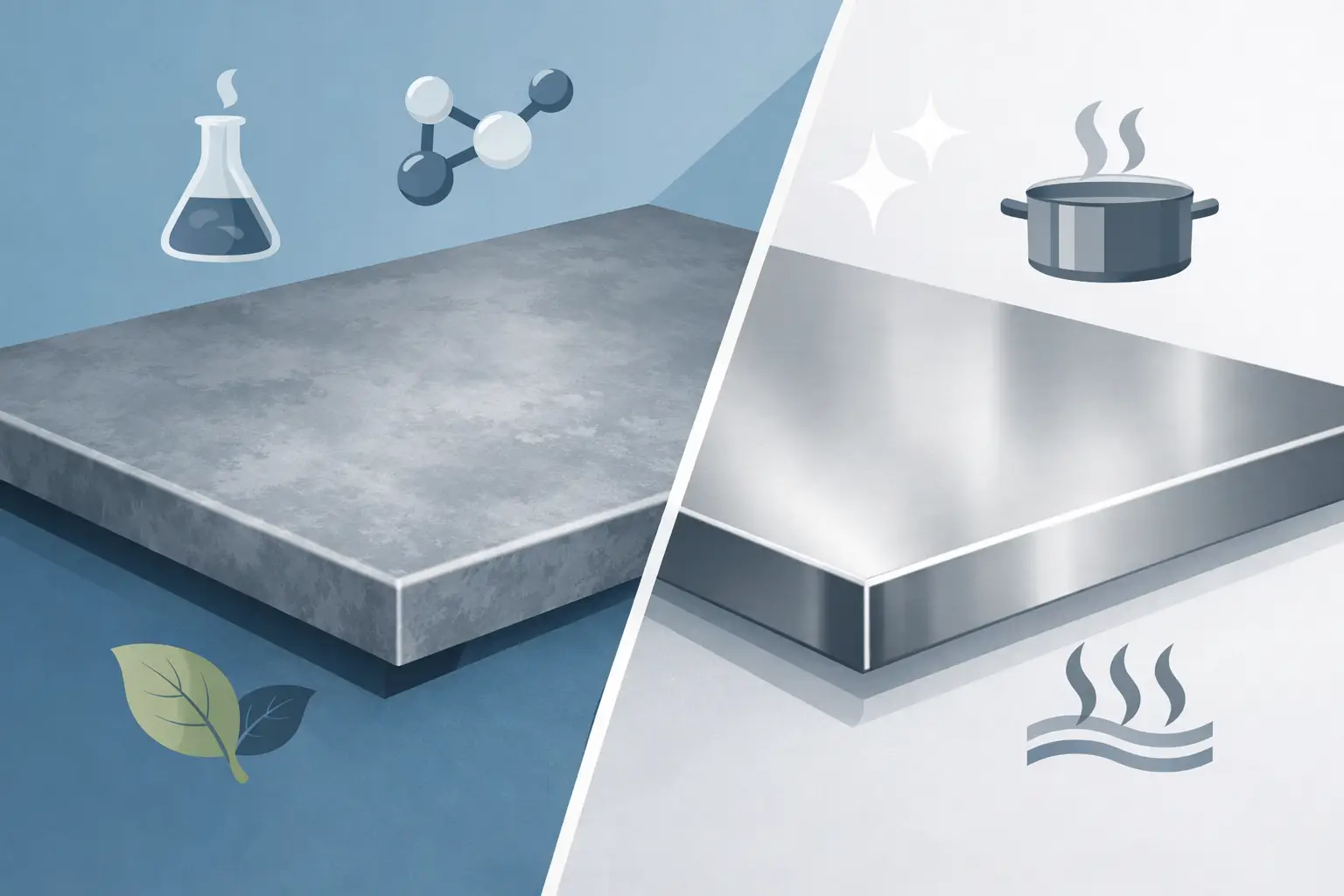
A metal countertop should not disappear into the room. It should bring a sense of material, light, and purpose to the space. When considering zinc versus stainless countertops, the right choice comes down to more than color. Each metal responds differently to use, develops a distinct character, and supports a different design point of view.
Zinc is warm, nuanced, and visibly alive. Stainless steel is crisp, clean-lined, and built for high-performance environments. Both can be fabricated to exact dimensions for kitchens, bar tops, islands, tables, and commercial hospitality spaces. Their differences are what make the selection meaningful.
Zinc Versus Stainless Countertops at a Glance
Zinc has a softer, blue-gray appearance that can range from pale pewter to deep charcoal depending on the finish, lighting, and age of the surface. It is often chosen for spaces where an authentic, time-earned finish is part of the appeal. A new zinc top begins with subtle variation, then gradually records daily life through marks, mellowing, and patina.
Stainless steel is brighter and more reflective, with a cool silver tone that works naturally with contemporary kitchens, professional-style ranges, and polished hospitality interiors. It has a more consistent appearance than zinc and a stronger association with culinary performance. Brushed finishes soften reflection and make everyday wear less noticeable than a mirror-polished surface.
Neither material is a generic choice. A zinc counter can make a tailored butler’s pantry, cocktail bar, or European-inspired kitchen feel established from day one. Stainless can give a hardworking family kitchen or restaurant service area the clarity and confidence of a professional workspace.
Choose Zinc for a Surface That Gains Character
Zinc is a natural fit when a client wants the countertop to evolve rather than remain visually unchanged. It develops a patina through contact with water, air, hands, and everyday objects. Rings, faint scratches, and tonal shifts are not necessarily flaws. They become part of the finish.
That quality makes zinc especially compelling for bar tops. In a home entertaining area, it creates a welcoming, collected look that pairs beautifully with painted cabinetry, warm woods, dark stone, aged brass, and open shelving. In restaurants and cafés, it can add immediate atmosphere without feeling overly themed or artificial.
Zinc is also a relatively soft metal. It can dent or scratch when struck by sharp or heavy objects, so it rewards owners who appreciate its relaxed, handcrafted nature. It is not the best fit for someone who expects a countertop to remain perfectly uniform after years of use.
Acidic ingredients and liquids deserve attention. Citrus, vinegar, wine, and other acidic materials can create temporary or permanent changes in the patina if left sitting on the surface. Prompt cleanup helps preserve a more even appearance, although some owners welcome the variation as part of zinc’s appeal.
Where Zinc Works Best
Zinc excels in applications where visual warmth matters as much as daily function. Consider it for an island with a dedicated baking or serving area, a wet bar, a coffee station, a dining tabletop, or a statement counter in a hospitality setting. It is also an excellent material for a custom range hood or backsplash when the goal is a coordinated metal detail rather than a purely utilitarian finish.
A zinc surface can be made with folded edges, a heavier-looking profile, or details that give the piece an established furniture-like presence. The fabrication choices matter. Edge treatment, corner style, seams, and finish all influence whether zinc feels refined and tailored or deliberately rustic.
Choose Stainless Steel for Performance and Precision
Stainless steel has long been valued in commercial kitchens because it is nonporous, easy to wipe clean, and highly resistant to corrosion under normal interior use. Those same benefits translate well to homes, especially for serious cooks, active families, and people who prefer a clean, streamlined material palette.
It handles water, food preparation, and daily cleaning with less concern about staining or patina changes than zinc. Stainless does scratch over time, particularly in busy work zones, but its wear tends to read as a fine, linear texture rather than a dramatic shift in color. A brushed finish is often the most forgiving choice for an active counter.
The look is equally important. Stainless steel works well with rift-sawn oak, lacquered cabinetry, natural stone, blackened metal, and glass. It can lean industrial in the right setting, but it can also look exceptionally refined when paired with custom millwork and a carefully selected finish.
Where Stainless Steel Works Best
For an all-purpose kitchen work surface, stainless is usually the more practical metal. It is a strong choice around sinks, prep areas, baking stations, and cooktops, as well as in restaurant kitchens and service counters where cleaning routines are frequent.
Stainless also gives designers a high degree of visual control. A directional brushed grain can be specified to suit the length of the piece, and custom details can create a crisp, architectural result. Integrated drainboards, raised edges, or formed transitions can be considered when they suit the intended use and the overall design.
Maintenance Is Different, Not Difficult
Both metals benefit from simple, consistent care. For zinc, use a soft cloth, mild soap, and water, then dry the surface after cleaning. Avoid abrasive pads, harsh cleaners, and products that promise to strip buildup, since they can create uneven areas in the finish. A zinc counter does not need to be treated as fragile, but it should be approached with an understanding that its surface will change.
Stainless steel also responds well to mild soap, water, and a soft cloth. Wiping in the direction of the brushed grain helps maintain an even look. Avoid steel wool and aggressive abrasive cleaners, which can leave marks or introduce particles that affect the finish. Drying the surface after use reduces water spotting.
The key distinction is expectation. Zinc’s maintenance supports an evolving patina. Stainless maintenance supports a cleaner, more consistent appearance. If the owner views every mark as damage, stainless will generally be the more comfortable choice. If the owner sees history as beauty, zinc offers something stainless cannot replicate.
Design Considerations Beyond the Metal
The surrounding materials often settle the decision. Zinc has an affinity for warmth: walnut, white oak, painted cabinets, leathered stone, antique mirrors, and unlacquered brass all emphasize its depth. It can soften a new space or give a traditional room a more unexpected focal point.
Stainless steel favors contrast and precision. It complements pale woods, saturated cabinetry, porcelain, concrete, and dark architectural accents. In a kitchen with substantial appliances, a stainless counter can make the metal elements feel intentional rather than scattered.
Lighting deserves consideration, too. Zinc absorbs and diffuses light in a subtle way, so it often feels calm under pendants and ambient lighting. Stainless reflects more light and can brighten a darker work area. Samples viewed in the actual room are valuable because the same metal can look notably different under warm residential lighting and cooler commercial fixtures.
Custom Fabrication Makes the Difference
A metal countertop is not simply a sheet placed on a cabinet. The finished result depends on proportion, folded details, corner treatment, edge design, support requirements, and the way the material meets adjacent surfaces. Custom fabrication allows the piece to suit the room rather than forcing the room to suit a standard size.
For a large island, the design may call for a dramatic uninterrupted field of metal or carefully planned seams that align with cabinetry and appliances. For a bar top, a shaped edge and considered overhang can make the surface feel inviting and substantial. For a backsplash or range hood, matching metal can carry a design language through the room without becoming excessive.
Brooks Custom hand-crafts zinc and stainless surfaces made to exact needs, helping homeowners and design professionals select a material that performs well and belongs in the larger composition. The goal is not simply to choose a durable counter. It is to create a finished element with the right presence for the way the space will be used.
The Better Choice Depends on How You Live
Choose zinc when you want warmth, variation, and a finish that becomes more personal with use. Choose stainless steel when daily performance, easy cleanup, and a more consistent visual character are the priority. For many projects, the most successful answer is not choosing one material for every surface, but placing each where it can do its best work.
A zinc bar top can bring depth to an entertaining space while stainless supports the hard-working kitchen prep zone. Requesting material samples and living with them near your cabinetry, lighting, and finishes is a practical next step. The metal that feels right in your hand and right in the room is often the one that will continue to feel right years from now.