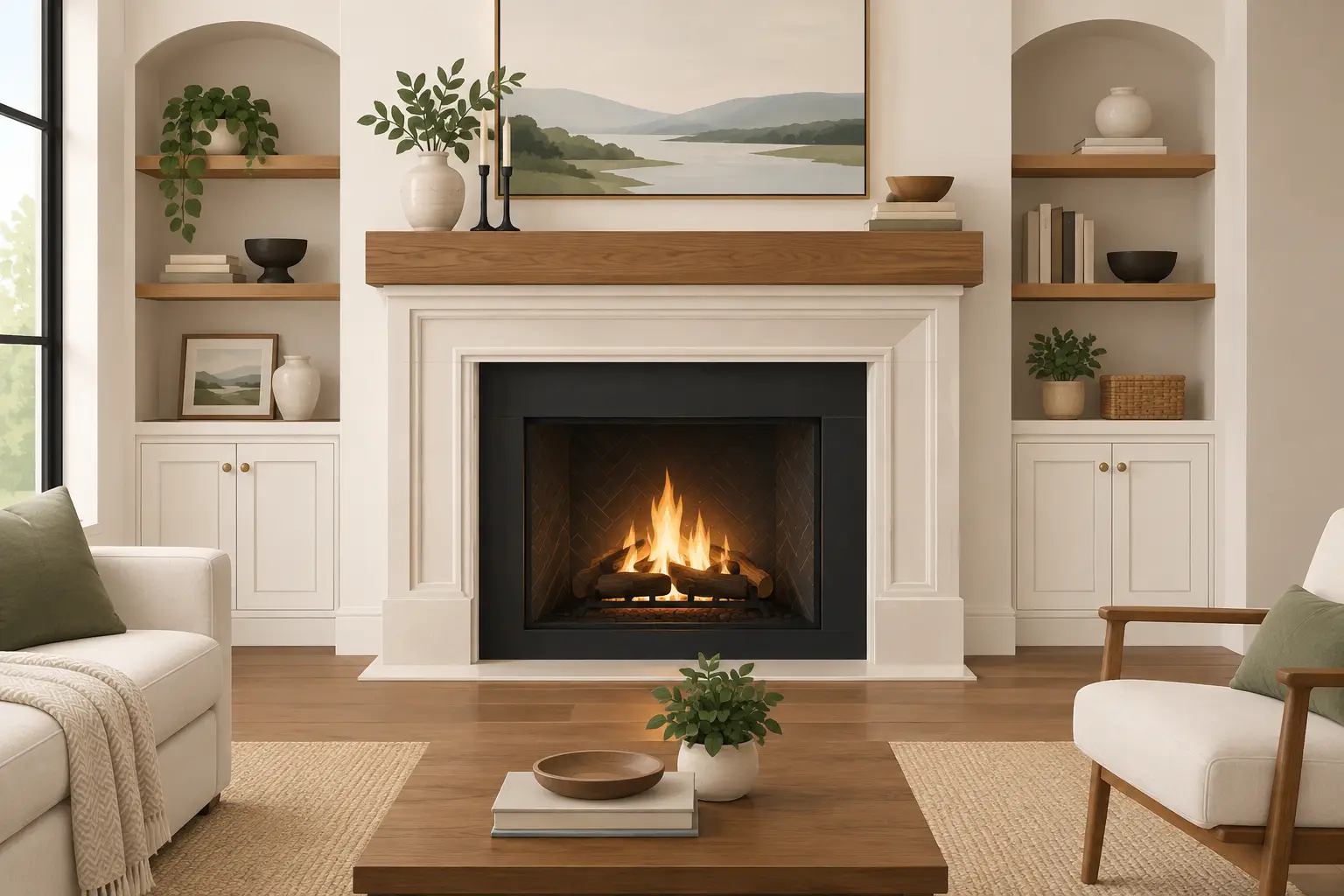
A fireplace can carry an entire room, but only when its surrounding details have the same presence as the firebox itself. This guide to custom fireplace mantels is designed to help you make those details intentional: the material under your hand, the depth that creates a proper shelf, and the proportions that give the wall a finished architectural point of view.
A made-to-order mantel is not simply a board above a fireplace. It is a functional surface, a visual frame, and often the element that connects the room’s flooring, cabinetry, metalwork, and furniture. The best choice depends on the style of the home, the scale of the fireplace, how the room is used, and the materials already doing the work nearby.
Start With the Fireplace Wall, Not a Material Sample
It is tempting to choose a mantel from a favorite wood species or a striking metal finish. Begin instead with the wall as a whole. Consider the width and height of the fireplace surround, the ceiling line, the hearth, and the amount of open wall on either side. A mantel that looks substantial in a sample can feel undersized over a broad stone surround. Conversely, a heavy beam can overpower a compact firebox in a quiet sitting room.
Look at the room from its most common viewing angle. In an open kitchen and living area, the fireplace may be seen alongside a range hood, island, bar top, or dining table. Repeating one material exactly is not always necessary, but a relationship between finishes makes the space feel considered. Warm white oak may echo a wood tabletop; darkened steel may pick up hardware and lighting; a soft pewter surface may add contrast to a room with pale stone and painted millwork.
The mantel also needs to support the way you live. If it will hold seasonal greenery, framed art, or a substantial mirror, depth matters as much as appearance. If you prefer a spare, gallery-like wall, a slimmer profile may be the better design decision.
Guide to Custom Fireplace Mantels: Choose the Right Material
Material gives a custom mantel its character before any décor is added. Each option brings a different balance of texture, maintenance, visual weight, and long-term performance.
Wood brings warmth and natural variation
Wide-plank wood, butcher block, and live edge mantels offer a depth and tactile quality that manufactured alternatives cannot replicate. Grain movement, knots, mineral streaks, and subtle color shifts give the piece a story. White oak feels tailored and architectural, walnut brings richness, and reclaimed or character-grade woods create a more relaxed, layered effect.
Wood is particularly effective when a fireplace wall needs warmth against brick, stone, plaster, or concrete. It can also soften a contemporary interior built around crisp lines and cool finishes. The trade-off is that wood should be selected with a realistic appreciation for natural variation. A handcrafted piece will not have the uniform appearance of a printed or synthetic surface, and that is precisely its appeal.
For households where spills, frequent decorating, or active entertaining are part of daily life, protective finishing deserves close attention. A durable finish helps preserve the wood’s appearance while allowing its grain and color to remain the focus.
Metal makes a precise architectural statement
Zinc, bronze, copper, pewter, stainless steel, and artisan-cast metal can turn a fireplace into a sculptural focal point. Metal mantels work especially well in modern homes, urban lofts, hospitality settings, and rooms where the fireplace shares visual space with custom metal range hoods or bar details.
Each metal ages differently. Zinc and pewter offer understated movement and a softened, hand-worked character. Copper introduces warmth and can develop a deeper patina over time. Bronze feels classic and substantial, while stainless steel delivers a cleaner, more contemporary presence. Artisan-cast metal brings texture that reads almost like a work of art, particularly under directional lighting.
Metal is not necessarily cold. Paired with wood flooring, upholstered furniture, or a plaster surround, it creates contrast that makes both materials more compelling. The key is selecting a finish that fits the room’s intended level of polish. A highly refined metal surface communicates something different from a patinated, more expressive one.
Mixed materials create depth without excess
A mantel does not have to be a single-material decision. Wood and metal can be combined to give the fireplace wall more dimension, such as a warm wood shelf with a metal-clad face or a clean metal element paired with wood accents elsewhere in the room.
This approach works best when one material leads and the other supports. Too many competing textures can make the fireplace feel busy. A custom fabricator can help translate a strong material pairing into a piece with clean edges, balanced proportions, and a finish that belongs in the larger interior.
Get the Proportions Right
A mantel should relate to the firebox and surround rather than float above them as an afterthought. Width is usually the first decision. Extending beyond the fireplace opening or surround gives the composition a grounded, intentional look, while a mantel that aligns tightly with the opening can feel more modern and restrained.
Depth affects both function and visual weight. A shallow shelf can be elegant in a narrow room or where circulation is close to the fireplace wall. A deeper mantel reads as more substantial and provides useful display space. Keep in mind that a thick, deep wood beam makes a bolder statement than a slim metal shelf with the same width.
Thickness is where material choice becomes especially important. Solid wood can carry meaningful visual mass, with its end grain and layered edge profile contributing to the look. Metal can appear lighter and more streamlined, even when it has a strong internal structure. Neither approach is better in every setting. The right one is the one that matches the architecture and the atmosphere you want to create.
Before a piece is fabricated, provide clear overall measurements of the fireplace wall, surround, hearth, and the desired mantel position. Include photos of the room and adjacent finishes whenever possible. Those details allow a made-to-order piece to be designed for the actual composition rather than selected in isolation.
Consider Color, Grain, and Patina Together
Custom materials have nuance, and that nuance is worth planning for. Wood samples show species, grain direction, and color range, but a full mantel naturally reveals more movement than a small sample. Metal samples reveal tone and texture, while the completed surface may develop additional variation across a larger span.
Treat that variation as part of the design language. A live edge mantel may feature a dramatic grain shift that becomes the room’s quiet focal point. A zinc surface may show soft tonal changes that make it feel less manufactured. These are not flaws to eliminate. They are the qualities that distinguish hand-crafted architectural furnishings from standard products.
If consistency is the priority, communicate it early. A more uniform wood selection, a quieter grain pattern, or a controlled metal finish can guide the final result toward a calmer appearance. If character is the priority, allow the material to show more of its natural personality.
Design for Daily Use, Not Just the Reveal
A mantel has a long life after the project photography is finished. Think about what will rest on it, how often it will be cleaned, and whether the room receives strong sunlight. A bright family room may call for a finish and color selection that remain comfortable over time, while a formal dining room may allow for a more expressive, patina-forward material.
Care should match the material rather than fight it. Wood benefits from thoughtful cleaning and protection from prolonged moisture. Metal may require different care depending on whether the desired finish is polished, sealed, living, or intentionally aged. Ask for care guidance that reflects the exact material and finish selected, not generic advice intended for every surface.
Brooks Custom brings nearly five decades of material knowledge to made-to-order architectural pieces, with wood and metal options fabricated to the dimensions and design direction of each project. That level of collaboration is valuable when a mantel must feel connected to multiple finishes across a home or commercial interior.
A custom fireplace mantel earns its place when it feels like it always belonged there. Choose a material you will want to touch, proportions that respect the room, and a finish that will look even better as the space becomes lived in.