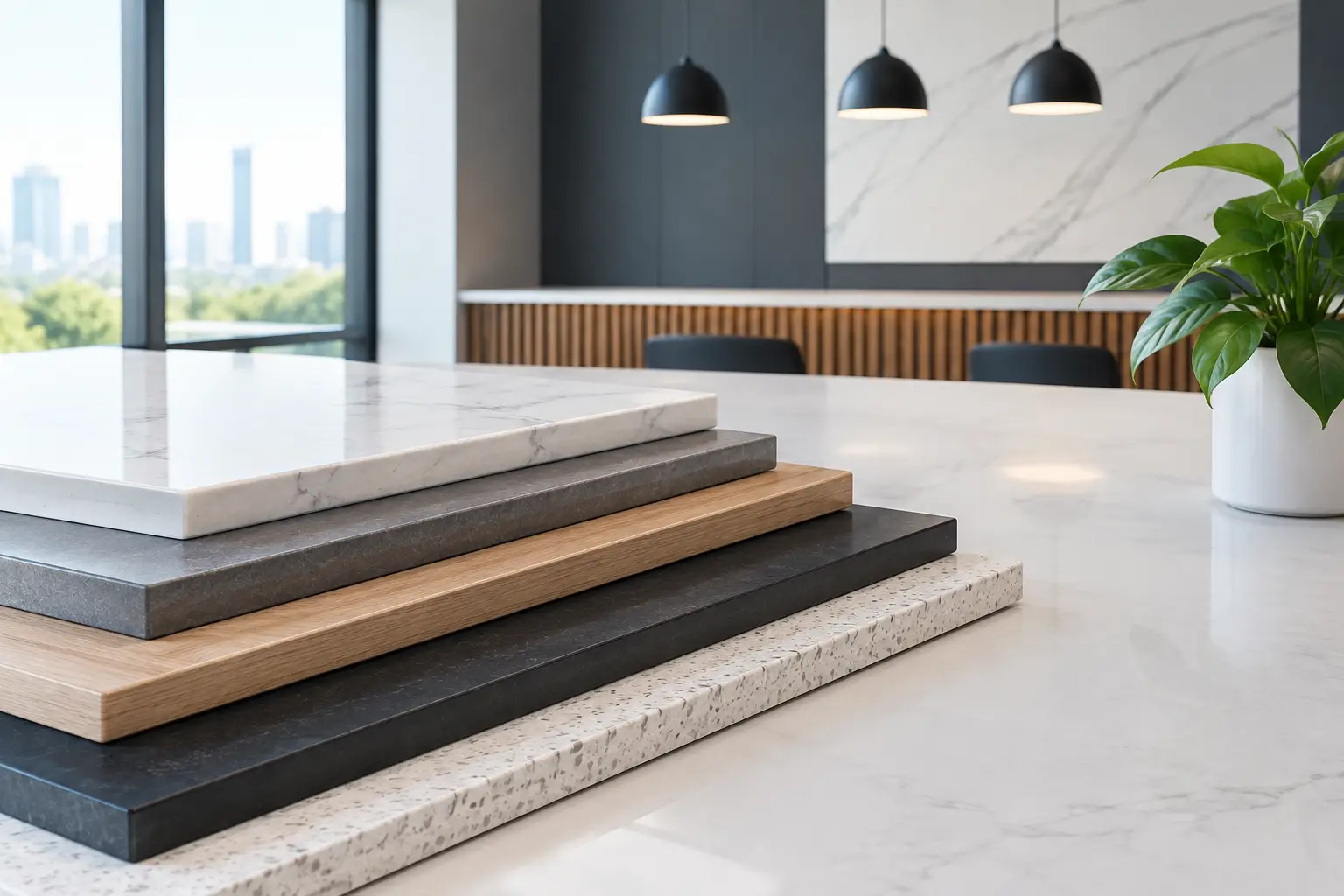
A restaurant bar top can look exceptional on opening night and still be the wrong choice if it stains after a weekend of service, feels rough to the touch, or cannot stand up to constant cleaning. That is why commercial surface specifications should begin with how a space will actually be used, not simply with a color board or a material name. The most successful surfaces pair a clear design point of view with details that support years of daily use.
For hospitality, retail, workplace, and multifamily projects, a custom surface is often one of the first elements a guest sees and one of the hardest-working elements in the room. A thoughtfully specified bar top, reception desk, communal table, wall feature, or vanity gives a commercial interior its character while meeting practical demands for durability, maintenance, and fabrication.
Start With the Real Demands of the Space
A commercial specification should answer a straightforward question: what will this surface encounter every day? A quiet private dining room and a high-volume cocktail bar may both call for a wood top, but their performance requirements are very different. One may need an elegant, low-sheen finish and occasional care. The other needs protection from moisture, spills, glassware, cleaning routines, and repeated contact from guests and staff.
Consider traffic, exposure, and cleaning before choosing a material. Is the surface horizontal, vertical, or both? Will it be exposed to food service, standing water, heat, direct sunlight, or heavy objects? Is it a focal point that guests will touch, or a decorative element viewed from a distance? These questions determine more than finish selection. They influence thickness, edge profile, seam placement, substrate requirements, and the appropriate tolerance for natural variation.
Commercial interiors also need surfaces that support operations. A finish that photographs beautifully but requires delicate care may be well suited to a boutique display area, yet impractical for a busy café. Conversely, a highly protective finish may be the better choice for a communal worktable, even if it changes the tactile feel or sheen of the material slightly. Good specification work acknowledges those trade-offs early.
Commercial Surface Specifications Begin With Material
Each material brings a distinct appearance, feel, and maintenance profile. Rather than searching for a universally “best” option, match the material to the project’s visual goals and its working conditions.
Wood brings warmth and individuality
Wide-plank wood, butcher block, and live edge surfaces introduce warmth that few other materials can match. They are especially compelling for bar tops, restaurant tables, host stands, communal tables, and feature counters where guests are meant to feel the hand-crafted character of the space.
Wood naturally varies in grain, tone, knots, and movement. That variation is a strength when the design embraces authenticity, but it should be understood before production begins. Species, construction style, color, and sheen all affect the final result. For demanding applications, a protective system such as a selected wood product’s Marine Finish can provide a stain-resistant, incredibly durable layer of defense while preserving the material’s depth and visual character.
The specification should still account for reasonable care. Wood is not the right answer for every wet or high-abuse condition, and no finish makes any natural material completely maintenance-free. When properly matched to the setting, however, it can deliver a welcoming, enduring surface with a presence that standardized products cannot duplicate.
Metal creates a tailored, high-impact finish
Zinc, bronze, copper, pewter, and stainless steel offer an entirely different kind of performance and personality. Metal surfaces can feel tailored, architectural, industrial, or quietly luxurious depending on the alloy, patina, texture, and edge treatment.
For commercial bars and hospitality counters, metal can be an excellent choice when the design calls for a surface with visual depth and a distinctive patina story. Zinc and pewter develop character with use. Copper and bronze offer warmth and richness. Stainless steel provides a more contemporary, utilitarian expression and is often selected where a crisp, clean appearance is central to the concept.
Patina is not a defect to be eliminated. On many metals, it is part of the material’s appeal. Commercial teams should decide whether they want a surface that remains visually consistent or one that evolves with touch and time. That decision affects both material selection and client expectations.
Engineered concrete and glass offer focused solutions
Engineered concrete brings sculptural weight, a refined mineral texture, and a wide range of custom possibilities. It can suit reception desks, tabletops, vanities, and dramatic feature elements where a monolithic appearance is desired. Its finish, color, profile, and reinforcement should be chosen with the intended use in mind, particularly where edges or corners will receive frequent impact.
Specialty glass can introduce reflection, color, depth, and light to tabletops, decorative wall components, and accent surfaces. It is not automatically fragile, but it must be specified with the right thickness, treatment, and application. Glass works best when its visual qualities are doing meaningful design work rather than being asked to imitate another material.
Define Dimensions, Edges, and Details Early
A custom surface is more than a material cut to a length and width. Thickness changes visual weight and perceived quality. A thick bar top can anchor a room, while a slimmer tabletop may better suit a light, contemporary dining setting. Edge profiles influence comfort, durability, and how the surface relates to surrounding millwork or furnishings.
Dimensions should also reflect how people use the piece. A bar top needs enough depth for place settings, beverages, and comfortable seating. A communal table needs a proportion that supports conversation without making the center inaccessible. Reception surfaces may need varied heights or layered planes to meet functional needs while maintaining a composed appearance.
When a project includes long runs, large spans, or complex shapes, fabrication planning becomes especially valuable. Thoughtful decisions about grain direction, metal sheet layout, structural support, and transitions help the finished surface look intentional rather than assembled as an afterthought. The goal is not to hide every joint or variation at all costs. It is to place and manage those details with craftsmanship.
Specify the Finish Along With the Surface
Finish language can be vague unless it is tied to real performance expectations. “Matte,” “satin,” and “gloss” describe appearance, but they do not fully explain resistance to stains, moisture, abrasion, or cleaning products. A clear commercial specification identifies the desired sheen alongside the expected level of protection and the maintenance approach the operator can realistically maintain.
For wood, this may mean selecting a finish system based on whether the top will serve drinks, food, or both. For metal, it may mean deciding whether visible marks and natural patina are welcome. For concrete, it may mean defining the desired color variation and how the sealed surface should respond to spills. These decisions are most effective when material samples are reviewed in the context of the project’s lighting, adjacent finishes, and operational demands.
Samples are also where design teams can evaluate tactile qualities. A surface should not only look right from across the room. It should feel right under a hand, glass, plate, or laptop. That sensory experience matters in commercial spaces because it becomes part of the guest’s memory of the brand.
Plan for Maintenance Without Diluting the Design
Every high-quality material benefits from appropriate care. The best maintenance plan is one that the people operating the space can actually follow. Specify compatible cleaners, set expectations around standing water and heat, and make sure the team understands which marks are signs of normal character versus issues that need attention.
This is particularly relevant for natural materials. A hand-crafted wood or living-finish metal top may gain subtle evidence of use over time. In the right setting, that aging reinforces the sense that the space is genuine and well loved. If the project requires a uniform appearance with little visible evolution, another material or finish approach may be a better fit.
Bring the Specification Into Focus
Commercial projects rarely succeed by choosing the most expensive material or the most protective finish in isolation. They succeed when material, fabrication, finish, scale, and daily use are considered together. With nearly five decades of material expertise, Brooks Custom creates made-to-order surfaces that give designers and operators room to pursue a distinct point of view without losing sight of performance.
Bring finish samples, use conditions, dimensions, and the feeling you want guests to take away to the conversation. From there, the right surface can be made to your exact needs and built to earn its place in the room for years to come.