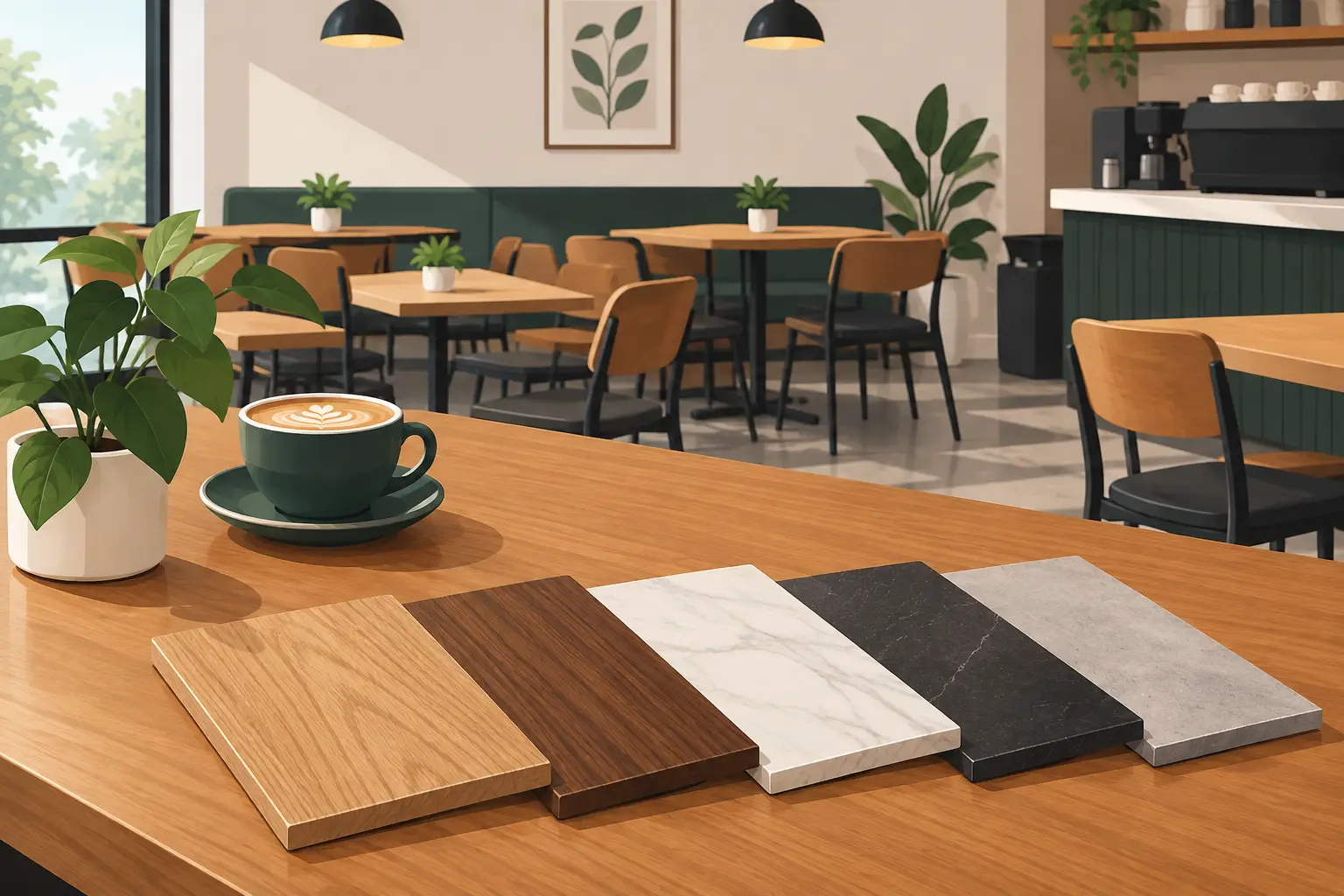
A cafe tabletop takes the kind of use a residential dining table rarely sees: morning coffee rings, laptop traffic, wiped-down surfaces between guests, pastry crumbs, syrup, and the occasional dropped mug. The best tabletop finishes for cafes are not simply the hardest surfaces available. They are the finishes that suit your service style, visual identity, maintenance routine, and the way guests actually use the space.
A beautiful surface should make a cafe feel considered from the first visit, while remaining practical through thousands of covers. That balance is where material selection and finish quality matter most.
What a Cafe Tabletop Finish Must Handle
Cafe tables are guest-facing work surfaces, not decorative afterthoughts. Before choosing a species, metal, or color, consider the daily conditions the tabletop will face. A quick-service coffee bar with frequent turnover needs a different solution than an all-day neighborhood cafe where guests linger over brunch and laptops.
The strongest choices stand up to moisture, food and beverage stains, repeated cleaning, and moderate impact without looking manufactured or overly commercial. They should also feel appropriate to the room. A polished glass top may suit a bright, contemporary pastry shop, while wide-plank wood brings warmth and ease to a more residential-minded cafe.
The finish should be judged as part of the complete surface. A durable coating cannot compensate for unstable construction, and a naturally resilient material still benefits from a finish chosen for its particular use.
Best Tabletop Finishes for Cafes by Material
Protected wood for warmth and everyday durability
Wood remains one of the most compelling cafe tabletop materials because it gives guests something they can see and feel. Its grain, tonal variation, and depth introduce character that standardized laminates cannot replicate. Walnut, white oak, maple, and reclaimed-look options can each set a distinct mood, from refined and tailored to relaxed and rustic.
For commercial use, the protective finish is critical. A high-performance clear finish helps resist coffee, wine, food oils, and regular wiping while preserving the natural movement and color of the wood. Brooks Custom’s proprietary Marine Finish, available on selected wood products, is designed for demanding environments where stain resistance and long-term durability are essential.
Protected wood is especially well suited to dining tables, communal tables, banquettes, and cafe counters where warmth is central to the concept. It is not maintenance-free, however. Staff should use non-abrasive cleaning methods and avoid leaving wet items on the surface for extended periods. The reward is a surface that can age gracefully rather than look worn out.
Zinc, bronze, copper, and pewter for a lived-in patina
Metal tabletops bring a level of visual distinction that is difficult to achieve with wood alone. Zinc is a natural choice for classic European cafe character, while bronze and copper deliver warmth, richness, and a more dramatic presence. Pewter offers a softer, silvery tone that works beautifully in both traditional and contemporary settings.
These metals develop variation over time. Small marks, shifts in tone, and subtle patina are part of the material’s appeal, not signs of failure. For cafe operators, that quality can be an advantage: a well-used tabletop gains personality instead of demanding a pristine appearance every day.
The trade-off is expectation management. If the design brief calls for a perfectly uniform, unchanged surface, a patina-forming metal may not be the right fit. But for an operator who values authenticity and wants each table to become more individual with use, artisan metal is an exceptional choice.
Stainless steel for high-use, contemporary spaces
Stainless steel is direct, clean, and highly practical. It resists moisture, does not absorb spills, and works naturally in cafes with an open-kitchen, bakery, industrial, or modern hospitality aesthetic. A brushed finish is often preferable to a highly polished one because it softens glare and makes incidental marks less noticeable.
This is a strong option for communal tables, service-adjacent seating, and busy locations where cleaning speed is a priority. Stainless steel can feel cooler than wood or bronze, so it is often most successful when paired with upholstered seating, warm lighting, wood flooring, or other materials that add balance.
Specialty glass for light and visual clarity
Glass tabletops create an open, luminous effect, making them particularly valuable in compact cafes or spaces with a strong view, striking tilework, or sculptural table bases. They are easy to wipe down and do not absorb staining liquids, which makes day-to-day care straightforward.
The practical consideration is visibility. Fingerprints, crumbs, and streaks show more readily on glass than on textured wood or patinated metal. Glass also asks for a careful match between the tabletop and the overall setting. In a design built around tactile, handmade materials, it may feel too crisp. In a sleek pastry cafe or gallery-like espresso bar, it can be exactly right.
Engineered concrete for sculptural durability
Engineered concrete has a grounded, architectural quality that gives a cafe immediate presence. It can be made in tailored shapes, colors, and thicknesses, offering a more refined alternative to the rough, unfinished look often associated with conventional concrete.
A properly protected engineered concrete tabletop can perform well in commercial dining, with a substantial feel that suits modern, urban, and material-forward interiors. Because it is a weightier visual element, it works best when the room has enough space and the table base is designed to support the overall composition. It is a statement surface, not a background material.
Match the Finish to the Service Model
The right tabletop is often clearer once you look at how guests move through the cafe. A fast-paced coffee counter with compact two-tops may benefit from brushed stainless steel, protected wood, or zinc because these finishes accommodate frequent cleaning and everyday use without asking staff to be overly cautious.
For an all-day cafe where tables become temporary offices, protected wood is especially inviting. It reduces visual fatigue, feels comfortable under forearms, and complements the residential atmosphere many guests seek when they settle in for an hour or two. Choose a finish with meaningful moisture and stain protection rather than an oil-only treatment that requires more frequent attention.
A destination brunch cafe or hospitality concept can be more expressive. Bronze, copper, pewter, artisan-cast metal, or engineered concrete can turn the tabletop into a central design feature. These surfaces are ideal when the brand experience depends on memorable materials and the operator is comfortable embracing natural variation.
Outdoor or semi-exposed conditions require a separate conversation. Sun, temperature swings, and prolonged moisture change what any material and finish can reasonably handle. A surface intended for interior cafe use should not be assumed suitable for exterior exposure.
Details That Affect Long-Term Performance
The finish itself is only part of the decision. Table edge profiles, color, sheen, and size all influence how the surface performs and appears over time. A softer matte or satin sheen generally hides minor marks better than a high-gloss surface. Lighter wood can brighten a room but may show dark spills more readily, while very dark finishes can reveal dust and fingerprints.
Edges deserve attention as well. They are the first areas guests touch and the places most likely to encounter chair impacts or bags. A thoughtfully shaped edge can make a tabletop more comfortable and reduce the sharp, overly formal feel of a square profile.
For a multi-table cafe, material consistency should be intentional rather than absolute. Custom fabrication allows the same wood species or metal family to be used across different table sizes while preserving natural variation. The result feels cohesive without becoming repetitive.
Care Should Be Realistic for Your Team
The best finish is one your staff can maintain consistently during a busy shift. Before specifying a tabletop, establish who will clean it, which products they will use, and whether the surface will be exposed to hot serving ware, acidic foods, or standing moisture.
Avoid harsh abrasives and aggressive chemical cleaners unless they are specifically approved for the selected material. Simple, routine care is usually more effective than occasional heavy treatment. A cafe team that understands the character of its tabletops will protect the investment and preserve the finish guests notice every day.
A custom tabletop gives a cafe the opportunity to make its material choices part of the guest experience. Choose a finish that supports the pace of service, reflects the atmosphere you want to create, and has the character to look even better once the room is full of regulars.