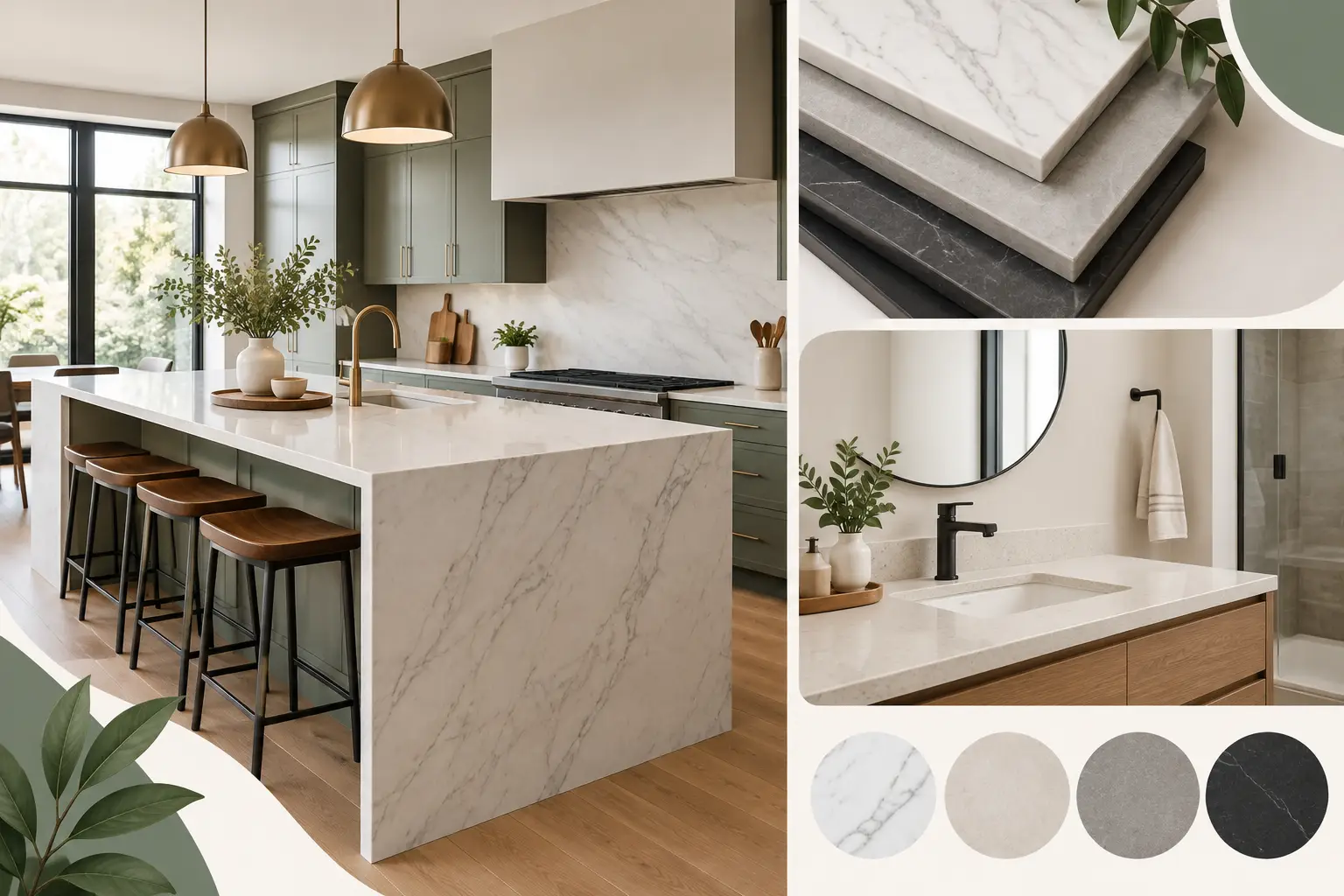
A dining table that is two inches too narrow, a bar top that feels generic, or a range hood that disappears into the room can change how a finished space feels. That is why choose custom surfaces is not simply a question of appearance. It is a question of creating functional pieces that belong exactly where they are placed and continue to perform beautifully over time.
Custom fabrication gives homeowners, designers, builders, and hospitality teams a broader set of choices than standard-size products can offer. From a wide-plank walnut countertop to a hand-finished zinc bar top, each decision can support the room’s proportions, use, and character.
Why Choose Custom Surfaces Instead of Standard Products?
Standard products are designed to serve the widest possible audience. That can make them convenient, but it also means their sizes, edges, materials, and finishes are predetermined. A custom surface starts with the actual needs of the project.
Perhaps a kitchen island needs an extra-deep work surface for family cooking and entertaining. A restaurant may need a long, durable bar top with a finish suited to constant guest use. A designer may be looking for a metal backsplash that brings warmth and texture to a quiet, tailored kitchen. Made-to-order fabrication allows the piece to respond to those conditions rather than asking the room to adapt to a standard product.
The difference is often felt in the details. The thickness of a tabletop, the profile of an edge, the placement of a live edge, or the tone of a metal patina can make a surface feel intentional. These are not decorative afterthoughts. They affect how the piece relates to cabinetry, lighting, seating, flooring, and the people who use it every day.
Exact Dimensions Make Better Use of a Room
A surface should fit the way a room is lived in, not just the dimensions listed on a product page. Custom sizing allows a countertop, table, vanity top, or mantel to be produced to the measurements and visual scale a project calls for.
This matters especially in spaces with strong architectural features. A long dining room may benefit from a substantial table that fills the room with confidence. A compact city kitchen may need a carefully proportioned wood top that provides usable space without making the room feel crowded. In a commercial setting, bar tops and communal tables often need specific depths and lengths to support service, seating, and circulation.
Custom does not always mean larger. Sometimes the right answer is a slimmer profile, a quieter edge treatment, or a material choice that adds visual depth without visual weight. The goal is proportion. When a surface is made for the setting, it has a natural presence that is difficult to achieve with an off-the-shelf alternative.
Function Should Shape the Specification
The best custom projects begin with how the surface will be used. A butcher block work area has different requirements than a formal dining tabletop. A family kitchen may prioritize a forgiving finish and a material that can develop character gracefully. A hospitality bar may require a finish selected for frequent cleaning, spills, and heavy use.
Material, thickness, construction, and finish all contribute to performance. For selected wood products, Brooks Custom’s Marine Finish provides stain-resistant, incredibly durable protection while preserving the warmth and texture that make real wood so compelling. The right finish should support everyday life without making the material feel artificial.
There are trade-offs to consider. Natural wood can gain patina over time, which many owners value, while metal surfaces may show marks or variation that become part of their character. Engineered concrete offers a substantial, architectural look, yet its weight and visual presence should suit the application. Choosing well means understanding both the beauty and the behavior of the material.
Authentic Materials Create a Stronger Design Statement
Custom surfaces offer an opportunity to choose materials for more than their color. Wood brings grain, depth, and warmth. Zinc, copper, bronze, pewter, and stainless steel introduce reflection, texture, and a tailored industrial note. Specialty glass can add lightness or a distinctive decorative element. Artisan-cast metal creates dimension that cannot be replicated by a flat, printed finish.
A material’s authenticity is especially apparent in large, highly visible pieces. A kitchen island, statement range hood, dining table, or bar top naturally becomes a focal point. Rather than treating that focal point as a generic component, custom fabrication allows it to carry the design of the entire room.
For example, wide-plank wood can bring a sense of calm to a contemporary kitchen with clean cabinetry. A live-edge tabletop can become the visual center of a mountain home or a refined dining room. A hand-crafted copper or zinc top can give a restaurant bar an immediate sense of permanence and personality. Each material creates a different experience, and each can be fabricated to suit a specific vision.
Material Variation Is Part of the Craft
Natural and hand-finished materials are not meant to look identical from one piece to the next. Wood grain varies. Metal can carry subtle movement, tonal changes, and marks from the finishing process. Cast surfaces may have texture and depth that make them feel alive rather than machine-made.
For clients who want absolute visual uniformity, a more controlled material or finish may be the better choice. For those who value individuality, variation is often the point. Reviewing material samples and discussing the intended look early helps set the right expectations and leads to a result that feels personal rather than predictable.
Custom Surfaces Support a Cohesive Interior
A well-designed home or commercial space does not need every element to match. It does need the materials to relate to one another. A custom tabletop can echo the warmth of wood shelving. A metal range hood can connect with cabinet hardware or lighting. A backsplash can introduce a finish that appears again at a bar, fireplace surround, or decorative wall panel.
This is where broad material capability becomes valuable. Rather than selecting disconnected pieces from different sources, a project can be developed around a more considered material story. Wood, metal, concrete, and glass each offer distinct possibilities, whether the goal is a quiet tonal palette or a dramatic contrast.
Custom furnishings also help carry that story beyond the kitchen. A matching console table, floating shelf, coffee table, or decorative wall component can make a room feel finished without becoming overly coordinated. The result is a space with continuity, not repetition.
Craftsmanship Adds Value Beyond First Impressions
The visual impact of a custom surface is immediate, but its lasting value comes from the care behind its construction. Hand-crafted pieces require experienced material selection, fabrication, finishing, and quality control. Those steps influence how a surface looks when it arrives and how it performs through years of use.
Brooks Custom has spent nearly five decades working across wood, metal, engineered concrete, and glass. That experience matters when a project involves a long bar top, a substantial wood island, a custom metal hood, or a one-of-a-kind table. Complex pieces benefit from a manufacturer that understands how different materials behave and how to produce them with consistency.
Custom work does require more consideration than choosing a standard item. Lead time, material selection, finish preferences, and precise project requirements should be addressed before fabrication begins. For clients who want a distinctive piece made to their exact needs, that planning is an investment in a better result.
A Surface Should Feel Like It Was Always Meant to Be There
The strongest custom surfaces do more than fill an opening or cover a cabinet. They create places to gather, cook, work, serve, and celebrate. They carry the marks of real material and skilled craftsmanship, while responding to the practical needs of the people who use them.
Begin with the room, the purpose, and the material that feels right for the way you live or welcome guests. With the right choices, a custom surface becomes not just a finishing detail, but one of the most memorable parts of the space.